More Wild Parsnip

I wrote about the wild parsnip growing at our place a few days ago. I have certainly been aware of it all along but since then I have been hyper aware, even more than I had been. And let me tell you, that stuff is everywhere. Any open field that hasn’t been cut recently is just covered. It is so tall that it drowns out everything else. When I look out over a field that has been taken over, I can’t see much of anything else–no grass, no flowers, no milkweed, no nothin’.

I drove today on the back roads from Hinesburg to Charlotte (which means, well, almost any road from Hinesburg to Charlotte) and there was a clear distinction between hayed fields and those that have been let lie. I saw a couple of fields where large patches had been left uncut. There was a rock or a wet area or some other obstruction to the mower. These were deep in wild parsnip. I mean, invasive species can be pretty aggressive. This one hits home for me. I mean, it really does hit home.

The problem is that the fields become a danger zone. Forget poison ivy. This is worse. Sure ticks are out there, but they are not nearly as likely to be an issue as wild parsnip. I am afraid to send my children out in the field because I do not want them to have chemical burns. Ouch. It is just a plant for chimney’s sake, but it is a ubiquitous and menacing plant.

This stuff has been around for many years, maybe even for over 400 years. It may have been brought here on purpose, as a food source, but no one really knows how it came to North America from Eurasia. It has certainly made itself at home, however. I see tons of it all over the place and, frankly, it creeps me out. Aside from the fact that I am in awe of how any species can be so adaptable and can just make it over other species, I am in awe of its bully-ness and unhappy about it. I guess I need to do what I can to control it in our part of the world and hope conditions for it deteriorate at some point so its presence lessens in the future.

For more good information about this plant you can check out the Eastern Forest Environmental Threat Assessment Center’s page, or the US Forest Services “Weed of the Week” page on it.

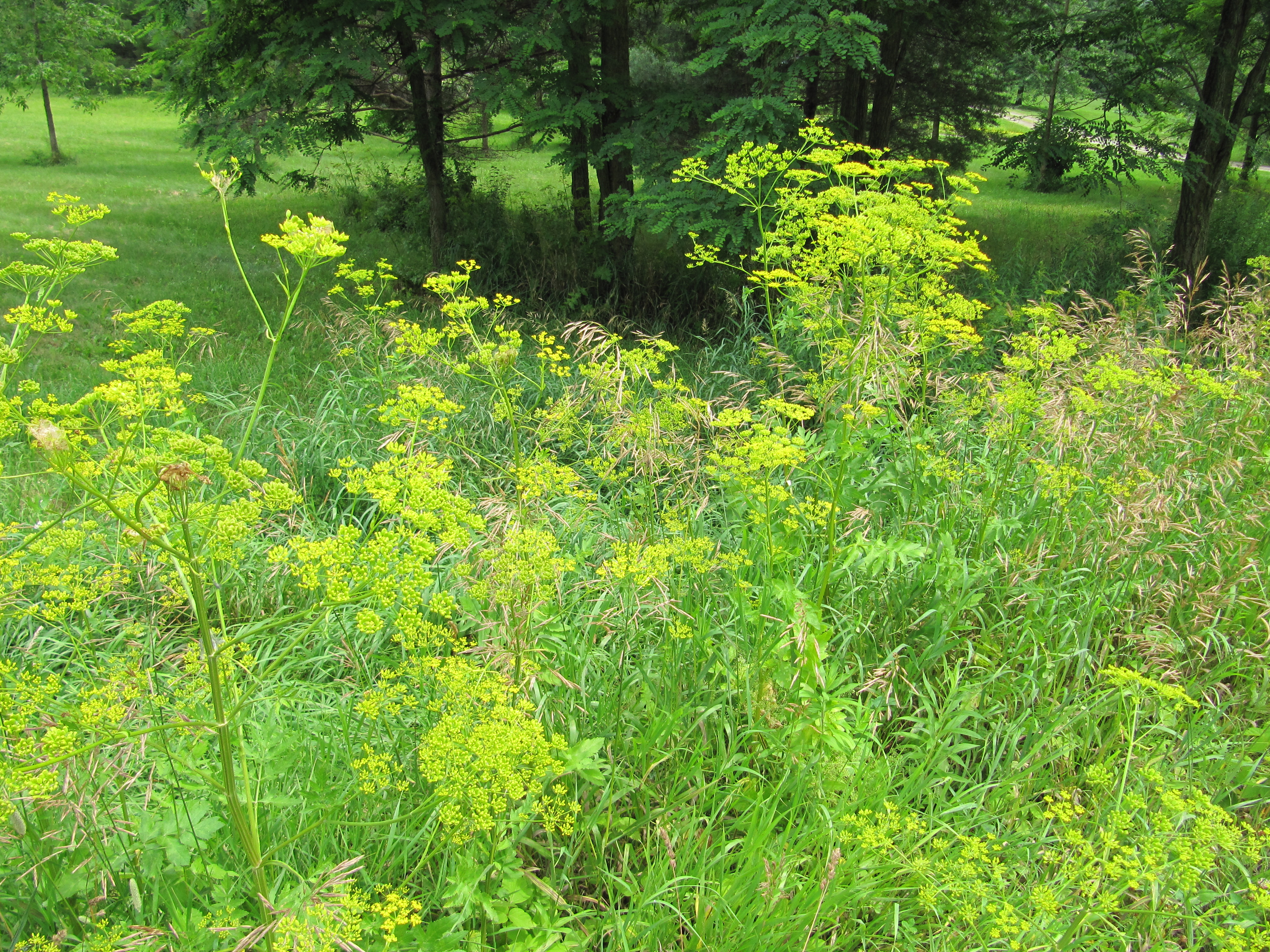
Wild Parsnip

Wild Parsnip

Up Close

I first noticed it in 2006, a tall yellow flower growing in the field. It was just one of several other plants, including Queen Anne’s lace, a couple varieties of goldenrod, and all those grasses I can’t identify. I looked it up. It wasn’t easy to find in the Vermont flower guide but I did find it in the edible wild plant guide. And I thought: Wild parsnip, huh? Interesting. Edible roots, related to carrots and cultivated parsnip. Worth trying one of these days?

But this plant has a nasty side. Rub up against it and get its oils on your skin, then hang out in the sun and watch out. Sunlight brings on burns and blistering because the plant goo is photoreactive. The result is ugly and painful. Not a plant to mess with, especially in summer. Unfortunately, that is when it grows. And grows.

Last summer the stuff took off. Road crews mowed less, so it grew more than usual, and it just had a banner year. This summer it has taken over roadsides and fields pretty much anywhere that isn’t cut. It grows tall, too–taller than me. Over six feet sometimes. There used to be a mix of plants, but where this grows it seems to dominate. Queen Anne’s lace just can’t compete. Late in summer its seeds will spread all over and it will grow even more next year.

That is one reason we want to cut our own field more often–to get rid of this plant. We can’t let it go to seed, that is for sure. The field was cut last month and it still is coming back, stretching its yellow flowers above everything else that is growing. We need to cut again soon to repel it once more.

So, yes, apparently, one can eat the roots–boil them up and have oneself a meal. It would feed many people, the way it grows around here. It isn’t native but it sure has made itself at home. I like to be welcoming, but I wouldn’t miss this plant if it decided to take up and move away. At least purple loosestrife has beautiful flowers and doesn’t cause wounds (except when I try to pull it up by the roots with bare hands). Wild parsnip is a fine plant, I am sure, once you get to know it. If it were not so aggressive I might even appreciate it. This bully, however, needs to keep it in check and learn to play nice.

Unfortunately, as the world of flora goes, I don’t see that happening.