A Little Evening Adventure

Last night was a full moon. I got invited to go along on a moonlight paddle in Burlington. Lots of people have taken moonlight paddles, myself among them. Being on the water at night when the moon shines is a treat not to be missed. I’d say it’s a must do experience. Last night, however, I was a novice. I went stand up paddleboarding.

Stand up paddleboarding is basically taking a surf board out with a tall paddle. You stand up and move around by, well, paddling. I had done plenty of canoeing and felt comfortable with that. I can balance. I felt pretty much good to go. And I was. I got the hang of it quickly. I went with a group led by Rachael Miller of Stormboarding. Here is a photo of hers, to give you an idea what it looks like:

Copyright Stormboarding

Copyright Stormboarding

The problem was, although I had seen photos and had talked to Rachael about it, I had never done it. And since we would be heading out after dark, I wasn’t going to see it last night either, at least not all that well. There was a full moon and I did wear a headlamp, but still, it was dark. Anyway, it was a blast, and an experience, all told, that most people probably won’t have. Here is why: we combined stand up paddleboarding, a full moon, a still summer Vermont evening, and an exuberant and confident punk rock band.

I was the first to greet Rachael, and the punk band was already getting started, playing at a pavilion right on the waterfront. I signed the three page waiver and then tied glow sticks to the shoulders of my life vest. Since we were out at night we needed lights, being watercraft, to be legal and, more importantly, to be visible to anyone else on the water. Red glow stick on the left, green glow stick on the right. The headlamp served as the white light which should be visible from any direction, but was close enough. As the others arrived we all tied on lights, carried boards to the dock and, after some instruction and a couple of photos, started paddling.

The band was really hammering it out by the time we curved around past the Coast Guard station, yelling and, seemingly, having a fun time of it. The moon was climbing, with Mars along to keep it company. The water shone. We moved together stealthily. It wasn’t the peaceful paddle that some had expected but it was a good time nonetheless. We moved pretty quickly without any wind or waves and paddled right into a cloud of skunk spray. If we had had anything tasty to snack on it would have been a true five senses experience. We turned around at what Rachael identified as, showing off her knowledge of nautical terminology, the “can thingees,” drums of some kind, in the water for a purpose I could not discern (to tell the truth, I couldn’t really see them). We hugged the shore and cruised back to the dock.

We were out for about an hour and, as we drifted in and pulled the boards out of the water, the band packed it up for the evening. I had fun and would surely do that again, even if it were regular old daytime. I doubt I again will get to experience paddling standing up and a full moon and Mars and a warm September night and perfect calm on Lake Champlain and the inspired lyric of “Weapons Factory!” pelted out over the odor of skunk. If you find yourself experiencing such a mix, do let me know. We’ll compare notes.

Dude at the Post Office

I had a package to mail this morning and I stopped at a post office in South Burlington where I rarely go.  I had been there once before and it was a standard transaction.  I figured today would be the same, but it colored my day in a way I had not anticipated.  It wasn’t a big thing, just something that made me think, pretty much all day.

I had to wait in line for a bit.  An older couple were in line ahead of me with two packages, one that was in a box that must have held several pounds of Splenda, the other in an old slide carousel box–the kind that had once housed a round tray for photographic slides.  The woman was looking through all the literature she cold fine there and it turns out she was seeking a change of address form.  She couldn’t find one and her husband kept pointing to a large bin, insisting that they were right there.

“No,” she said. “That is just instructions for doing it online.”

His response:  “For-GET it!”

I thought that exchange was interesting in itself, and it made me think about technology and how we adapt or don’t, how we sometimes stick to ways that seem to work for us and then one day find that those ways don’t work so well anymore.  Those were the kinds of ideas zipping about my little cranium while I waited in line.

When it was my turn, I greeted the man at the counter and placed my package on it.  I have mailed things many times and I always feel bad for the mail clerk who has to ask the same questions every time a customer comes to the counter.  “Is there anything fragile, liquid, perishable or potentially hazardous…” and all that, with the added requests for my additional postal needs.  That would pretty much drive me batty if I had to ask those same questions in the same way every time.  So I tried to be helpful.  I wanted to save time for many people who were now in line behind me and save the effort for my helpful postal worker.  He was not, however, pleased.

I tried to offer that there was nothing fragile, liquid, perish…but he cut me off.  “I have to ask so let me do my job.  It’s like a cop stopping you.  You let them do the talking.”  He was curt.  He was grumpy.  I noted that I was just trying to be helpful but he merely returned to his list of questions, all of which I could have answered before he asked them.

I left feeling upset.  Why would someone get so upset when someone else was trying to be helpful?  It was uncalled for.  If he had merely told me that he was required to ask the questions, even if I offered the answers first, I would have been informed enough to accept those questions.  He was rude, however.  As I drove off, I recognized that his emotions had transferred right to me.  Now I was upset.  Because I recognized that, however, I stopped. Take a lesson, I told myself:  People feel like they do and I can’t necessarily understand why and I certainly can’t change it, so accept that and remember to try not to react like he did.

I felt as though I was not treated with respect.  Note to self:  try hard to be aware so that you treat others as we all would like to be treated.  Thinking that made me feel better.  My day was still off, and I thought about that interaction more than a few times, but I now thought about it in a more positive way.

My wife later pointed out that perhaps he assumed I was making fun of him.  “People make fun of postal workers all the time,” she noted.  “Why would you be any different.”  She had a point.  He perhaps made an assumption about me, regardless of my true intentions.  While I was trying to do something that most people don’t do, he may have assumed that I was doing something that too many people do.  It is too bad.  I hope he was feeling less than stellar just today.  I wish him more happiness in his work tomorrow.  And every other day, while we’re at it.

First Day of School

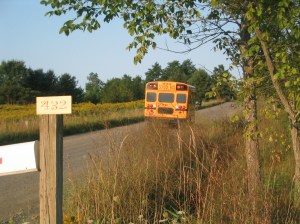
Today was the first day of school for our children.  After some anxiety about what that might bring, it worked out OK for them both.  Now we have some worries about what day two might bring.  One day at a time, I guess.

Bus on the Way

Bus on the Way

Off They Go

Off They Go

Really Gone (at Least for the Day)

Really Gone (at Least for the Day)

A Little Contrast

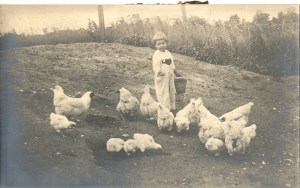
Perry Schmidt, 1918

Perry Schmidt, 1918

This is a photo of my grandfather when he was three years old.  My grandmother gave this to me a while back when she moved out of her place into an assisted living facility.  He would have been 94 this year, were he still alive.  This photograph was taken in Connecticut.  It is a great photograph in terms of composition, especially considering how expensive such pictures were at the time, and how few might have been taken to get this shot.

I am sure they did not have many photographs.  Some may be hanging around somewhere and some may have been lost over time but, nonetheless, the family’s collection was likely small.  When I managed to migrate all the photographs from our old computer to this new one, there were over 8,000 to move.  I knew we had a lot, but I was still mighty surprised to see that number.  We have hundreds of photographs of our children.

There is a great contrast here in terms of what the world was like for my grandfather and what it is like for my children. I give my daughter the camera and she takes 50 photos.  Half of those might be good enough to consider keeping, and maybe ten we might call good.  There is little extra cost to taking all those pics.  Even when I was a kid one had to load film and then develop it just to see what came out.  That could happen the same day but not instantly, and it cost.  I am sure no one would have given my young grandfather the camera to take pictures of the chickens.

Moreover, I pulled out this photo from its clear envelope, scanned it, and now can send it around the world to thousands of people if I want.  I can print copies at home.  It really is such a different world than the world of that three year old boy.

The other thing to note is the chickens.  When this photograph was taken, if a family wanted to eat chicken, someone went outside and caught one, then killed it, plucked it, took out its innards and cleaned it before cooking it.  I think of how connected my grandfather’s family was to their food.  That many people are choosing to have gardens these days, or to raise chickens, is news, but then it was how people ate.

The interesting thing here, or I should say the really interesting thing, is that we are much more connected our photographs than our food.  We take photographs with our telephones but have no idea where our food comes from.  We can manipulate colors and edit out the goofy guy in the background, right at home after dinner, but most of us have no idea how to pluck a chicken, or even what it ate when it lived its confined life, or that it had a confined life, and most of us don’t want to know.  We seem to want to be distanced from our food.

Imagine this brief conversation:

Hey where’d that photo of Sam in Pete’s Mustang come from?

Oh, Jill sent it to me from her Blackberry.

Hey, where did those blackberries come from?  I mean really come from?

I don’t know.  Argentina?  Chile?  Somewhere far away.

My grandfather and his family would have been a tad confused back when those chickens were prancing about.