Afternoon, Stick Season

image

The river runs not high but not low. A sand bank toward the far side pushes the water away, causing the current to run faster. Across the river the banks drop steeply. In spring, Bank Swallows nest here, burrowing into the sand, flying low over the water to catch flies. Today it is not spring. Fall’s glory has passed. The brilliance of turning leaves is over. Those leaves lie in wilted piles among the bare shrubs.

But it is not yet winter. The current flows smoothly over rocks and sand and mud. A few moths still flit among the maples. There is no ice under which the water must crawl, no ice to scrape at the log lodged in the river’s bend. Snow does not yet fall. Today there are no clouds and the air is warm enough for scattered green leaves in the under-story to spread to catch the sun. But the sun is low, and will not last much longer today.

Upstream, at the mouth of the stream that melts into the river, a beaver just stirs in its lodge. It has been waiting for the light to dim, for shadows to grow long. It dips into the water, swims, waits again. Soon it will climb the bank to work at the silver maple it plans to fell. Already it has cleared smaller trees. It will chew away the bark, working steadily, wary of predators. Perhaps this tree will fall before winter sets in. Perhaps spring winds will send it tumbling. Perhaps it may prove more stubborn, standing for years before its top branches dip into the water. The beaver, however, does not concern itself with such possibilities. It simply works.

Two Blue Jays call across the bare trunks. A woodpecker knocks. A second calls to it and sends the first flapping away. A small breeze taps branches together, but mostly it is quiet. Crickets, cicadas, birds do not sing. Squirrels stay still. The woods here rest, exposed, not waiting exactly, not sure or unsure, just knitting the past into the present so the future can be only an imagined thing that does not matter to this day.

Soon the sun will drop below the hills. The day’s heat will drift off, like milkweed seeds across a field. In the dark, the river will seem louder. No bats will dot the skies but owls will call. Already owls are planning for spring, finding mates, starting nests. They plan for the future, like the beaver, doing today what must be done for tomorrow. Mice will crawl under dry leaves, finding seeds that won’t become flowers, feeding the owls, thinking only of right now, this November day next to the river that will not stop flowing, even when the ice comes.

Another Go at Birding in the Northeast Kingdom

image

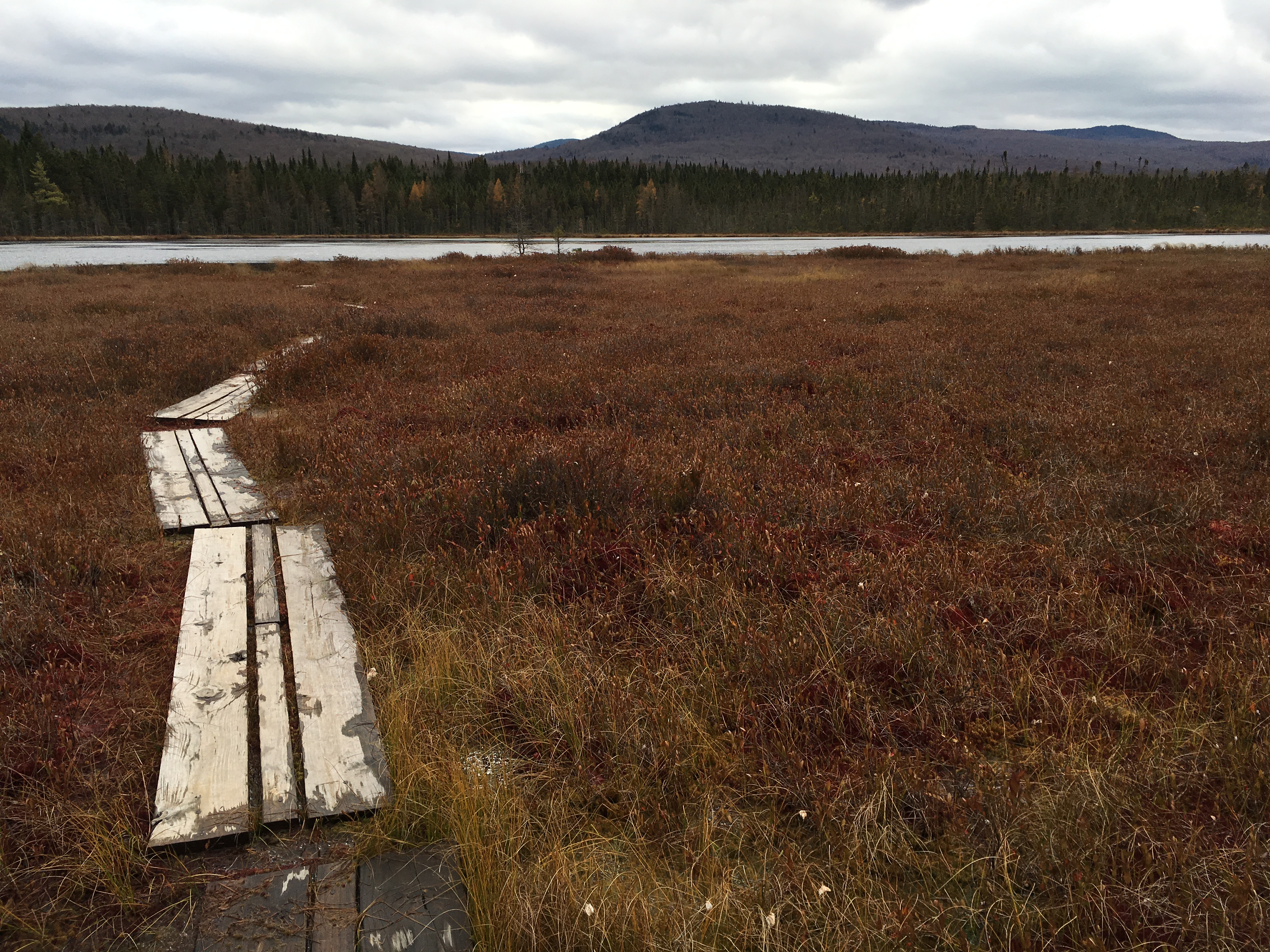
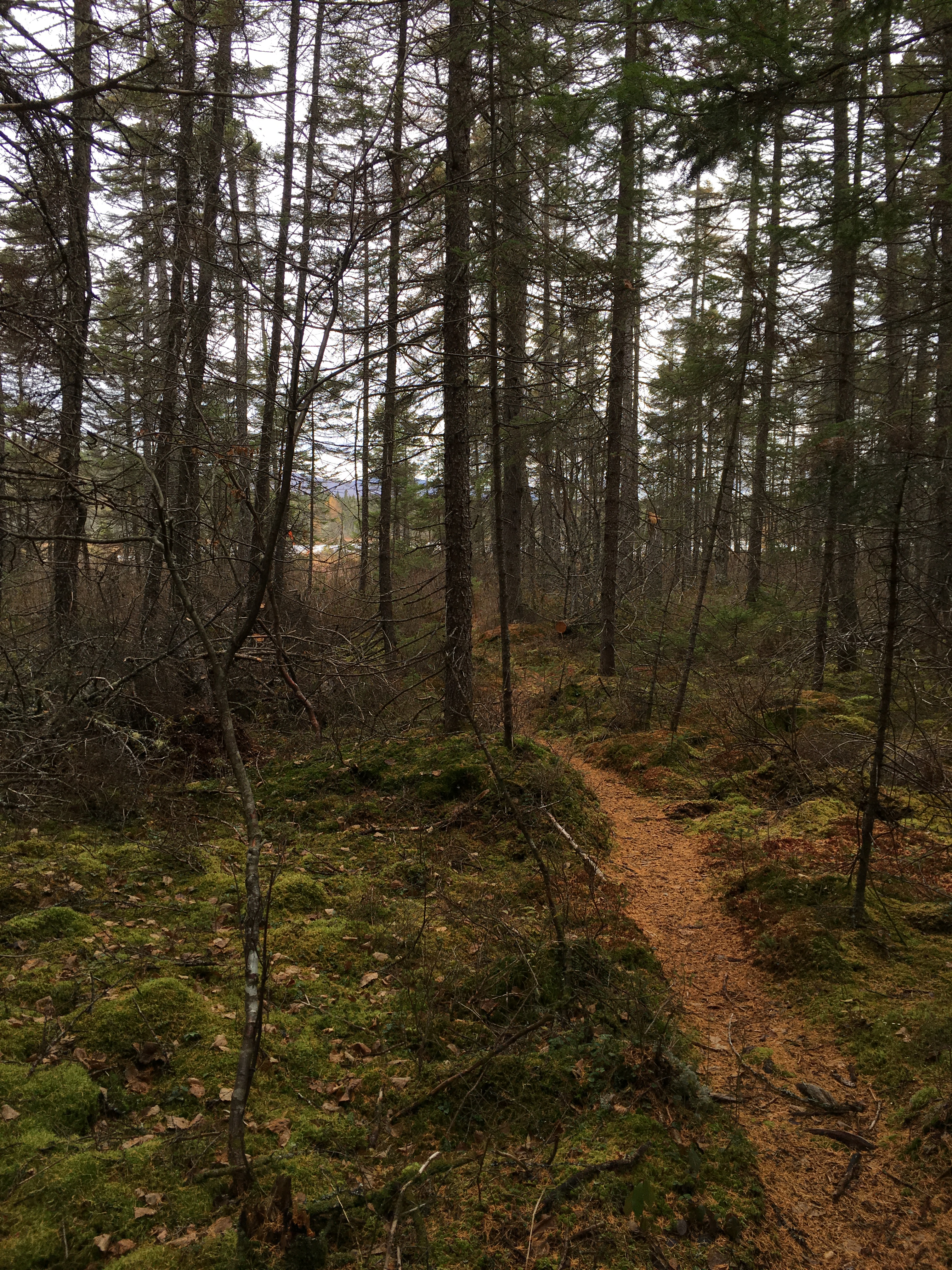
The trail to Moose Bog at Wenlock Wildlife Management Area

My work took me yesterday to Lyndon State College, in northeastern Vermont. Since I live on the western side of the state, it took me a couple of hours to get there. After an early start and a morning spent learning about the school, I was free to go. Since I was so close, relatively, to a birding spot I had hit last year, I thought I might give it another try.

I did not have a lot of time and this detour added about an hour to my drive home, but I was so close I couldn’t help myself. I drove north, through Island Pond, and snaked around to Wenlock Wildlife Management Area. I parked in a little dirt lot off the narrow dirt road, avoiding the logging trucks heading in empty and heading out full of logs. I pulled on trail shoes and a looser shirt (a dress shirt and shoes are not my standard birding attire) and headed into the woods.

There were four target birds on my list: Boreal Chickadee, Gray Jay, Spruce Grouse and Black-Backed Woodpecker. All of them live in the boreal forest and this is a good place, apparently, to see them. I did not have a lot of time–two hours max–and I was hoping to see at least one of them. I walked on the trail through mossy, dense forest, looking and listening carefully. Spruce Grouse, which I have never seen, are not easily spooked; I have heard one can walk right past them. Maybe I did. I certainly did not encounter much.

I found a few Red-Breasted Nuthatches and lots of Blue Jays, but none of the avian quatrain I was seeking. The woods were still and mostly quiet. I hiked downhill and squished my way down to the bog, water sneaking over the tops of my shoes. I stood near the water for a while, hoping for something. No luck. Not even a dabbling duck. So I got back to the car, while feeling great to be out on a fairly warm November day in a beautiful place, a little disappointed.

Moose Bog on a Gray Day with no Gray Jays

Moose Bog on a Gray Day with no Gray Jays

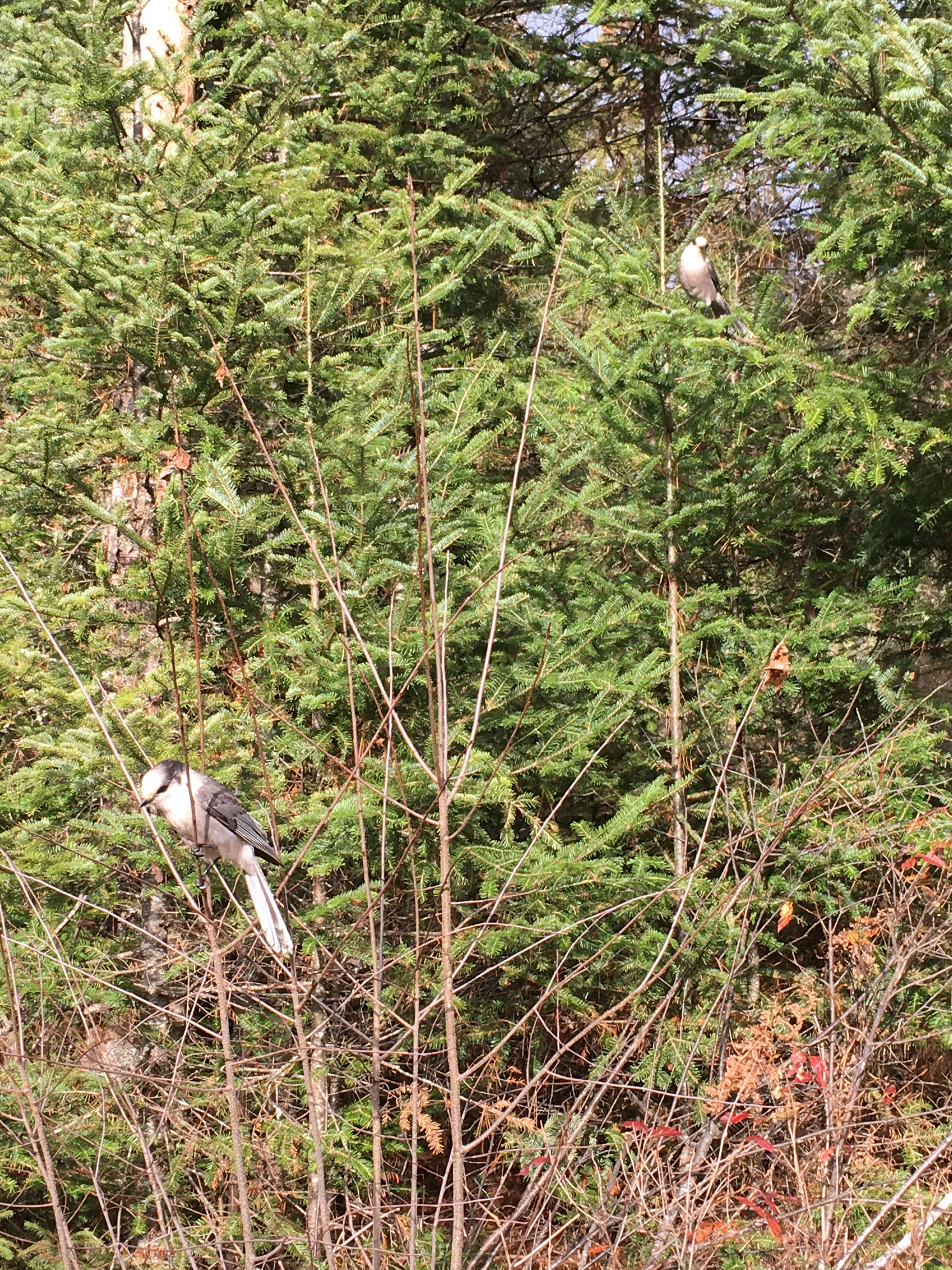
As I changed my shoes back to my dry ones for the drive home, however, a Gray Jay popped out of the woods and landed a few feet away. It hopped around on the ground, back up to the edge of the trees and then lit on a branch right next to me. “Well,” I said to it. “You are just who I have been looking for.” Then out came another one. I watched them for a bit and then figured it was time to go.

I turned back to the car but then heard a peeping in the brush across the road. It was the soft whistle of a chickadee, the sound I hear most often in winter made by Black-Capped Chickadees. Could I be, I wondered, a Boreal Chickadee? And then I heard it call its chick-a-dee call. Bam! Boreal Chickadee confirmed. I found it in the dense trees and then really did have to hit the road.

So in the end I found two out of the four species I was seeking. When I have more time I will go back to find the other two. I did think that it would be quite a place to visit in the spring, when bird activity is at its peak. The Silvio O.Conte National Wildlife Refuge has a branch just up the road and there are trails to explore there as well. The black flies might be out, but I imagine the birds might be as well.

Gray Jays

Gray Jays