Down the road the other day, walking, I looked down. Bright green, moving. I knelt. I found a caterpillar. It waved its way across the gravel. It seemed a tough environment for a caterpillar–soft and squishy on hard and rough. I found a dried leaf. I held it in front of the caterpillar. It climbed aboard. I carried it to the other side of the road.
I kept looking down. There was a mottled leaf, still green but dried in spots. Why was it like that? It looked burned. I admired it. I left it where it had fallen.
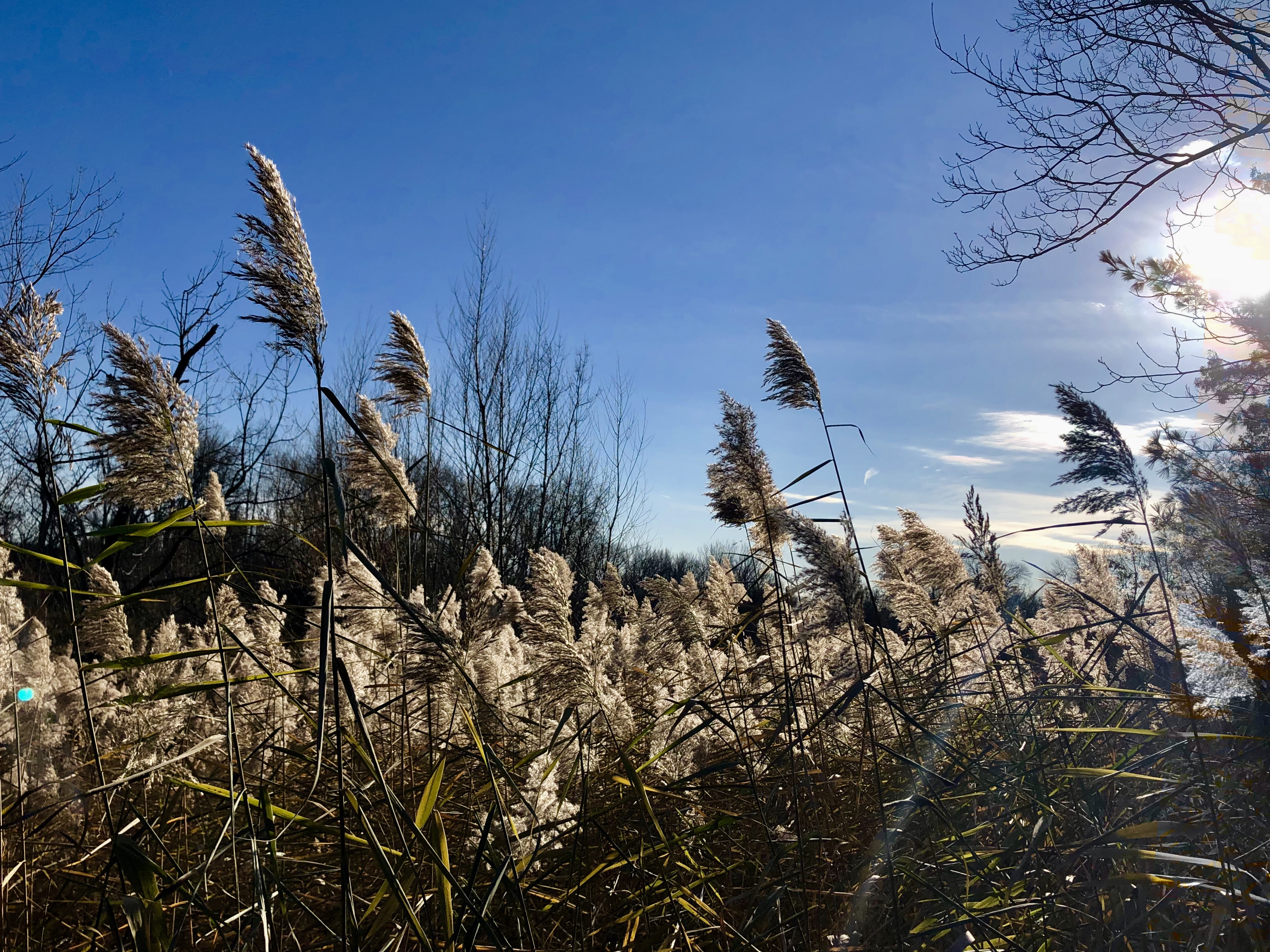
And now I was looking closely at small things. I noticed the seeds of the grass backlit by sun. I noticed all the tiny yellow flowers of the Goldenrod, green and brown that look like one big cluster of gold. I noticed the mud. In the sun the mud was almost dry, hardened into deer tracks. In the shade, tire tracks firmed up, damp. In the deep shade, goo and puddles.
And more flowers–Chickory and Asters. Several kinds of asters–pink and light purple and the purple of almost night. One Aster matched the color of the sky as the sun sank low. Monarch Butterflies found the flowers. They like the Asters the best. Moths flitted. I watched a mosquito on my shoulder.
Then I looked up enough to walk back home. A breeze picked up. Some sparrows peeped in the brush. A car passed and raised a cloud of dust. Then it was quiet again. Buttercups bobbed. A goose honked its way south. And then I was back, and as I wrapped myself n the world of my house, those small things of the world sank back into the afternoon.
Shorebirds are passing through. Most people have no idea. Maybe they see “sandpipers” if they visit the beach, but in Vermont? No beach, no sandpipers, right? Well, mostly. But when those little wading birds head south, they stop along the way.
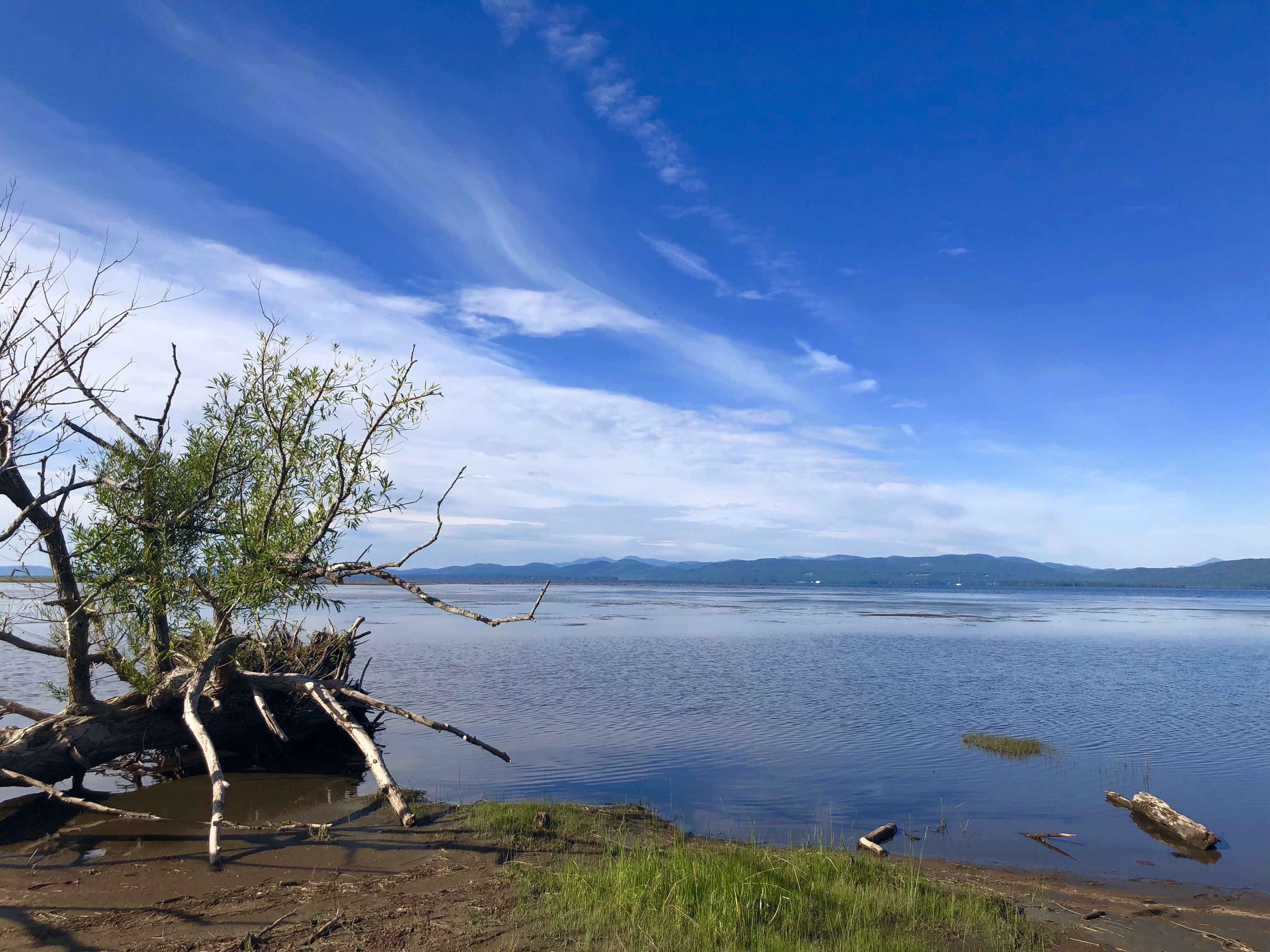
I went to Delta Park, in Colchester, to find some shorebirds the other morning. They were there. I saw seven different species. Lake Champlain is low enough that I could walk around the point. At times the wetland bleeds into the lake, so it makes for a wet walk. But I got around the corner and found them.
Some were on a sandbar, not far from shore–close enough to see well with the right optics. There were Semipalmated Plovers, the cutest birds you’ve ever seen–plump little buggers with a mask and orange bill. There was a Dunlin, with a long curved bill, probing deep in the mud for breakfast. And there were long-legged Yellowlegs, living up to their names with long bright yellow legs.
I also saw several Great Egrets, large elegant white wading birds, resting on a log just off the beach. And an osprey soaring overhead. And in the willows, a Yellow Warbler in its drab fall plumage. And on top of all that wildlife, the place itself is just stunning. Green reeds and grasses spilling out toward the lake, and the Adirondacks strutting their stuff over in New York. When I go there I can’t help but fumble a little, I am just so in awe.
So I saw my shorebirds. I stopped for a cup of coffee to sip on my way home. I watched the morning grow into full-on day. I vowed to go again the next morning, even though it would mean another drive to get out there. But when I woke in the dark that night, it was raining.
We have not had anything but showers in months, so I didn’t think much of it. But as the light strengthened, the rain did too. And it kept coming down. I was disappointed. But we got rain. We needed rain. I stayed home most of day–baked bread, made granola, read a book, payed some bills. Shorebirds will be passing through for a little while. I will get out to Delta Park again. And I will see those shorebirds that all the bikers and joggers on the nearby bike path don’t even know are there.
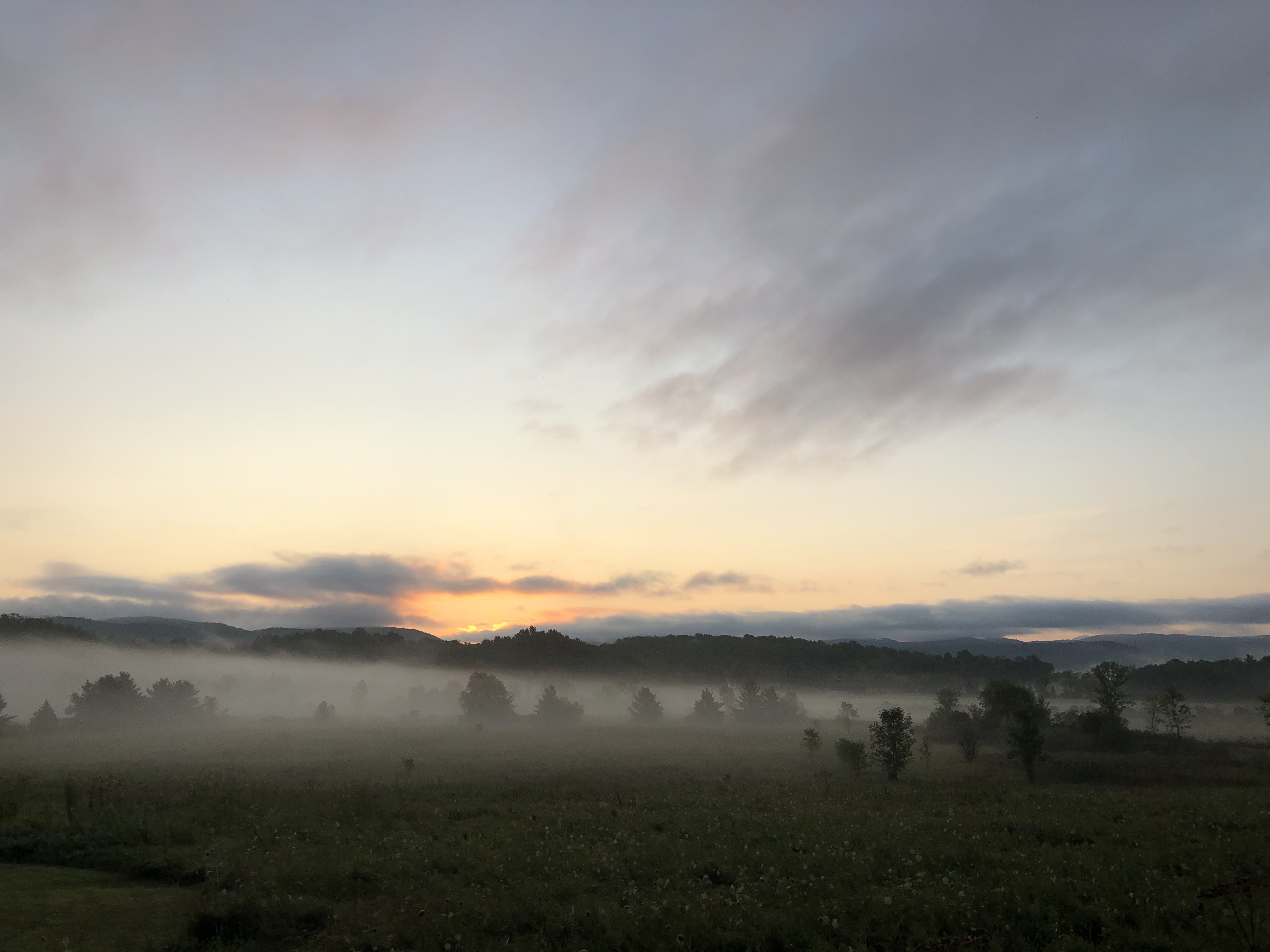
I have been up early these past couple of weeks. The sun rises later than it did at the beginning of the summer. Fog settles over the river most mornings. Sometimes a Great Blue Heron quietly flies past. Or two Great Blue Herons. Here is a sample of what it looked like when I went out.
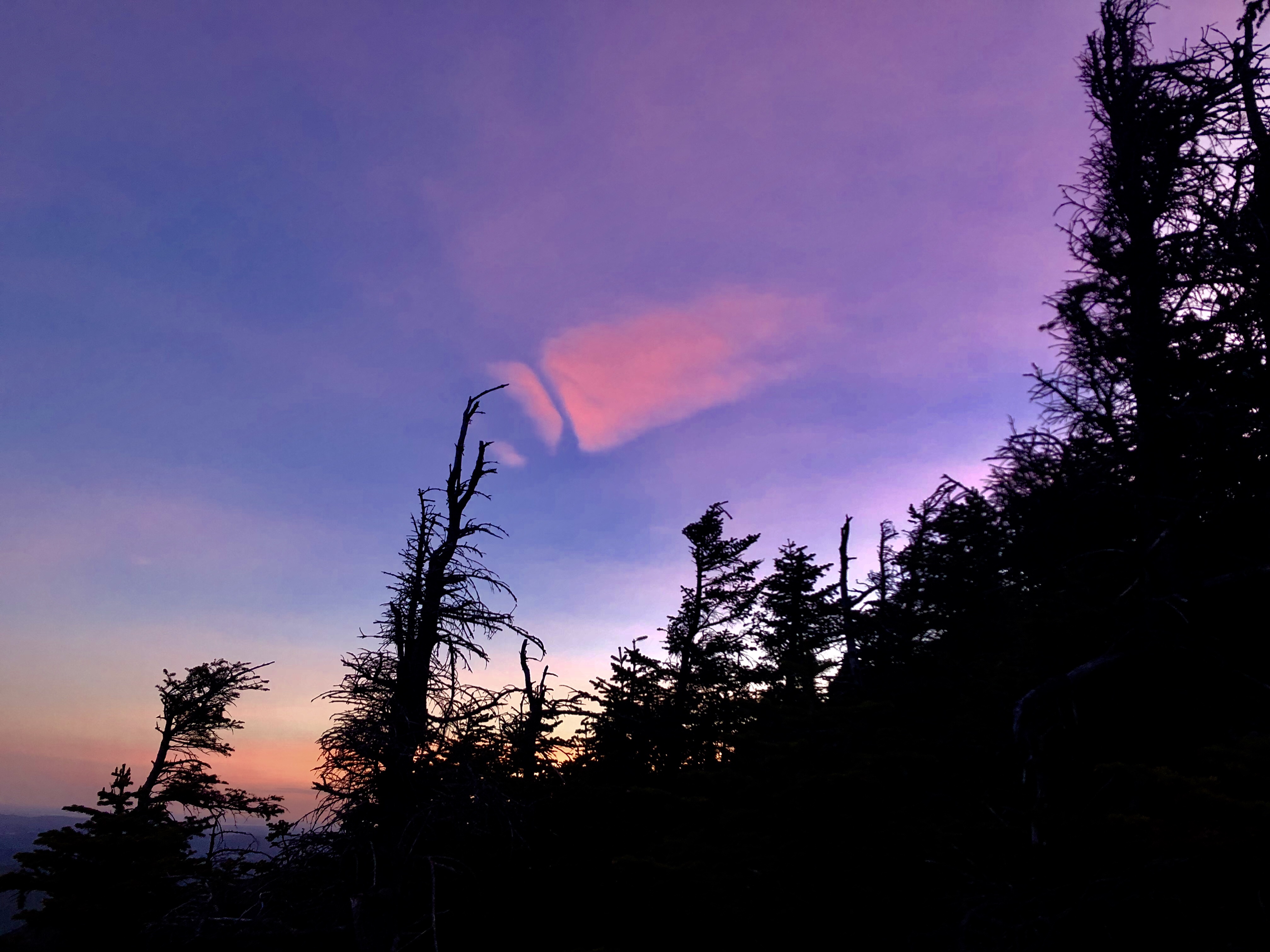
View from the Long Trail north of Bolton Mountain peak
I have been participating in Mountain Birdwatch for a couple decades now. I started with Ricker Peak, which is in Bolton. That worked out great, since we lived in Bolton and I could walk out the door and hike to the survey route. But the survey got a makeover about ten years ago and that route was eliminated. I took on a route on the Worcester Range after that, which had its own charms, but I switched it up this year and volunteered to survey Bolton Mountain instead.
This route was right in my old stomping grounds so the hike in was familiar. I hiked in mid-day and scouted the survey points along the route, in reverse order. I hiked up and over the peak, then down to Puffer Shelter on the Long Trail, just beyond the first survey point. There were two other hikers planning to spend the night there, but I sent up a tent nearby. It was pretty much a stellar day for a hike–sunny and warm with good views when I could get them.
Bunch berries were blooming along the trail
I didn’t exactly have a tent. I brought a bug shelter–really light and roomy enough to be comfortable, but not a solid shelter in rain or high winds. The thing was ideal. I had scouted the route and gotten to the shelter way early, so I had a few hours before I had to try to sleep, even though I was planning to hit the hay earlier than I usually do. There were black flies and lots of them, so I snacked and read in my handy shelter. I did hang out in the shelter for a little black-fly-swatting conversation (one guy hiked in just to spend the night there after seeing the shelter for the first time on a Long Trail through-hike last year, and the other had hiked north from West Virginia), but once out of the bugs I easily fell asleep.
I rose at 4:00 and, after packing up, walked with a headlamp to the first survey point. While I know the routine of this project well, I enjoy it every time. I heard Bicknell’s Thrush, which is just always a treat, and my first Yellow-Bellied Flycatcher of the year. Hearing those birds and, sitting in the shadows of spruces, thinking about the long journey they make to get to that spot, I am awed again and again.
I paid careful attention and wrote it all down, and reflected in between survey points, and overall had a pleasant day. I hiked all the way back to the car and was out of there in time for breakfast. Just at the trailhead I ran into a guy from Montreal (it was a national holiday weekend) who had come down with his family and was looking to hike up Bolton Mountain. I told him how to get there and he mentioned he and his wife had a baby in a backpack. While I admired that and remembered carrying our own kids that way, I also couldn’t help thinking of the black flies. They like babies. I tried to warn him but he did not seem to know what they were. I guess they don’t have those in the city. I hoped it worked out.
I stopped for coffee and a muffin at Sweet Simone’s in Richmond and made it home by late morning. It is hard not to be a little tired after rising before dawn, but I felt great. Being in the mountains does that for me. I did not do a whole lot the rest of that Sunday. I dried out the bug shelter and put away my supplies and entered my survey data. Later in the day, we all went out for a creemee. Perfect summer day if you ask me.
I definitely got one of the plum routes. Mount Mansfield is the highest mountain in Vermont and surveying the Mountain Birdwatch route up there means watching the sunrise with no one else around from the highest peak in the state. Pretty sweet. I went up there a few days ago. I had a fine experience.
Mountain Birdwatch is a program to study high elevation songbirds in the northeast with citizen science volunteers. It means hiking a specific route, about a mile long, with five or six specific points. It means stopping at those points and counting ten bird species, plus red squirrels, for 20 minutes. The hardest part is learning the bird songs and calls, since they hardly show themselves in the dense spruce/fir forest. This is my 19th year volunteering, so I’ve got those songs and calls down.
One of the reasons this is a plum route is that I get to drive up the toll road, which is open for paying customers during the day. Stowe Mountain Resort gives permission to Vermont Center for Ecostudies, which manages Mountain Birdwatch, to use the road for research. Scientists from VCE go up there a few times each year to catch and band birds. They were up there a few days before I was. They set up mist nets and check out the avian critters that get snagged. So I get to benefit from the perk of using the road. It makes for a much shorter hike and I can be home in time for a late breakfast.
Stowe even allows VCE staff to stay in the ski patrol hut up there so they can get up early and get to work. I have done that in the past but this year I just rose early (2:00!) and drove over there. After some serious finagling with the lock, which was a bit stuck, I got through the gate and slowly drove up the twisting gravel road. The speed limit is 15 and that is definitely the limit on this road. I parked in the small lot by the visitor center and hopped right onto the Long Trail.
I heard few birds, at least compared to previous years. I did hear Bicknell’s Thrush, which breeds only in that habitat, but no Yellow-Bellied Flycatcher or Swainson’s Thrush, which was just odd. I always hear those birds up there. Until this year. So it was a quiet morning. There was hardly even any wind.
I have found Blackpol Warblers in greater numbers down in the valley this year; I do sometimes hear them in the spring as they pass through on their way toward higher locations, but I have heard a lot of them down low this year. I am guessing that birds are just slow to head up the slopes this year. There was still quite a bit of snow up high, although not on the trails. That’s my theory.
I have another route to survey. I traded my usual route in the Worcester Range for one on Bolton Mountain. I will need to scout that one first so it will definitely take longer. I can’t drive most of the way up the mountain on that route, and I haven’t seen it before, so I will need to find the survey points ahead of time–I don’t want to be trying to find obscure spots along the trail in the dark. It will give me another chance to find the birds I missed on Mansfield. So here’s hoping the weather holds.
I have to go when I can go. So I went up to the town forest a couple mornings ago, when I had some time to do it. If I had total flexibility I might have gone the day before, when the sky was clear. But I have to work, and I have a family and, you know, life stuff. So I went when I had time.
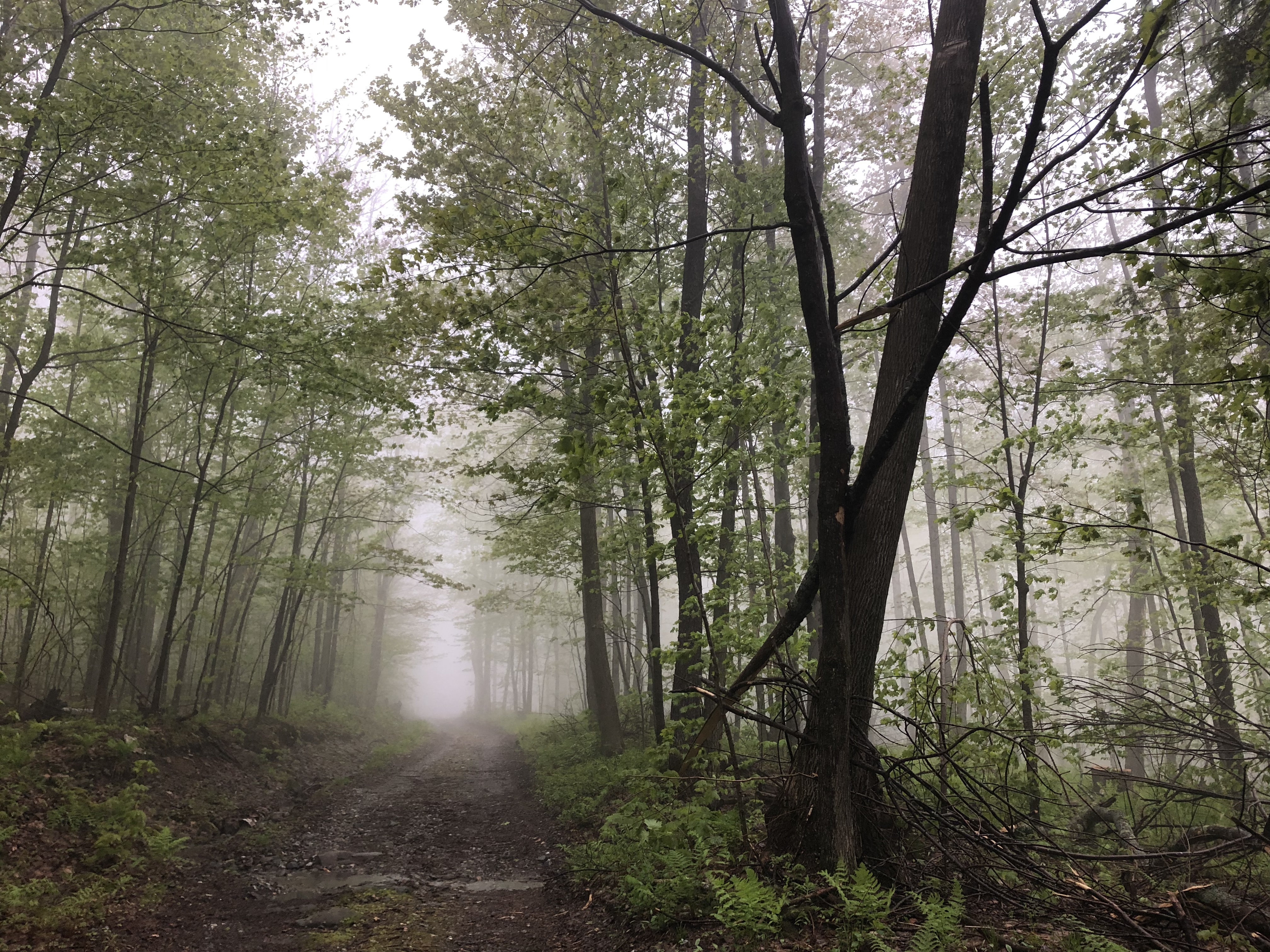
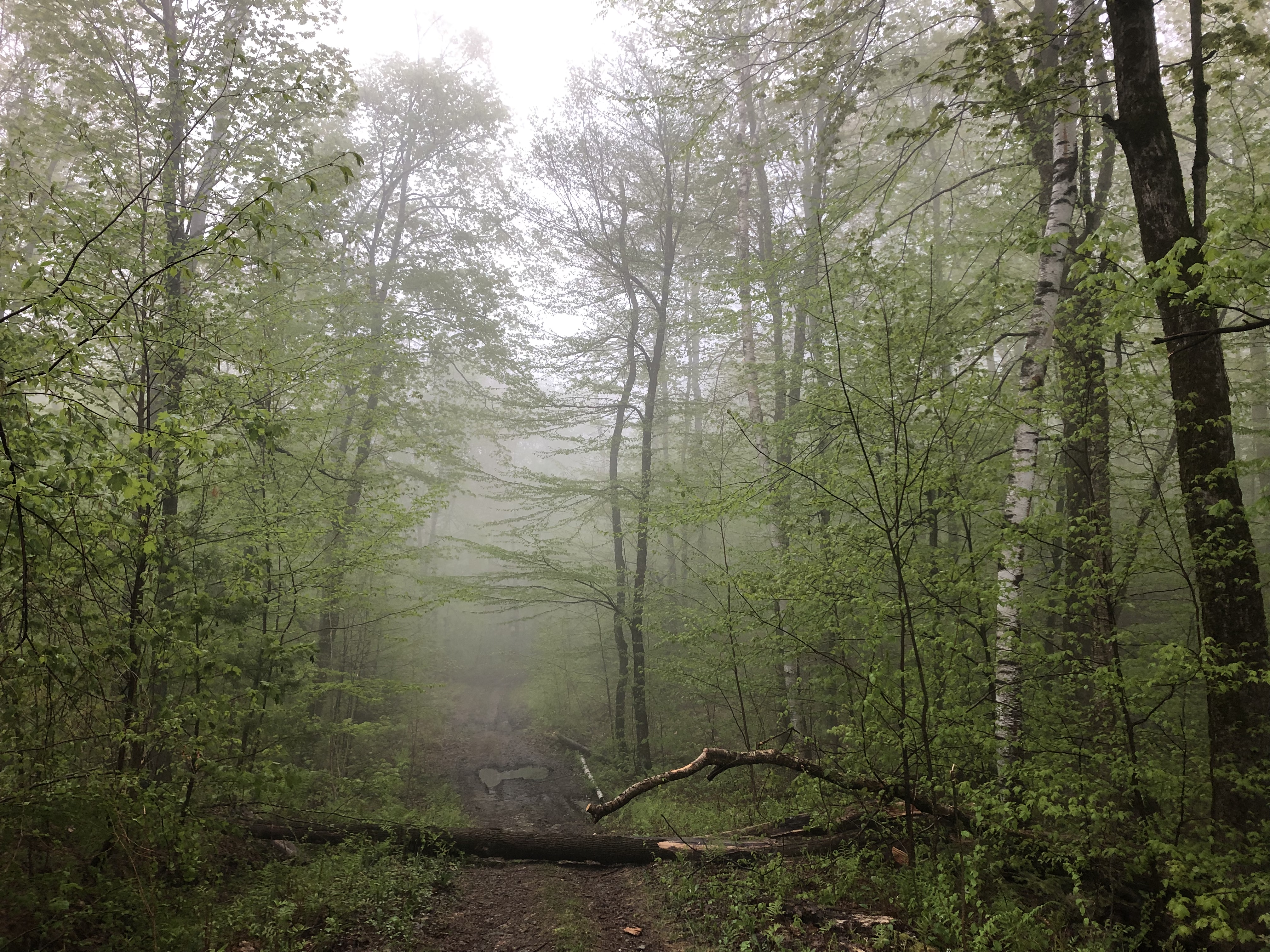
May is the month to find migrating birds. And, currently, it is May. So up I went to see what is passing through, or what has arrived for the summer. There was some fog down low, but as I drove up the hill, the fog got thicker. Up at the small parking area it was a bit socked in. I could see, mind you, just not very far. Tree tops were obscured, so I had to listen more than look.
When I go birding I usually listen more than look anyway, so it was natural. I have to remind myself sometimes to look up, in fact. There is just so much sound that birds make–songs and calls and drumming and chips and peeps. On this day I heard plenty of birds–Winter Wrens and American Redstarts and Veeries and Mourning Warblers. The bird of the day was the Bay Breasted Warbler–one that passes through–peeking out from a spruce tree right next to the trail at head height. Cool looking little dude.
I wandered around in the fog for a while before I had to get off to work. It was a successful and satisfying morning. The fog behind the fresh greenery was a quiet portrait of spring. I was in awe. It was awesome. I sank into the landscape and, by observing closely, discovered some of the landscape’s details. Not a bad way to start the day.
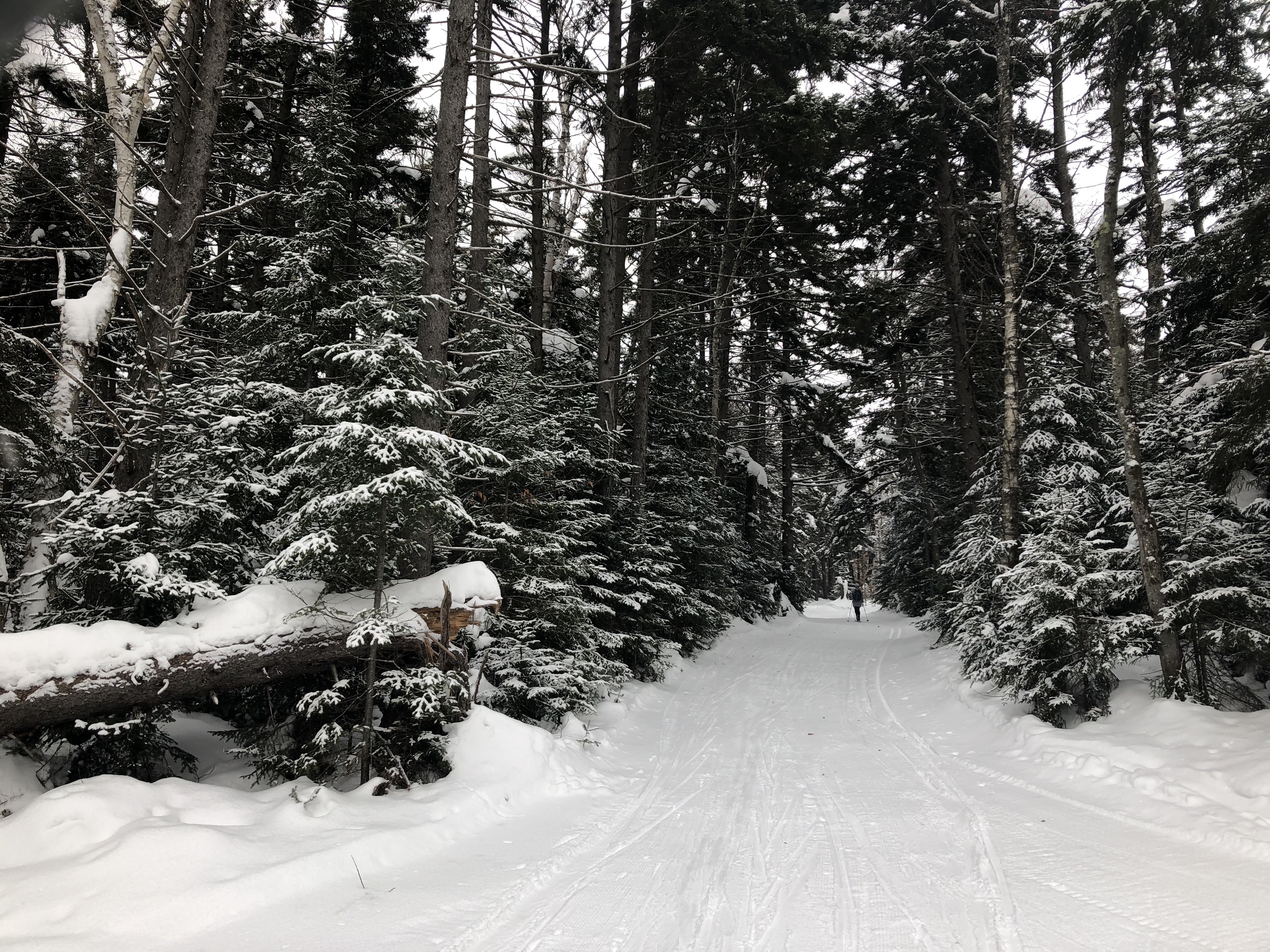
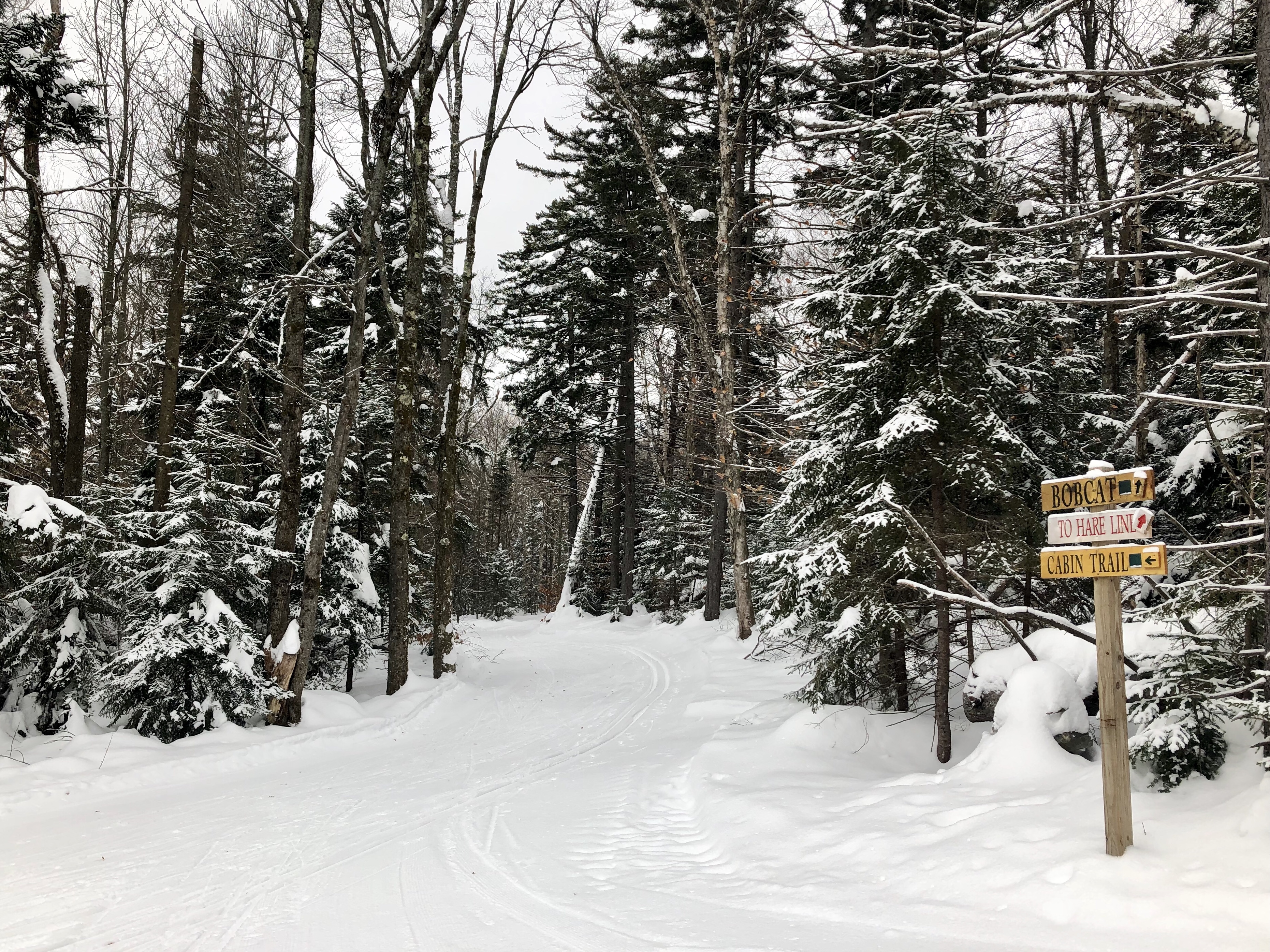
We headed up to Stowe on Friday and it was snowing. It snowed for days. On Saturday, five days before the earliest Thanksgiving possible, we went nordic skiing at Trapp Family Lodge. It was some of the best conditions I have seen there. There were some (sort of) thin spots where water flowed underground, or where the wind blew across a field, but that can happen even mid-winter. It was March skiing in November.
We skied several times last week. The woods were magical. Winter wonderland and whatnot. And we cozied up inside by the fire. Since we were staying up there, we walked down every morning for coffee at the Kaffeehaus. We even walked down Friday morning when it was below zero. We also got pastries there. They know how to do pastries. Couldn’t get enough of those, especially that almond croissant jobber, so it was a good thing it was a solid walk to get there or I might have gone twice each day. Maybe I did go twice one day. None of your business.
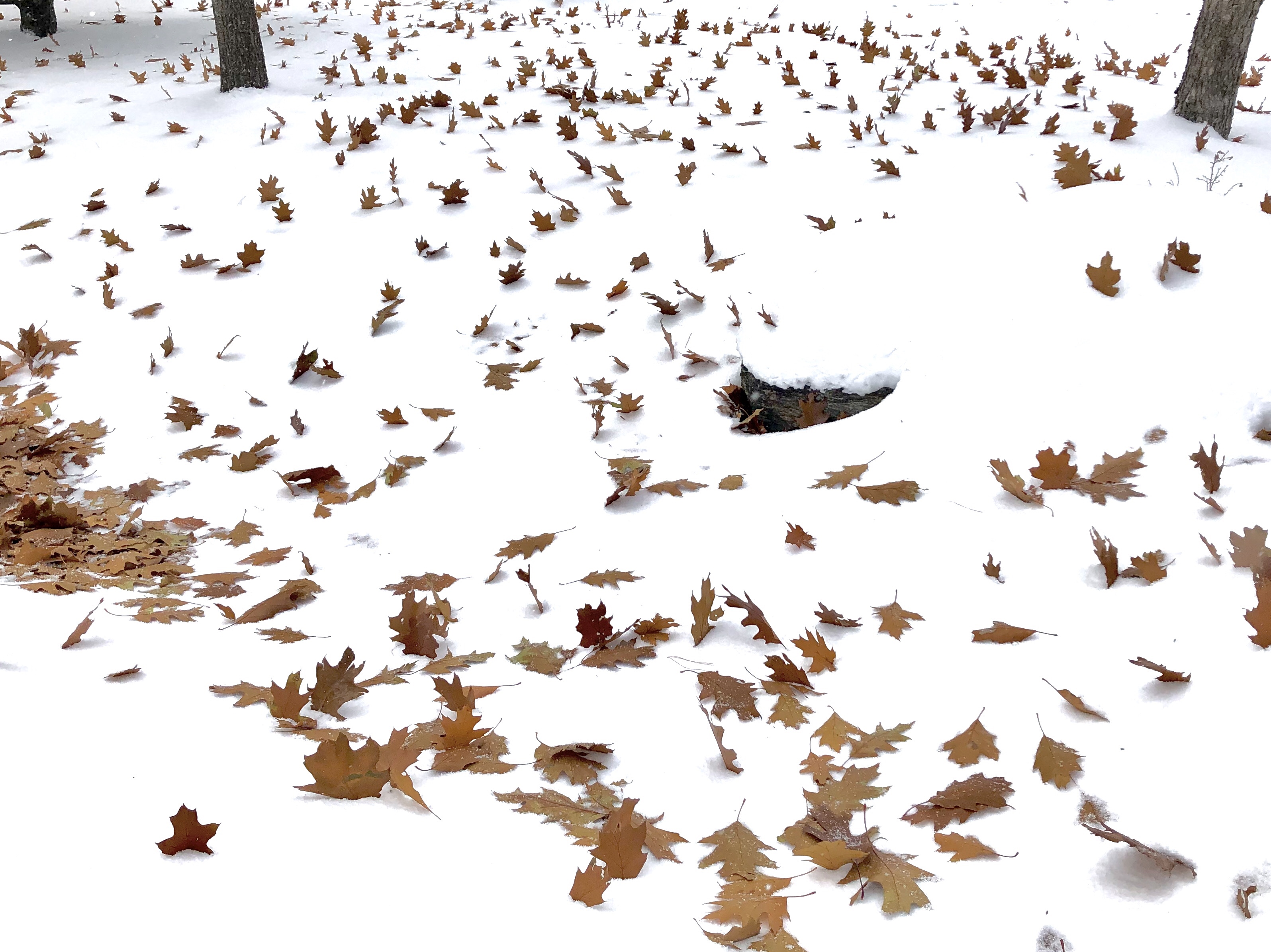
You can’t say snow isn’t beautiful. I mean, you could, if you are a curmudgeon, but seriously? Snow covers up the blemishes of the natural and the human world. It helps us see things in new ways. It makes its own sculptures. It is art. Check out this pic:
The wind had blown oak leaves, which cling longer than most, onto the clean field of snow. Many of them speared the surface and stood there–a crowd of oak leaves, waiting for someone to tell them where to go. They went nowhere. The next day, snow lay a blanket over them–temporary art transformed into a metaphor for slumber.
When we left, the day after Thanksgiving, the sun shone on more fresh snow. It gleamed. It glistened. Ski tracks called but we did not listen. We headed back home, leaving the wonderland behind. We still have snow here, just not as much. Tips of grass stand out in the meadow. Trees have no white. Snow is fickle, so hopefully it at least sticks around up high. If it doesn’t come to us, we will go find it in the mountains. I’ll give thanks for that.
Outside the window, rain pounded the porch roof. It was too dark to see the rain, or the field beyond. But water falling onto standing seam is loud. It was coming down. I woke several times in the night, battling a cold that dragged a cough across my throat. Each time I heard the rain.
But then, as the light overtook the dark, the rain did not pound the porch roof. The rain had stopped. It was still hardly light, and I groggily slogged over to brush my teeth. I shaved. I showered. When I finally left the bathroom I saw the snow. It had not just stopped raining. It had started snowing.
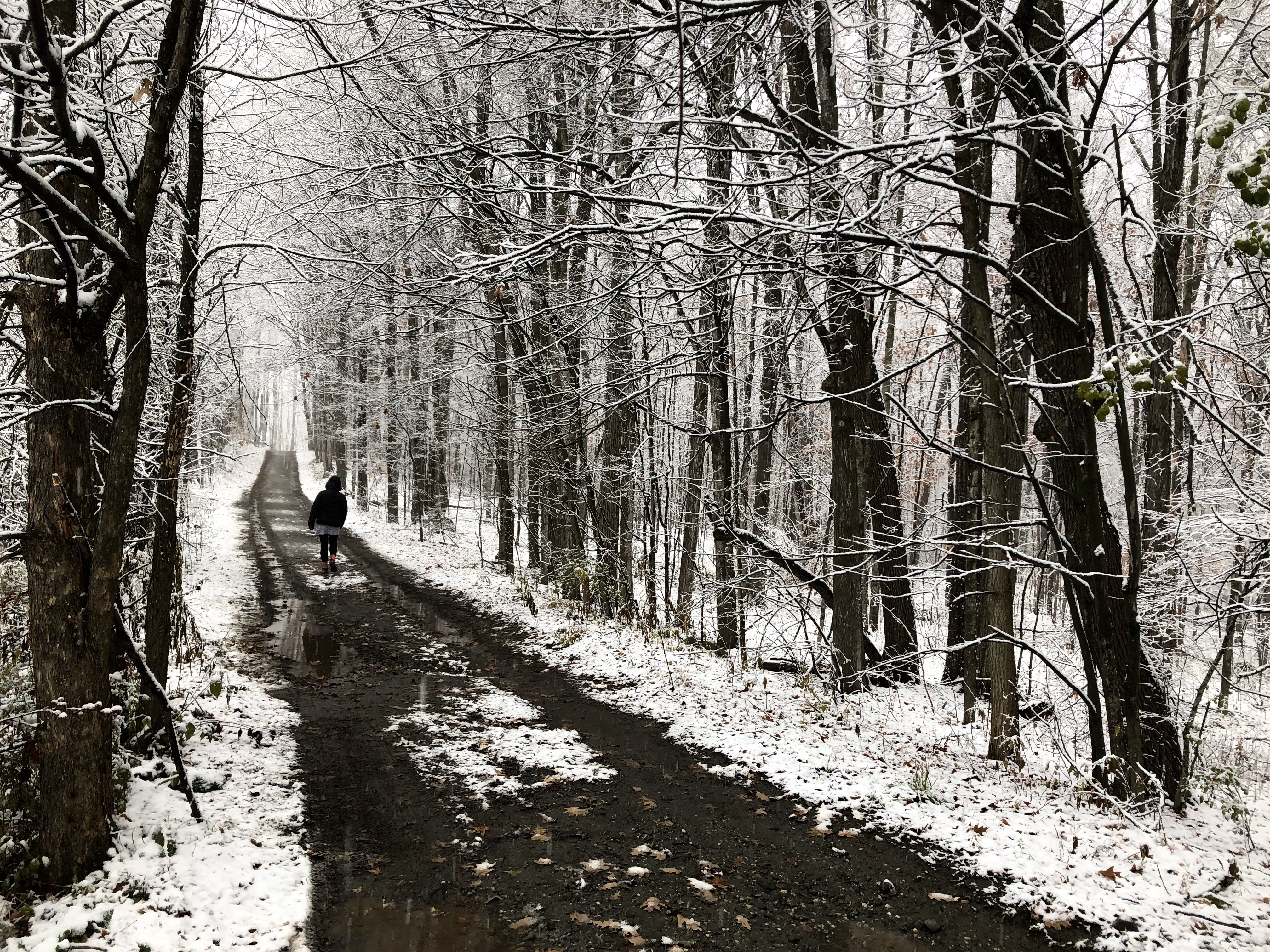
Snow is quiet. It coated the grass and the bare maple branches and the piles of fallen leaves. It coated the porch roof. I watched it fall while I debated whether to subject my work colleagues to my cold. Then I coughed again. I stayed home. I watched the quiet snow fall.
Later, my wife and I walked in the snow. We had a window of time and took advantage of it. I coughed along the way. The snow was wet. The road was muddy. Trees dripped their slush into the river. We wore hoods and watched the horses watch us as we walked past. The wet snow kept falling.
In the afternoon the snow stopped, then slowly started to fall again. Now, in the dark, the clouds are keeping things to themselves. Wind tries to shake the last birch leaves onto the house. Tonight will be cold, and tomorrow. More snow will fall this week. The porch roof will creak with ice before turning white again.
Will I notice the next snow? Or will I wake again in bleary unawareness? I will try to watch for it, even in the dark, even when my dreams can’t seem to stop churning. However long it takes me to see it, I will appreciate it. And it will make me smile. And whether I can or not, I will want, as I did today, to go out walking it that snow with the most beautiful woman in the world. If the timing is right, I will.
It wasn’t winter, but it did feel cold. The sun was low, but still high enough for an afternoon walk. The light was sharp and the shadows were deep. The woods had the feel of calm, ready for winter to hang out for a while. Leaves rustled under my feet. Wind blew in bare ash branches. Tall grasses shone golden.
I was looking for Rusty Blackbirds. Maybe some would be around, picking through leaves in the wet understory. None were around. I did find quite a few Chickadees. Some crows flew overhead. The bird of the afternoon was the Brown Creeper I finally spotted, creeping, of course, up a maple trunk.
Around the back side of the loop I heard Golden Crowned Kinglets. They trilled their soft calls all around me, hidden. I waited. I watched. I looked for movement. I didn’t see any. And then I did. I got just a quick glimpse of one, its black mask metaphoric of its stealthiness. Not far from there, White Throated Sparrows, or so I thought, called. They stayed hidden in the brown shrubs.
I warmed up after a while, comfortable by the end of my slow couple of miles. I saw few birds, but a chipmunk squeaking away from me, and a red squirrel carrying a beech nut into a hole hollowed out by a Pileated Woodpecker. Looking for birds means paying attention. The river slid by, cold and powerful. The pond tried to thaw out, its morning skim of ice almost gone, but likely to come back tonight. The trail, closed in like a tunnel in summer, was open and new.
I looped around to the car, watching for those sparrows, but they stayed hidden. I headed into town to pick up my daughter and her friends, the heat a little higher than when I started, my mind a little clearer. Fall, that is what I found. I will find my Rusty Blackbirds another day.
Peak foliage has passed. Around here it was about three weeks ago. Earlier farther north. We have had some wind, plenty of it in fact. And lately it has been raining. A lot. Wind and rain tear down the leaves, especially after they have reached their peak color. And so it has been. But there is still plenty of color to be had in the trees.
This morning I went down to the lake. I was hoping to find ducks. And maybe a late shorebird. Shorebirds have mostly migrated through, but there are always a few stragglers. But I didn’t see any today. I did see ducks from up north, however. Some of them will stick around for a while, as long as the ice stays away. I saw Buffleheads and Goldeneye and even a Black Scoter. Even if I hadn’t seen any, however, it would have been worth it.
The Adirondacks across the water were lit up with scattered sun. Clouds skittered across the firmament, but broken. So the sun popped though onto the mountains. The brilliant leaves remaining, and the fresh snow up high, were glowing. I started in Shelburne, with some birding success (Black Scoter!). I kept going south after that to the Charlotte town beach. I struck out there–the wind was fierce. There were a few Mallards in the cove and some gulls circling in the air currents, but otherwise it was a dud. But those mountains…
Even on the Vermont side there were a few gems. One oak was ka-powing right next to my car. And there were maples lining the road in a couple of spots–yellow and red and orange. I mean, it isn’t what busloads of visitors come to see. It wasn’t whole hillsides of brilliance. But still, there is some color sticking around. By Thanskgiving it will all be gone, but I’ll take it for now.












 Mercury on the Move