Rainy June Days

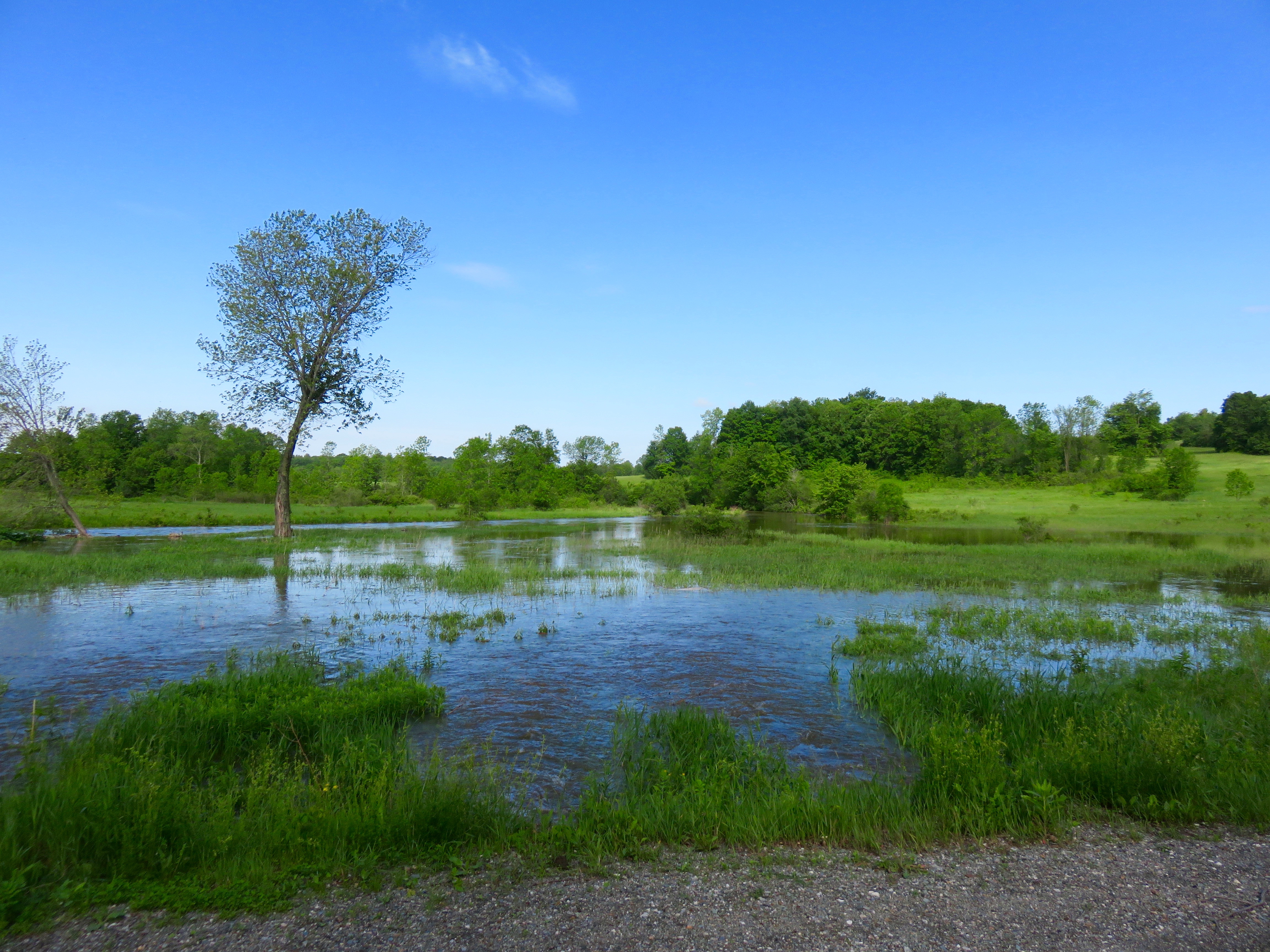
IMG_0481It is sunny and warm this morning. It feels like summer. The sun is up, the air is humid. A Cardinal belts out his whistled song. The meadow grass bows. Across the road, the flood waters recede. It has rained for several days now, sometimes coming down hard. The river rose, then rose higher, then spilled into the fields.

My son and I wandered out into it a couple days ago. We chased frogs. They sang loudly enough to hear them across the field, but when we approached closely they clammed up and stayed hidden. Too shy for mammals I guess. We tromped through the new swamp, my cracked mud boots filling with water. We bushwhacked through the stand of willows, getting scratched and soaked. It was a blast.

Yesterday morning I wandered out to see how much flooding occurred. The field around the river with filled, although I have seen it higher. Water did not cover the road. Mallards swam far out, dabbling in the grasses for slugs. A Great Egret flew in later, wading through the pond, seeking out those frogs we heard. Maybe it would have better luck. A Great Blue Heron arrived while we ate dinner on the porch.

Already the water has dropped. The river will be within its banks today. Rain will likely fall again tomorrow. Thunderstorms will pop up more than once this month. June is here, and she is wearing summer. She looks lovely.

Mountain Birdwatch Survey on the Skyline Trail 2015

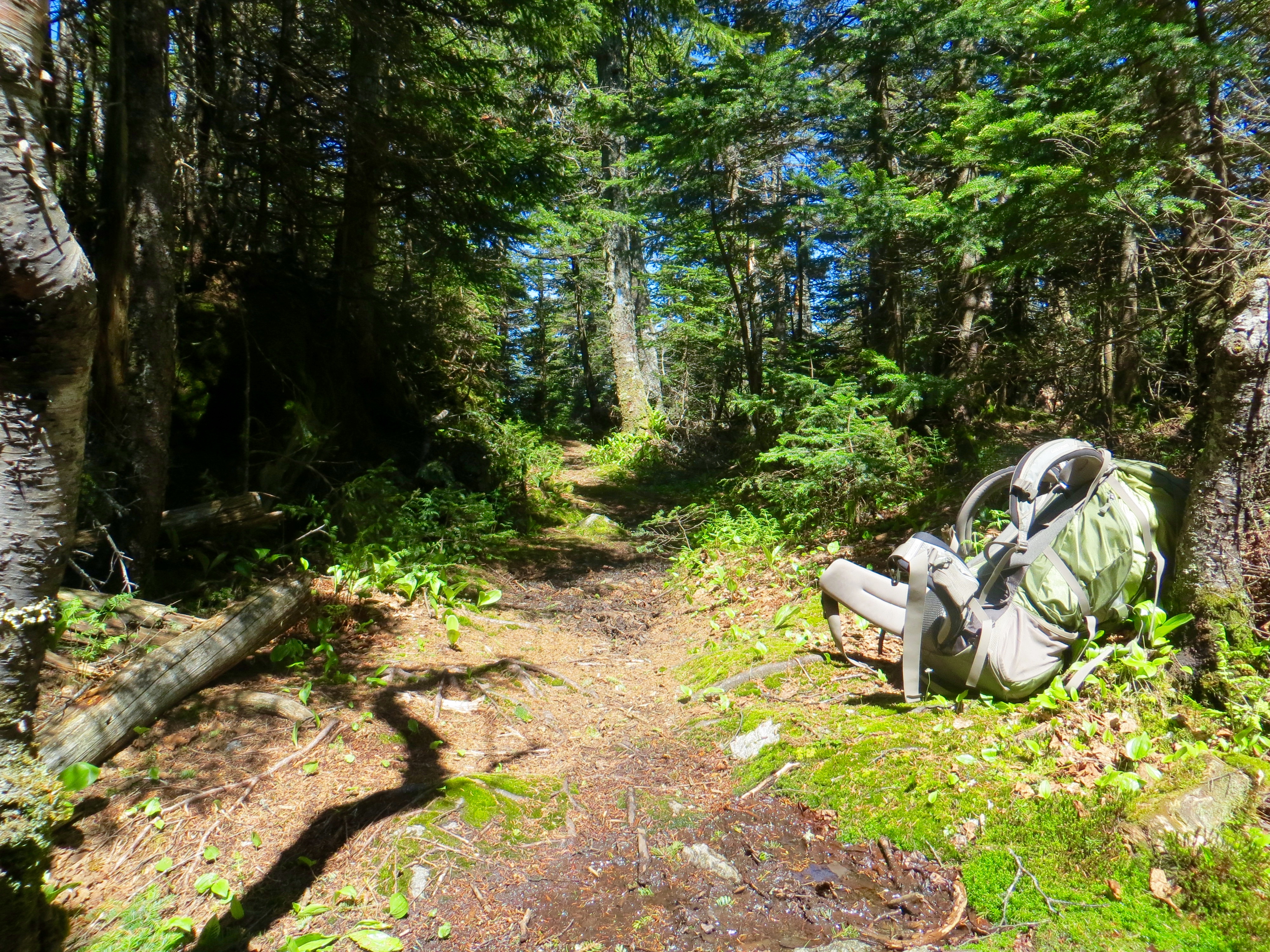
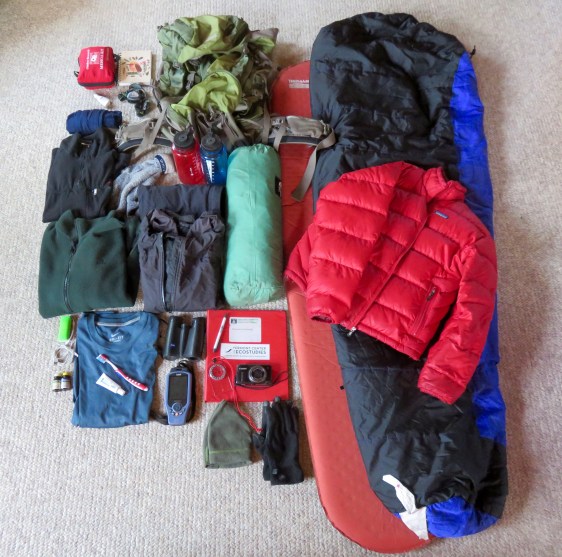
IMG_0466Pictured here is most of the stuff I carried up to the Skyline Trail for my Mountain Birdwatch survey up there this year. I have participated in this citizen science initiative to monitor high elevation songbirds for 16 years now. This was my fourth year on this route, which requires a solid hike in. Not pictured above are the clothes I wore (including hiking boots), a small bag of food (I pretty much snacked the whole time as cooking requires a stove I did not want to carry) and an iPhone (for emergencies and to use as a stopwatch for the survey).

Back in 2000, the first year of the survey, I rose early and walked about my door to hike up to my survey route. I lived in Bolton, at over 2,000 feet elevation, and the route was only a short hike away. The survey’s methods were also different then, with fewer birds to monitor and less time required. I could rise at 5:00 to start by 6:00. This route is different as is the survey. Now I drive an hour, hike three hours, and I need to start about 4:00. When I first adopted this new route, I did the math to figure out what time I would need to get started if I did not spend the night up there. Including prep time and longer hiking time in the dark, I figured starting at 10:00 pm would do the trick. So spending the night just made sense.

Let me tell you, that hike is a beast. It seems like it shouldn’t be that hard. It is only about three miles. A 5K is about three miles, and my 10-year old kid can do that in 45 minutes or less. This, however, is no 5K. The route starts off easy enough, on a well-traveled trail up to the Stowe Pinnacle. Yesterday, as usual on a sunny June day, there were scores of people hiking up and down. I always feel a little odd hiking past people who are wearing running shoes and white T-shirts with my full pack (especially on the way back down when I am covered in mud and sweat and smashed black flies).

The beginning of my hike--easy going on a blue bird day.

The beginning of my hike–easy going on a blue bird day.

After a mile I peel off onto a trail leading up to the ridge. That trail is steep and rocky and covered in roots and slippery and downright tough. Few people go up there but I always seem to see those few, usually when I am talking aloud to myself and they are suddenly upon me. Despite my embarrassment I keep plodding and make it to the ridge. This time I did not take a break until I hit the Skyline Trail. I needed a break at that point.

Pack off at the Skyline Trail junction.

Pack off at the Skyline Trail junction.

At this point I only have to hike along the ridge to Point One, near where I will camp for the night. This is a mere mile, so no problem. At least I think that every time. But that mile takes another hour, with steep up and down (there is a ladder at one point) on a slippery narrow trail. I need to stop to fill water bottles along this stretch, as there is only one water source up there. Eventually I get to my spot and set up camp. Then I take a longer break.

But I’m not done yet. Part of the survey is counting cones. When there is a mast year (a year where there is an abundance of cones) the squirrel population booms. Lots of cones means lots of seeds inside for squirrels to snack upon so lots of them survive that year. But then all those cones are not there the next year and the squirrels are. One substitute food source for them is bird eggs. So there is a connection between cones and nesting birds. Once I set up my tent, I traveled the survey route and followed the protocols to count the cones. And let me tell you there are lots of cones this year. This counting took quite a while so by the time I got back to my tent I was ready to rest.

Compounding the usual challenge of this route were all the fir tops. An ice storm this winter did lots of damage on I wondered as I hiked up (among many many things) if there would be any damage up high. There was. The top sections of fir trees were snapped off and lying all over the place. Many of these, of course, were lying across the trail. Some were small (think mini Christmas trees) and some were like full trees themselves. That slowed me down a bit (plus needles stuck inside my boots and down my shirt as I climbed over or around or through). I stopped at one point and counted them–I could see 18 from that spot.

Tree tops everywhere!

Tree tops everywhere!

In the end, the survey was successful. I heard Bicknell’s Thrush, the main target species, several times. Plus I heard Blackpol Warblers, Swainson’s Thrushes and Yellow-Bellied Flycatchers all for the first time this year. It was a beautiful day in a beautiful place. I was tuckered when I got back to the car. I stopped for a couple pizza slices on the drive home and called it good work.

I took on a second route this year as well but that one does not require such a tough hike. It will feel like a cake walk. This route, however, has pretty high rewards. Lots of people can run a 5K but most wouldn’t do this hike to get up at 4:00 am and not have a view. Apparently, I would.

Diverse Neighborhood

IMG_0436

House Wren

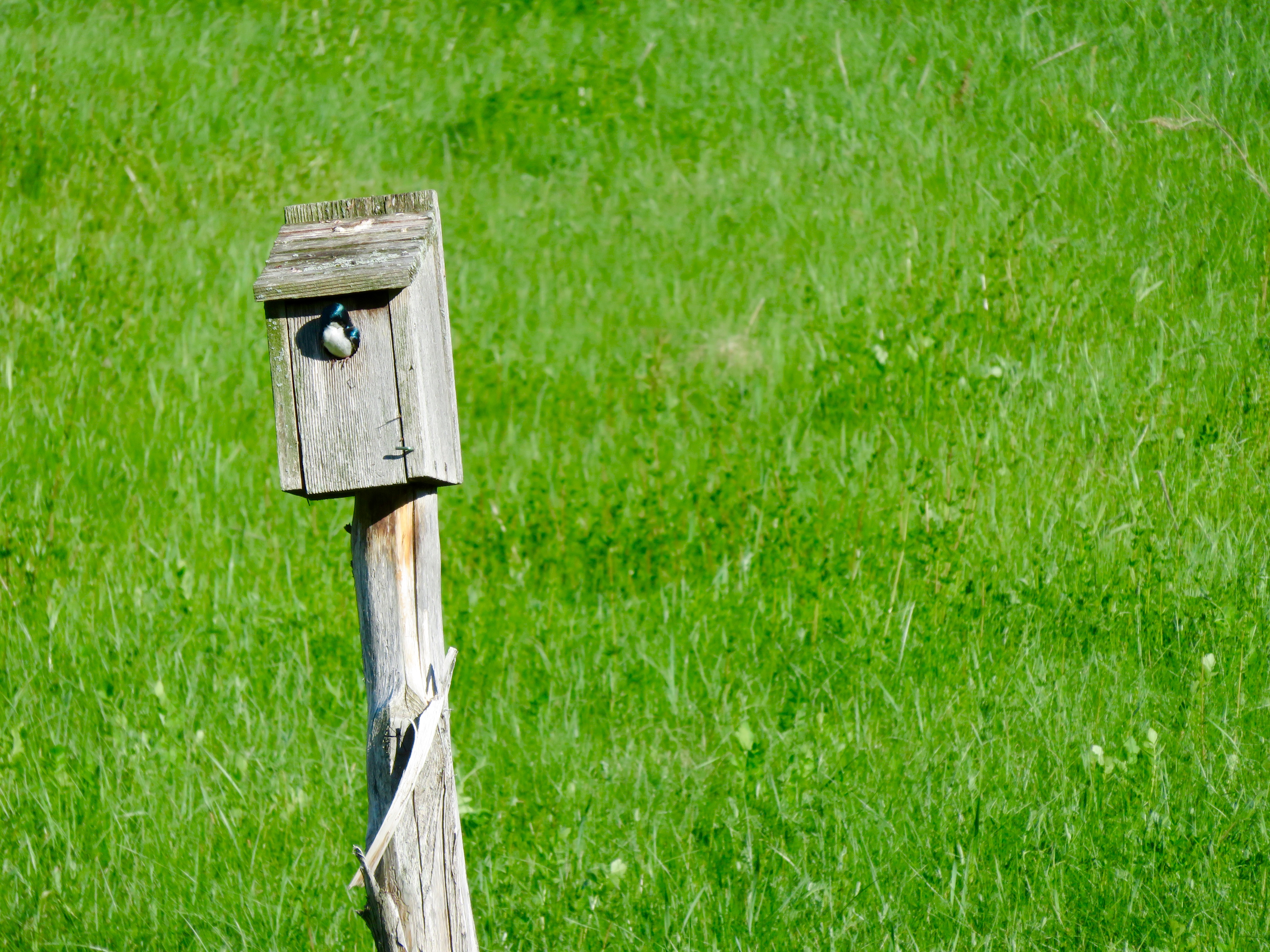
In front of our house we have four birdhouses on posts. There were a few of them on a fence when we moved in. We took out the fence. I hammered in a few cedar posts. I replaced the birdhouses. In past years we have had bluebirds nesting in one of them. Swallows have nested as well, sometimes in two boxes at once. The bluebirds seem to favor the one closest to the sugar maple. The swallows like the one that is the most in the open. One of them gets used by the bluebirds when the swallows take over their favorite. The one on the end, however, next to the tall spruce, has never had residents. This year, however, the wrens moved in.

House Wrens have nested in the old Christmas tree stand next door for several years. They have been pretty reliable. If I walked past in the morning, I could count on them singing their bubbly, and loud, song from the dense needles of the firs. This year they have decided to nest in that long-empty box near our house. Every morning now, and much of the rest of the day, I hear the male singing. He is loud. Every day I am amazed that such a small creature can create such a complex song and belt it out with such volume. That little dude has heart.

So this year we have three birdhouses in a row with different birds nesting in them. The Eastern Bluebirds pop in and out of the maple tree to their abode. The Tree Swallows zoom in fast to theirs after grabbing insects in the air over the field. The House Wrens hide in the spruce or the forsythia as they zip back and forth to theirs. It is quite the family neighborhood.

Eastern Bluebird

Eastern Bluebird

Tree Swallow

Tree Swallow

Looking for Bobolinks

IMG_0410

Can you see that Savannah Sparrow that landed in that tree?

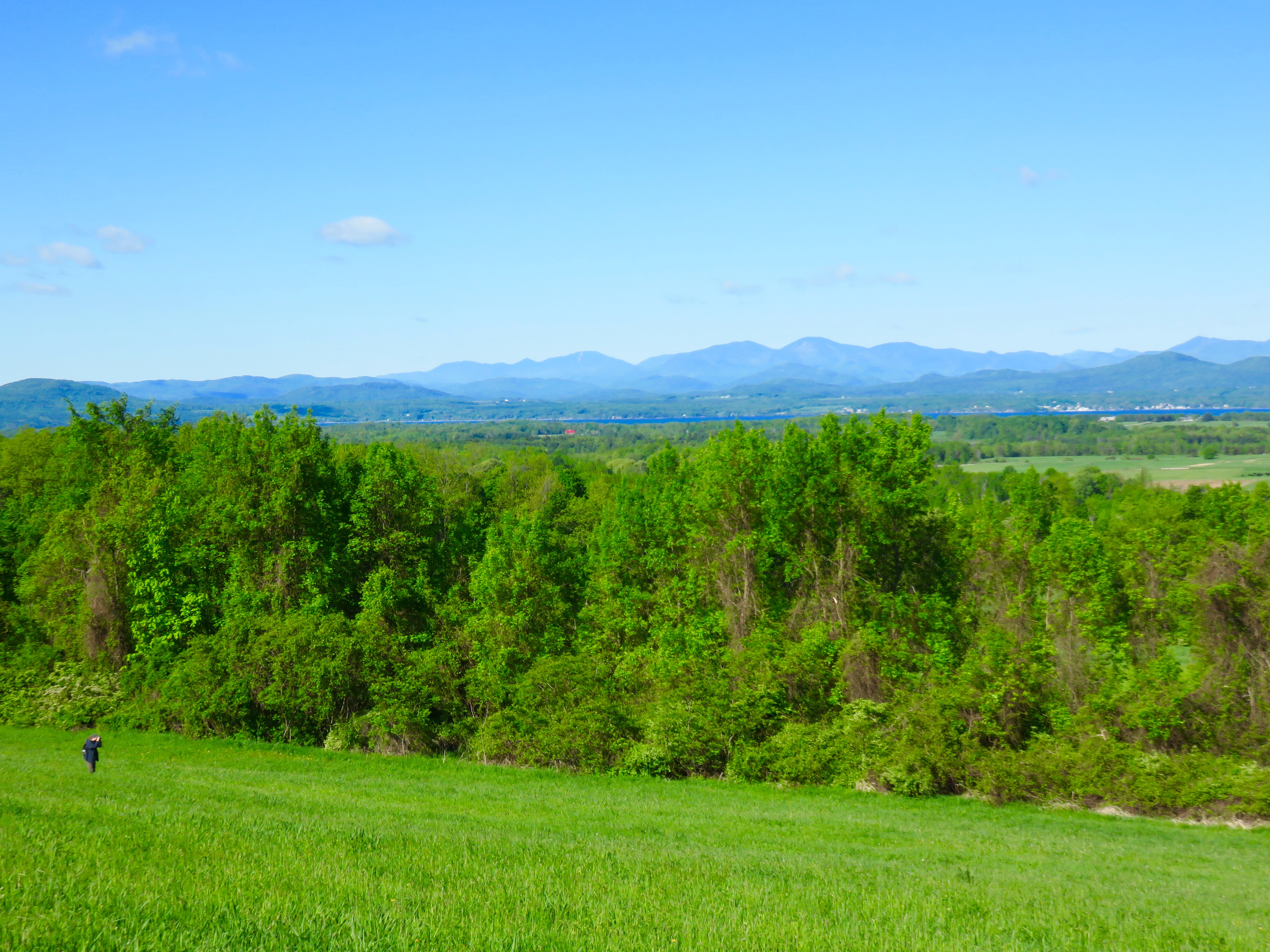
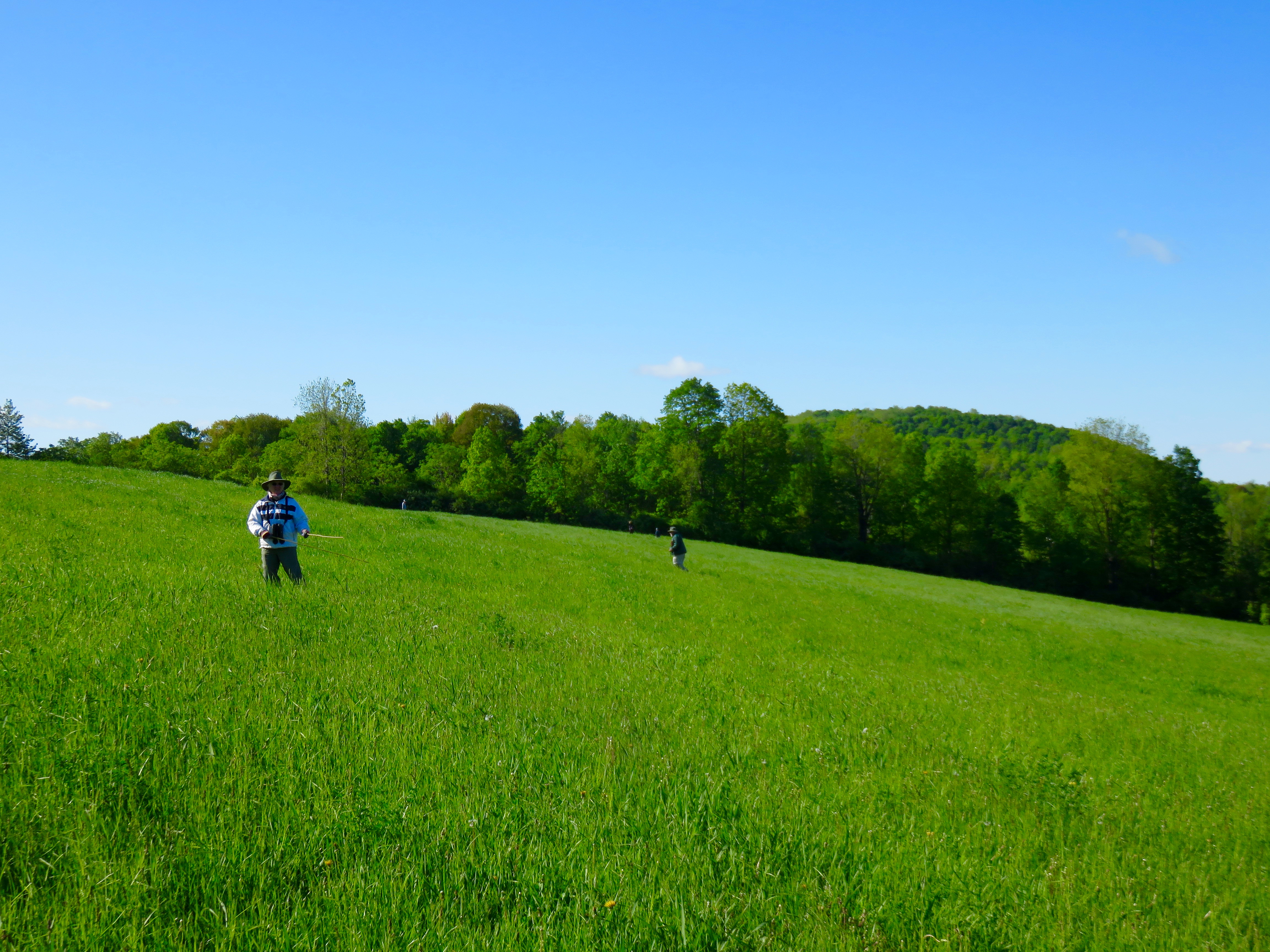
This morning I volunteered to help look for Bobolinks and Savannah Sparrows. As part of a long-term study to learn about the health of ground-nesting bird populations, the idea today was to look for birds that had been banded in the past. A group of us met at Shelburne Farms, whose fields are a large part of the study, split into two groups, and headed out to beat the bushes grass.

The idea was to flush birds from the ground and to try to see if they had bands on their legs. There are a few types of bands so we got a quick tutorial before we started stomping across the meadows. To help flush birds before we were right on top of them we swished the grass with thin bamboo poles. Once the birds were airborne we could watch them through binoculars to see if anything bright stuck to their legs. Our group headed to Charlotte, to fields adjacent to Shelburne Farms, and right away we encountered Bobolinks. We saw half a dozen, plus a few Savannah Sparrows, but none of them had bands. We tried a few meadows divided by rows of trees and shrubs. Lots of birds but no bands. IMG_0409We then drove to another, nearby, field. Their were lots of Bobolinks here, maybe 15-20 of them. There were males and females, flying all over, the males singing like mad. The females have started laying eggs (they lay one a day for about four to six days) and apparently this drives the males a little loony. They burbled and gurgled and chirped away. We all had some great looks at these beautiful birds but again, saw no bands.

So we learned that there are some Bobolinks and Savannah Sparrows in all these fields (the other group managed to find one bird with a band) but it didn’t add much to the data. We did find one Bobolink nest. That was pretty cool. The eggs in it are not being incubated yet, as there were only two of them (they lay one egg per day for four to six days before settling in to get them to hatch); seeing that made the morning worth it. Plus, on the way to one field we all saw a Blue-Winged Warbler, an uncommon bird and one that I had never seen until last week. I even got a photo of that one. No Bobolink photos–I was too preoccupied with my binoculars–but I may get a chance to volunteer again when these folks come back to survey in June. I will try to remember to get photos of the actual birds then.

IMG_0418

Bobolink nest

Blue-Winged Warbler

Blue-Winged Warbler


I Like May

IMG_0331I have spent a lot of time getting outside this month. Green has taken over from white and gray. Birds are singing. The sun shines or the rain falls. Winter is done. I have been loving May. It may, and this is a maybe mind you, be taking over as my favorite month. There is a pun in there, but let’s just let that go. Here is some of what I have been up to this month.

I visited Missisquoi National Wildlife Refuge for the first time. The place was beautiful. I only explored some of it and will have to go back to see more at some point. I saw lots of birds, getting there first thing in the morning, including my first Black Tern and, right in the parking lot of my first stop, a Yellow-Throated Warbler.

I visited a few other spots as well. I just passed the 200 mark for birds species I have found this year, over 150 of them in Vermont. Like I said, I like May.


Leaves just emerging at MIssisquoi National Wildlife Refuge

Leaves just emerging at Missisquoi National Wildlife Refuge

I saw more than birds at Missisquoi National Wildlife Refuge

I saw more than birds at Missisquoi National Wildlife Refuge

Northern Waterthrush at Missisquoi National Wildlife Refuge

Northern Waterthrush at Missisquoi National Wildlife Refuge

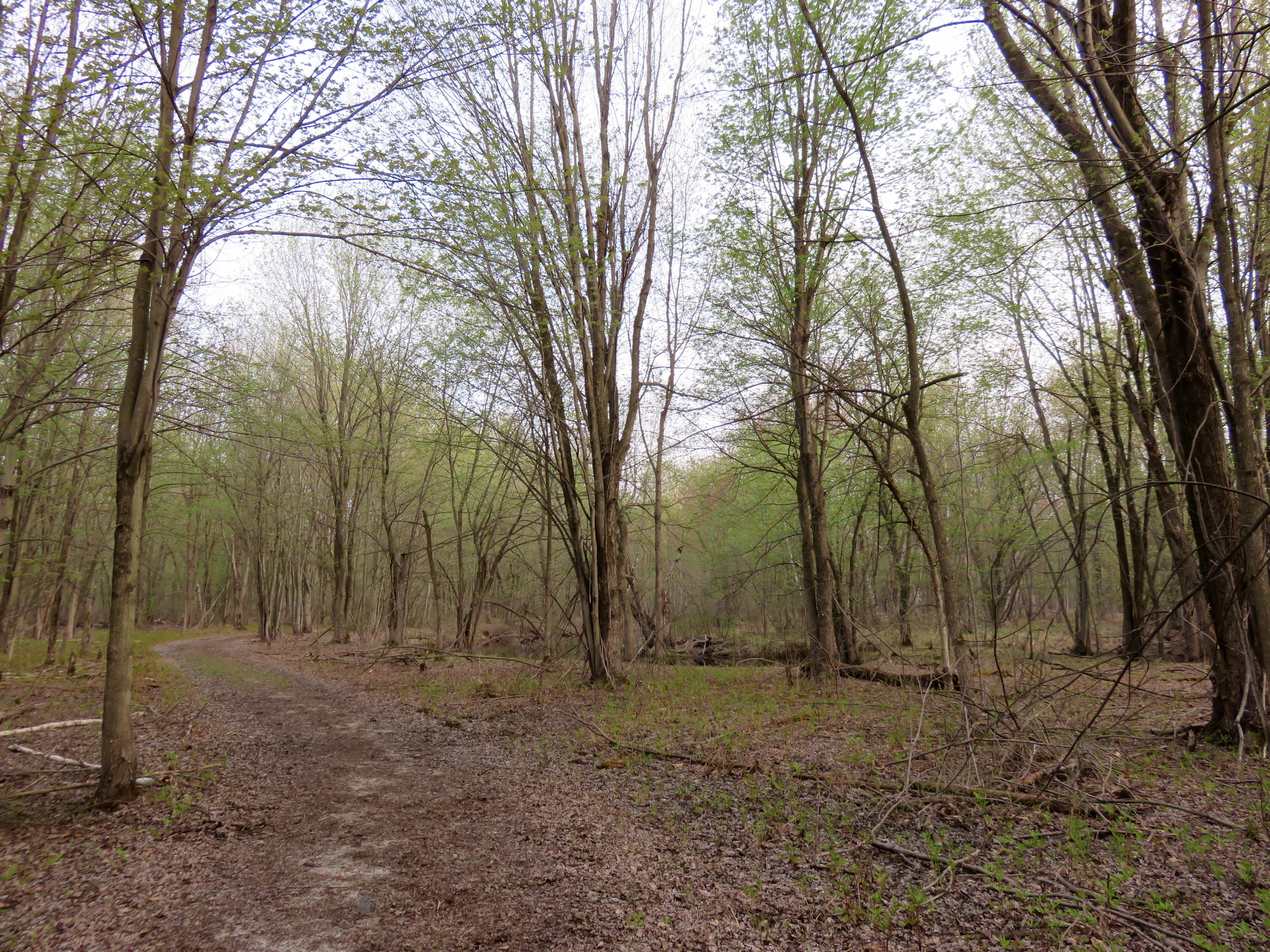
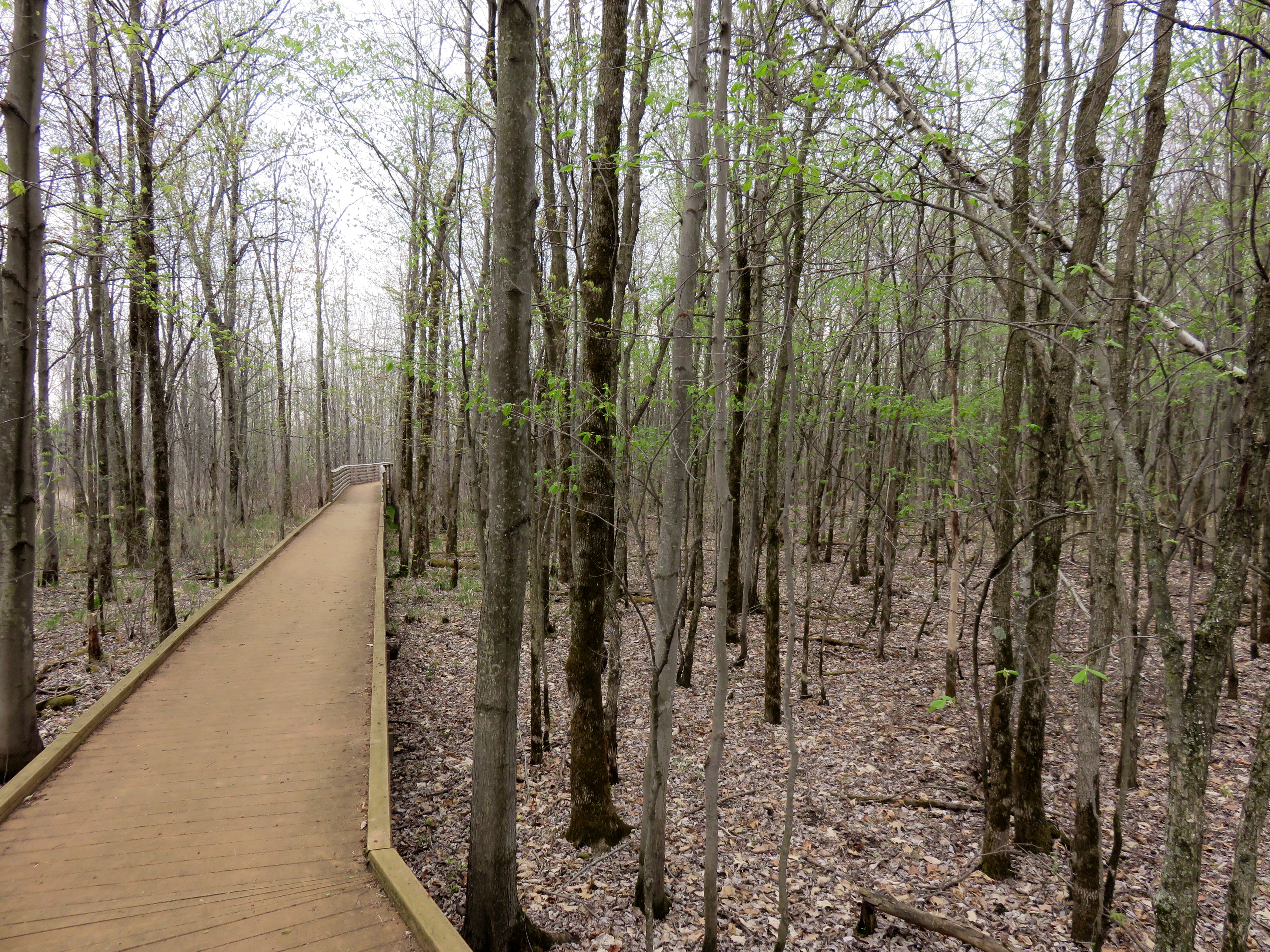
Boardwalk at Missisquoi National Wildlife Refuge

Boardwalk at Missisquoi National Wildlife Refuge

Dutchman's Breeches at Geprag's Community Park, Hinesburg

Dutchman’s Breeches at Geprag’s Community Park, Hinesburg

Trillium, Woodside Park, Colchester

Trillium, Woodside Park, Colchester

Woodside Park, Colchester

Woodside Park, Colchester

Bike Path, Burlington

Bike Path, Burlington

Shelburne Pond

Shelburne Pond

Clay-Colord Sparrow, a lifer for me, right in Hinesburg

Clay-Colord Sparrow, a lifer for me, right in Hinesburg

Yesterday morning, out early

Yesterday morning, out early

Golden-Winged Warbler welcoming the day with its buzzy song

Golden-Winged Warbler welcoming the day with its buzzy song

A Little Birding on the Gulf Coast

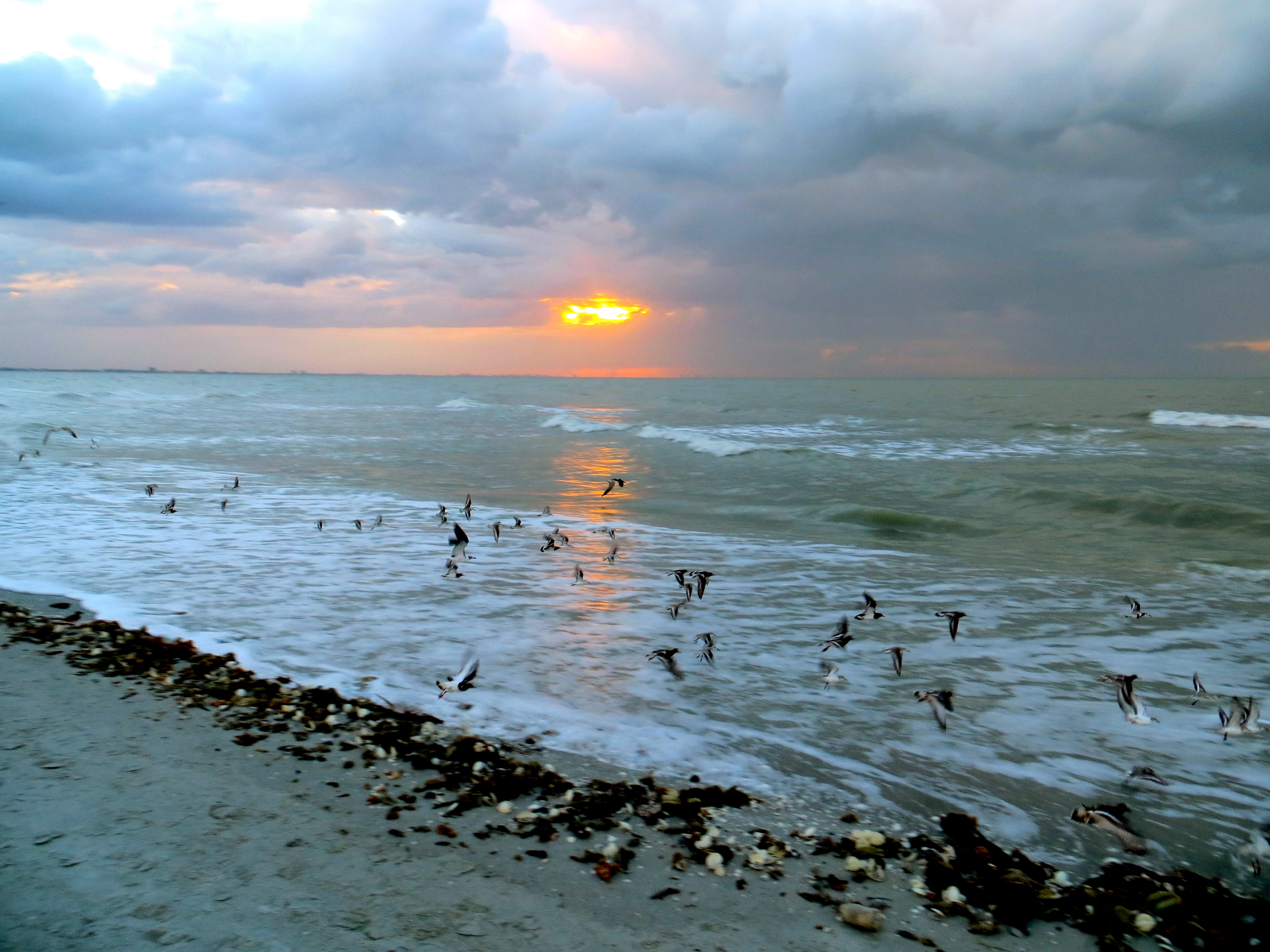
IMG_5778

Ruddy Turnstones flying as the sun rises

I just got back from Florida. I went with my family on a trip to visit my spouse’s grandfather and to get some warmth during these cold Vermont days. We stayed on Sanibel Island, which is home to the J.N. Ding Darling National Wildlife Refuge. The island is a spectacular place to be, in part because of the refuge, and it is a spectacular place to go birding. We were planning to return to Vermont in Tuesday, but because of the blizzard of 2015, our flight was canceled and we got an extra two days there. That made things quite a hassle for my job, but plenty enjoyable over those two days.

We visited the same place a year ago and I saw 62 different species of birds. I was hoping to see that many this year. I missed some from last year but got a few new ones and saw 72 this year. I went out every morning and snuck in some extra birding on the beach and elsewhere. I didn’t see a Wood Stork (can’t believe I missed that one) or a Yellow Throated Warbler I was hoping to see (I saw a few last year) but had some great sightings nonetheless.

Highlights included three lifers for me: Prairie Warbler, Snowy Plover and Common Gallinule. The Prairie Warbler was flitting about in a tree with a Blue-Gray Gnatcatcher and a couple of Cardinals. The Snowy Plover I got to see with my wife on the beach. It is always good to see a lifer with someone you love. The Gallinule I saw tucked into some shrubs at water’s edge on the Bailey Tract of the refuge. All were memorable.

I missed seeing a White Crowned Pigeon, an uncommon bird that was hanging around the refuge. It turns out that Lillian and Don Stokes, writers of bird guides and part-time Florida residents, were at the refuge the same day as me and saw that threatened species. It would have been great to see that bird, or to meet them, but timing was not in my favor that day. Below are some other great sightings I managed to photograph.

Willets were plentiful--I saw hundreds of them

Willets were plentiful–I saw hundreds of them

White Pelicans at the refuge

White Pelicans at the refuge, along with Willets, Dunlin and Laughing Gull

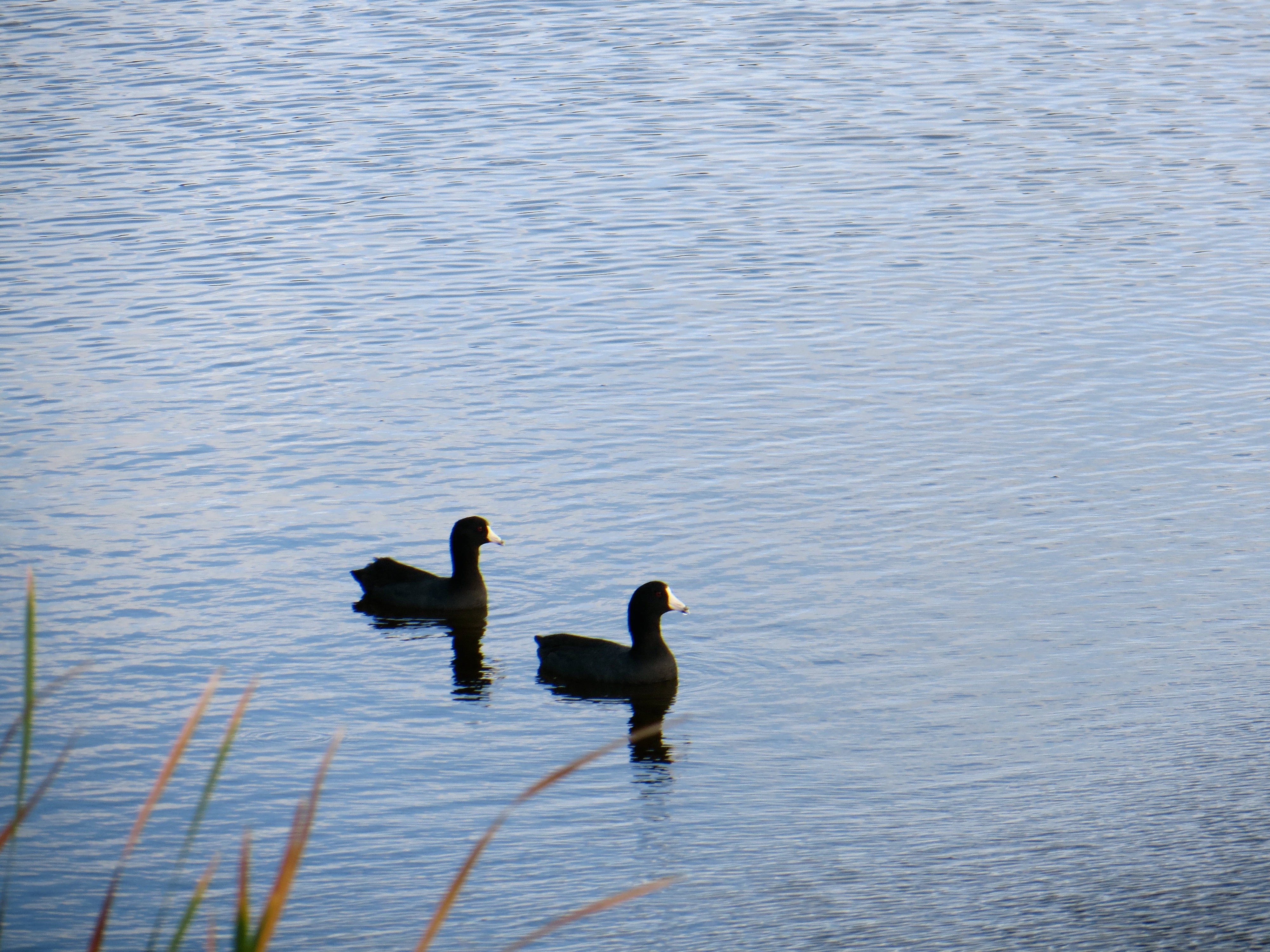
American Coot at the Bailey Tract--check out those white honkers

American Coot at the Bailey Tract–check out those white honkers

Black Skimmer landed on the beach one morning; I saw over a hundred that day

Black Skimmer landed on the beach one morning; I saw over a hundred that day (Ring-Billed Gull, Ruddy Turnstone and Sanderlings are hanging out with it)

Snowy Plover

Snowy Plover

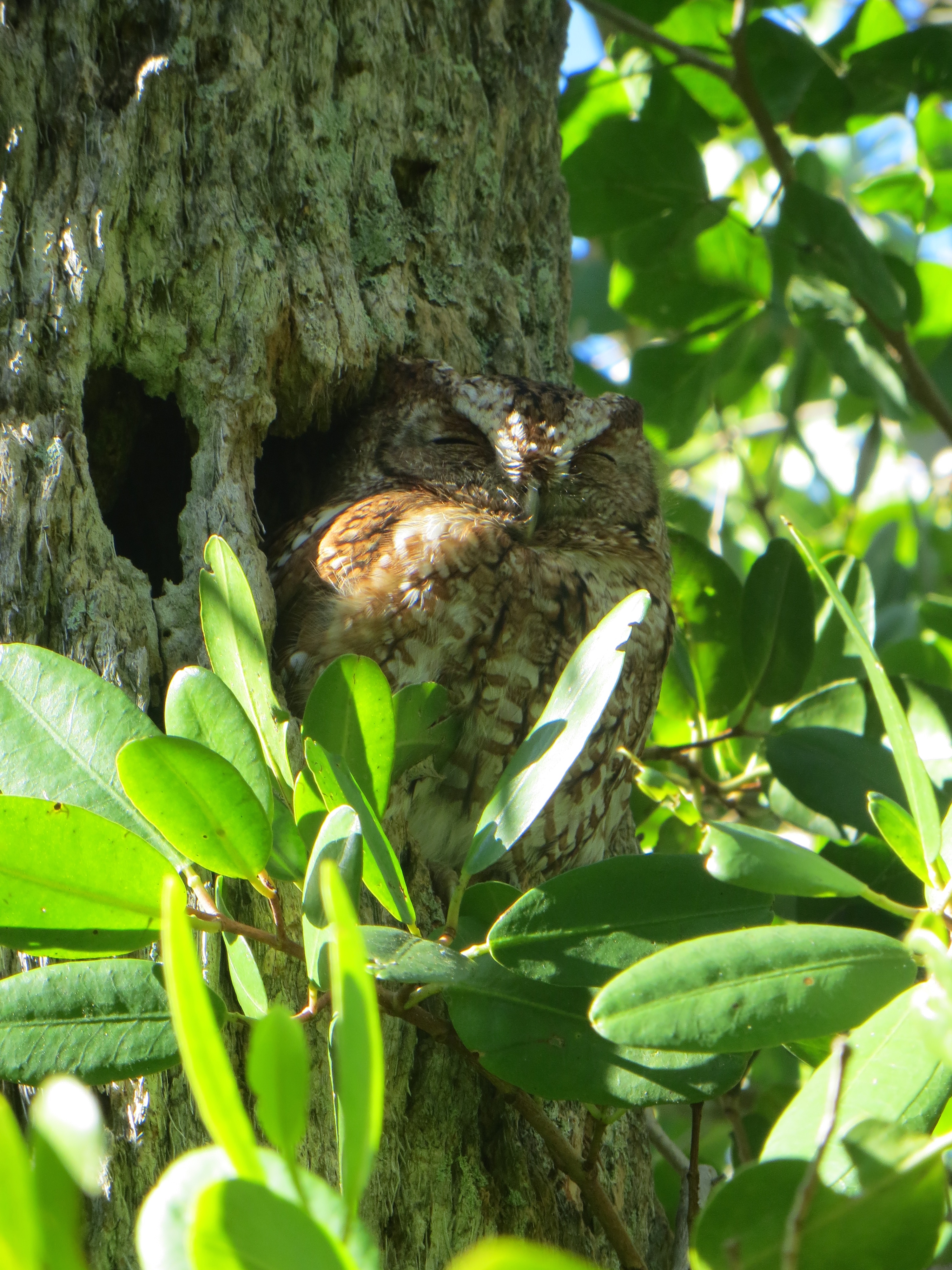
A trip highlight: Eastern Screech-Owl in plan sight. My family all got to see it as well.

A trip highlight: Eastern Screech-Owl in plan sight. My family all got to see it as well.


Frozen River

IMG_5717Yesterday my son and I walked down to the river. It was a perfect winter day–23 degrees, sunny, with a thin layer of new snow on the ground. A couple of Hairy Woodpeckers flushed as we got close to the bridge. A Tufted Titmouse whistled across the field. The air was still.

We walked through the trees to the water. In spring, the river bank is often flooded, water to my knees or higher, but yesterday the grass was brown and flattened, the puddles frozen. We could see the frozen river and all the way across the field on the other side. The landscape changes every season, every day really. Where in summer the scene would be green–the grass, the leaves on the trees, even the water–yesterday it was brown and white and blue. Beautiful either way.

The water was frozen from shore to shore. This is not a big river. You could easily toss a rock or a stick or dirt clod to the other side. But it moves along and meanders and isn’t typically solid, even in winter. We might have been able to walk across but we were cautious. We walked along the ice on the shore, watched the water flow under the bridge where the surface was not frozen, crunched our way through the sleeping vegetation.

To get back home we eschewed the road for as far as we could. I followed the shore north while my son bushwhacked through the willows. I watched the tops of them wave and bend as he pushed his way toward me. He emerged with a big grin. The breeze started to pick up as the shadows grew. We walked on the ice that filled the ditch along the road. Camel’s Hump glowed in the sun that has stayed away too often lately. The next morning the temperature would dip just below zero, but in the moment we were content with a fine winter day.

New Year Birding Goal

IMG_5539

Last year I had a goal to see 175 birds in my home county. My goal for 2013 was to see 150 and I got up to 174. The 175 goal was simply to surpass that 174. By December 31 I had encountered 194. At one point in October I thought I might be able to get to 200, a lofty goal for one county in Vermont. I had seen three new birds for the year in one day and thought I only needed to find a few more to reach the 200 mark. In the last two months of the year, however, I found only one new one–a snowy owl by Lake Champlain, just inside the county line. Still, 194 ain’t bad.

I could have simply increased my goal to 200 for the county. That would, perhaps, seem logical. I wanted, however, to try something new, something broader. Staying in the county is fairly easy, as I live year and it means I do not travel far. But I will travel a few times in any case. In 2014 I encountered 177 different birds. I traveled to Florida and to California, plus looked on the Connecticut and Maine coasts. I was happy with that. I have no California trip planned but I do have a trip to Wyoming planned. Wyoming does not have quite the diversity that California offers but will offer some great birding I am sure.

My birding goal for 2015 is simply to find 250 birds, anywhere. I know this is less than 2014 but I will not be in California. I saw 88 species there. Half of those I saw nowhere else. It can be tempting to just up the ante and go for more, but attempting to find 250 unique bird species is a reasonable goal for me. If I could take all the time I wanted and travel all over I could try to find twice that number but that is not in the cards, not this year.

Noah Strycker is one man trying to find as many birds as he can in one year by traveling all over the world. He is now in Antarctica, where he started two days ago. There are about 10,000 bird species in the world and he is hoping to see half that many. That is a lofty goal. You can check out his progress on his blog, Birding Without Borders, on the Audubon website. If you want to follow my progress you will have to check back here. It won’t be nearly as exciting, but I hope to get a few interesting species and maybe some photos. So far I am at 28 species for the year, including the Snow Goose that eluded me all last year. Not a bad way to start a new year, goal or no.

Cold Day to Look for Birds

IMG_5429


December is well under way, which means I only have a few days left to see how many birds I can find in my home county. Last year my count was 174 so I wanted to best that this year. I reached that goal months ago but kept going. I figured 200 was just a little too far out of reach but as I inched closer I thought it just might be possible. Yesterday I was at 193. Today I got up to 194.

I had heard that snowy owls had been seen on the lake and I wanted to try to see one myself. I have tried to find them, but I have struck out. I headed to Sand Bar State Park early this morning even though it was cold–18 degrees–and it was windy. With ice on the lake, and the wind blowing in right off the water, it was bitterly cold. I started off well by seeing a Rough Legged Hawk. They are not common but head south to our area in the winter. I got a really close look at it so felt the morning was a win already. I also saw ten Northern Pintails, beautiful ducks with a brown face and white neck. Again, I got close enough to see them well, and ten is a lot to see at once. So I was happy enough.

As I was watching the ducks (and there were many other ducks there as well) I missed a Snowy Owl glide in and land on a log nearby. I looked up and couldn’t believe it had landed right there. I watched it through binoculars and through my spotting scope and then figured I might as well try to get closer. I walked toward it and it did not fly away. I got close enough to get the above shot.

I watched it for a while. I had seen one last winter but this was a much better sighting. The sun had come up by then and was low in the sky, so when it peeked out from the clouds, the owl was bathed in golden light. But mostly it was cloudy, and did I mention the wind? I had on lots of warm duds, including snow pants and a down jacket, but the wind managed to creep in. My hands, especially, got cold. I kept warming them and they kept getting cold. Apparently t is time to break out the thicker gloves.

The owl, and the Pintails, were still there when I walked away; I was too cold to observe any longer. I warmed up in the car and headed to the corner store for a cup of hot coffee for the ride home. The owl was still on that log, a white ghost in my rear view mirror as I drove off. All those people driving by on Route 2 couldn’t see it, but there was an unusual and beautiful creature right there if they slowed down and looked. It is easy to miss things of beauty as we race along. It was seriously cold this morning, but I am glad I slowed down to look. Six more species by the end of December? I’ve got a bit more slowing down to do in these next weeks to reach that goal.

Gray Days

IMG_2175These days are gray. Clouds, rain, drizzle. Driving home from a visit to Connecticut we encountered snow higher up. No snow by the time we got home. The sun shone this morning waiting for the bus. So it isn’t all gray. That sky was as blue as the bluebirds that are still hanging around.

This week we will have some showers, some clouds, some cold nights. I cleaned the bird feeders yesterday. I’ll hang them this week with the seed I bought last week. Winter isn’t far off. November is a teaser month–too cold to lounge outside, no snow to play in. It is a good month to make soup and  to bake bread.

I love the gray clouds on a chilly November day–wood smoke drifting in the air, the smell of dampness and old leaves, the muted light. It is a month of transition, of waiting for winter and for the holidays, but it is a good month to slow down. It is a good month to appreciate clouds.