Butterflies and Asters

img_5521

Asters are blooming like crazy right now: Purple Aster, New England Aster, Fleabane. Black-Eyed Susans are done. Touch-Me-Nots are gone. Dandelions? Haven’t seen them. Asters rule the fields these days.

I don’t know my butterflies well. I have thought many a time that I should learn them. I got some exposure to learning them on a trip this summer the butterfly garden at the Fairbanks Museum in Saint Johnsbury. They had a tent full of them with signage to show what was what. I don’t remember squat from that. Poor student, I guess.

The butterflies in the photo above are American Ladies. I had to look that up. I might be able to tell a Viceroy from a Monarch, but don’t trust me too much. I know there is more than one Swallowtail in Vermont. Can’t tell them apart though. But I tell you this: they are just cool-looking.

It is kind of nice to simply not know the names of things. There is real pleasure in being able to look at an insect, or a plant or a bird, and to know its name. To name something is the beginning of getting to know it, to knowing more than just its name. However, there can be just as much joy in simply wondering at a thing, in watching and seeing with ignorant eyes, in being present to observe.

A sunrise does not have a name, but it is beautiful. We can watch the sky change and the clouds trudge along in their pinkness and just feel awe. We do not have to create a name for snow on trees to find it wondrous. So it is with butterflies. I am curious about what they all are, what makes them different, where they go in winter, what flowers they prefer–all of that starts with naming them. But I do not need to name them to find them wondrous. They dance, unnamed, among the asters I might be able to name, and I feel like kid. “That is so cool!” I say aloud. And that is enough.


Monarchs on Milkweed

img_5448

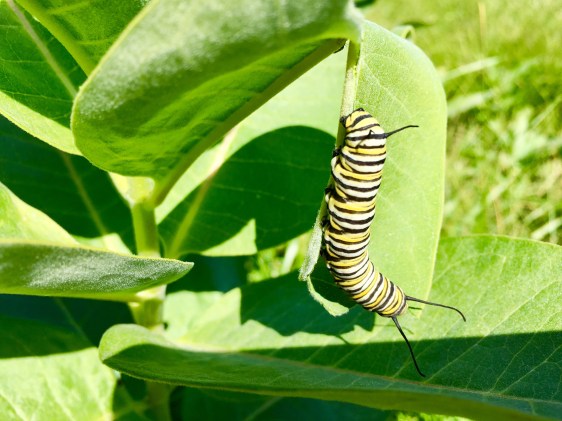
We typically have some milkweed growing in our field. For the past couple of years I have made a point to try to leave some standing when I mow. Since Monarch butterflies only lay their eggs on milkweed I wanted to make sure they can keep doing their thing.  For the past couple of years we have had no Monarch caterpillars on that milkweed.

This year I wanted to just mow everything. Saving the milkweed means saving some of the wild parsnip, and I want that stuff gone. So I just cut it all. The milkweed, however, perhaps because I mowed early enough, came back. And now we have Monarchs.

We found a caterpillar in a neighboring field recently and that made us more vigilant in searching our own. We found one caterpillar, then another, then another. Yesterday my spouse and I took a walk down the road. On the way out we found half a dozen on milkweed plants along our driveway. On our way back we looked again. We found eleven.

I am not sure if they are just doing better this year, or maybe cutting the milkweed actually helped. Maybe the younger plants are more appealing to them. In any case, those critters are thriving in our field. And they are cool-looking–wiggly and fat and striped with those waving antennae. Looking through the milkweed now is like searching for treasure. Plump, squishy, pre-butterfly treasure.

Before long those caterpillars will hole up for a bit and pop out of cocoons as butterflies. Then they will haul their fragile little selves down to Mexico for the winter. That is amazing, and don’t you even think it isn’t. The milkweed will go to seed after the butterflies depart. The seed pops will burst with floating white seed parachutes. I will crack open the pods and toss those seeds to the wind.  All of us in the house do this every year. We try to spread the milkweed to help the Monarchs. Apparently it helped last time.

Today it has been raining. I am sure the caterpillars are tucked under leaves, chewing their way through their own roofs. We have mostly stayed inside–reading, doing Algebra homework, paying bills, cobbling together lunch. Tomorrow we will look again for those yellow and white and black wrigglers. Finding eleven of them at once was a household record. I am hoping we can break it.

Rain and Shadows and Light

img_5317

In the night it starting raining. Hard. The wind picked up. Rain blasted through the screen. We rose, shut some windows. After a while it tapered off. Waking in the dark, I heard the rain fall again against the porch roof. Then I slept.

Morning, rain fell on and off. I could not get out to stain the house siding. Too wet for that. I could not finish mowing the field. I brewed coffee, sat on the porch and read Ivan Doig. My reading was interrupted by heavy showers. Wind misted rain through the screen. More than once I said aloud “Dang. It’s coming down.”

I got lost in Doig’s story, then looked out again at the gray. I had breakfast–blueberries and yogurt and granola. Later I took care of paying bills. I hung some closet doors. When it cleared, I thought temporarily, I popped over to a spot in town that often gets flooded to see if any early shorebirds had come through. They hadn’t. The rain did not come back.

Late in the day, sunlight highlighted the hills. Clouds hung in shadow and the far-off green trees glowed. Wind tickled the Black-Eyed Susans. Trees and grass and flowers drank the fresh water. It is quieter these days, with fewer birds singing. Soon, at night, the Perseid meteor shower will light up the night. I love rain, but hope for clear skies to see the stars surprised by slashes of light.

A few red leaves have appeared, as if competing to be the first to arrive at autumn. They are anomalies, for now. Sandpipers and plovers are not far off. Maples will blush soon. But not today. August has treasures to be found. I need to seek them out.

Mowing. Finally. 

One of my favorite sounds of spring and summer is the song of the Meadowlark. That sweet whistling tune makes me smile every time I hear it. This year they nested in our field. Starting a few years ago they were around, nesting in surrounding fields and sharing their songs. Now they nest right here in our meadow. By mid-July, chicks have fledged. We had a half dozen young birds zipping around, buzzing out their calls rather than their songs, done with nests for now.

Other birds were out of their nests as well–Red-Winged Blackbirds, Savannah Sparrows, Bobolinks, Snipes. Birds fledged and Wild Parsnip not yet gone to seed? That means time to cut the field.

I had powered up our tow-behind brush hog in June. I wanted to make sure it started, that the blades spun, that it worked. So when mid-July arrived and the weather cooperated I hooked up the mowing system and got started. Unfortunately, after one pass of one edge of the field, smoke started pouring out of the brush hog. Dang! Busted belt. No more mowing.

There is a repair shop right up the road, so I just kept on going. It was Friday, of course, but they assured me getting parts is pretty quick these days. So I’m thinking they order a belt on Monday, put it on and maybe Wednesday I’m in business, best case scenario. But since I didn’t hear from them I called after a week. They had an estimate for me. Seriously? I’m hoping the thing is ready to go and they haven’t even ordered the belt?

So, giving them the go-ahead, I patiently waited some more. After another week I called again. It was still not done–complications, other parts needed, rust involved. After another couple of calls and another week, it was finally good to go. I picked it up Saturday morning, just before the place closed. It ran like a charm. So I headed out to field, three weeks after I started, Wild Parsnip now starting to go to seed, and started cutting.

I wasn’t sure just how much I could get done that day, but after about eight hours, I had most of it cut. It was a long afternoon/evening. I had planned to stop by 9:00 pm and stopped about ten minutes before that hour. I probably spread a few Wild Parsnip seeds but not too many, I hope. I left a couple of patches uncut but, since we planned to head out for a week the next day, it would have to do.

The birds were definitely cleared out by the time I started cutting. I missed my window between ground-nesters fledging and seeds falling by a bit but hopefully not by too much. If I can get out there and cut once more this fall, the Parsnip should be checked for this season. That stuff is aggressive and I need to keep at it. What I want is for grasses and native wildflowers to grow. I want better habitat for the birds and more food for the pollinators. It has been a long project and may take a good deal more time yet.

In the meantime I can look out over the cut meadow with relief. I don’t see those tall stalks with yellow flowers turning brown with seeds. I don’t hear much birdsong now, but come spring I look forward to the Meadowlarks, flying low across the greening field,  whistling their tunes once again.

Fine Spring Day

IMG_6244

Green is coming out. In the yard, daffodils are blooming, white and yellow. Azaleas have popped. Grass is starting to stand up. Spring? I believe so.

I was up early, out to find birds. Otter Creek was flooded. Ducks were scarce at the usual spot by the boat launch. The boat launch was under water. But ducks were abundant in the flooded fields. Shovelers! Ring-Necked Ducks! Plus Mallards and Canada Geese and Wood Ducks. I saw my first Spotted Sandpiper of the year.

Heading home from the ducks I decided to make an extra stop. I walked through Williams Woods. Ruby Crowned Kinglets sang in the brush. Pine Warblers sang in the tops of white pines. A Carolina Wren teakettled far off. And green, trout lilies included, crept across the forest floor.

Clouds gave way to sun but then came back. It is cool but feels warm after those winter days. Rain showers now. I need to get out and pull some early dandelions and grass that is butting in on the flower beds. I might plant some more flowers. The bulbs I planted in the fall are peeking up through the dirt. Soon the world will be a chaos of plants.

Already I think ahead to mowing the field, in July. The meadowlarks are singing, along with Savannah Sparrows. Woodcocks, however, never came back. That is our spring mystery. Where did the Woodcocks go? Or did that final winter storm do them in? Soon we will crank up the lawnmower, and sleep on the porch, and swing in the hammock.

But now we need to enjoy spring–the dawn chorus, the sweet smell of new growth, the wild leeks in the woods. The world feels and smells new.

Wondrous, that’s what it is. Wondrous.

Water and Ice

img_4707

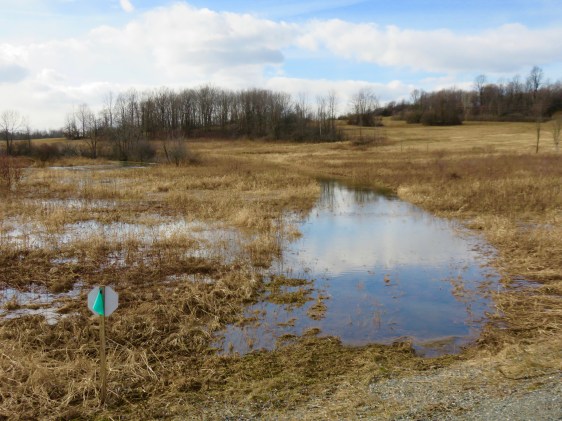
A few days ago it was warm, so warm that rivers ran high and snow melted and we had lots of water. I walked down to the bridge to see the fields. The river gushed under the bridge. The fields had become a lake. The snowmobile trails were a wash. Just recently we finally had enough snow for snowmobilers to buzz around on the local trails. That afternoon they would have needed a boat.

img_4710

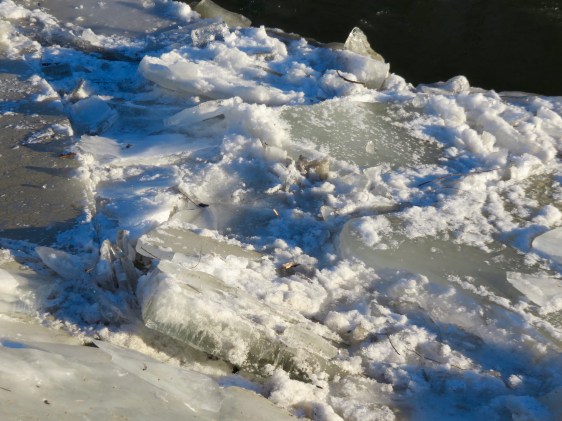
Last night the temperature was in the single digits, as it was the night before. Yesterday morning I went for a run. Where a week ago I was dodging mud and puddles and piles of slush, yesterday I ran on frozen dirt. A dusting of snow made the ice patches hazardous. It was a different landscape.

Winter came, then spring came, then winter came back. As I have said, I prefer snow. As many have said, if we have winter we might as well have snow. The sun shines today. The temperature might rise to the twenties. It is too cold for sugaring now, although some sugaring happened just last week. In a couple of days the temperatures will rise above freezing and stay there–too warm for sugaring. Hopefully things will settle out so the sap will run this month–below freezing at night, above freezing during the day.

In a month we will have spring for sure. Today I plan to reattach the birdhouse that fell off its post this winter. I want it up by nesting season. Who knows when that will be there this year? Red-Winged Blackbirds have been back for a week, so it could be here in a few days.

We might get another snowstorm. Would love that, but I’m not confident. Tomorrow morning I will get out and run again. Maybe we have mud. Maybe we have ice. Either way I look forward to getting out there again. Winter and Spring can duke it out. Regardless, I am going to do my thing.

Winooski River Portrait 2

Yesterday I volunteered for the second time for the Mid-Winter Eagle Survey. My route was the Winooski River, from Waterbury to Lake Champlain. I stopped at several spots along the river, crisscrossing and paralleling as I went. Unlike last year, this year I did see one Bald Eagle, perched overlooking the mouth of the river. Like last year, I took photos as I went. Here is my January 2017 Winooski River Portrait:

img_4519

River’s edge, Waterbury, Vermont

img_4520

Winooski Street Bridge, Waterbury, Vermont

img_4523

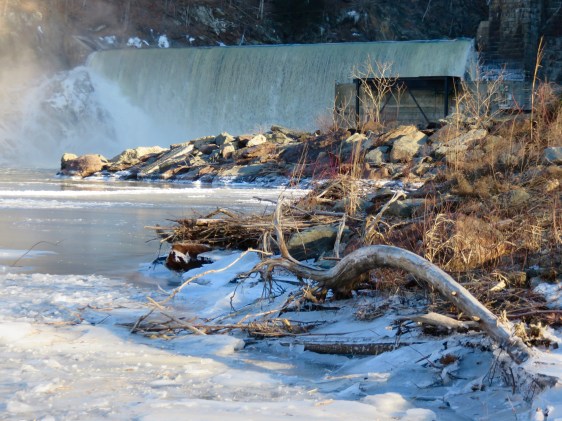
Bolton/Duxbury Dam

img_4526

Duxbury, from Long Trail next to Winooski River

img_4528

View of Winooski River from Long Trail Bridge

img_4529

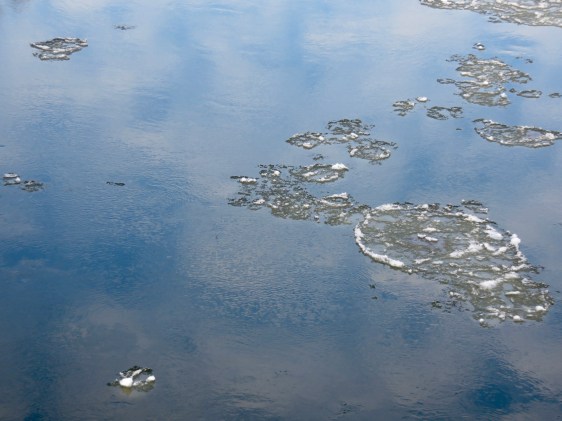
Pancake ice

img_4532

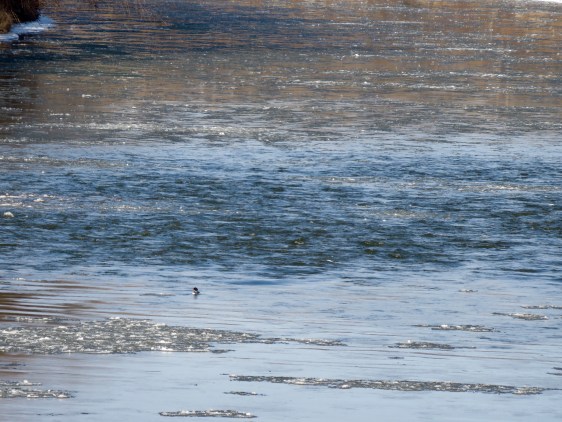
Common Merganser, seen from Jonesville Bridge

img_4533

From Warren and Ruth Beeken Rivershore Preserve

img_4534

Looking west from Volunteers Green in Richmond, Vermont

img_4535

Discarded television, Williston, Vermont

img_4536

View of Winooski River from Woodside Park, Colchester, Vermont

img_4538

Winooski, Vermont

img_4539

Ice at Ethan Allen Homestead, Burlington, Vermont

img_4544

Bald Eagle looking out over Winooski River and Lake Champlain

Still Some Color Here

img_4432

We have had some wind lately, and some welcome rain. Most deciduous trees are bare. Our yard was covered in leaves the other day. My wife took advantage of the wind and raked them up into the air so they would get carried off. There is a wall of leaves now at the edge of the field. The lawn is clear.

We have had snow a few times. Nothing much in the valley, although some tracks have been laid on high elevation slopes already. And we have been getting rain for days, on and off. Several days ago I laid the hose on the hill to dry so I can roll it up and store it for the winter. It has only gotten wetter. We haven’t cut the grass in weeks, but it is still green.

img_4449

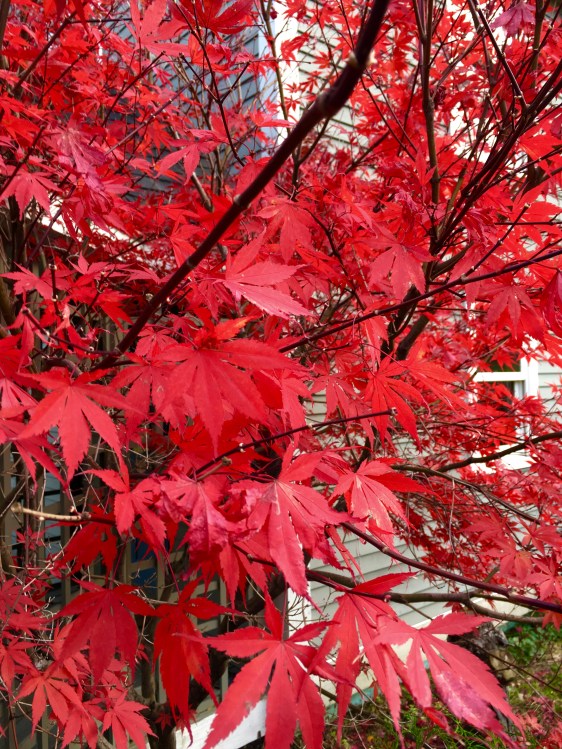
A few trees, like the Japanese Maple next to the house, are still bright. That tree is brilliant. It isn’t native but I can see why it was planted. It’s a beaut.  And there are places where red and orange and yellow leaves are spread out in bright layers. The foliage that draws leaf peepers may have dwindled but there is plenty of color lingering in the corners.

When the sun has managed to find its way out of the clouds this week, it has highlighted the snow on the mountains, or the trunks of trees now visible, or the leaves piled at the edge of the woods. Slowly this will fade to gray, but fall is still here.

Autumn in Full Swing

img_4170The turning foliage this year is brilliant. Every day it seems to get brighter. This is one of the benefits of living here. Nature creates art. We are surrounded by beauty.

img_4178

Shelburne Farms

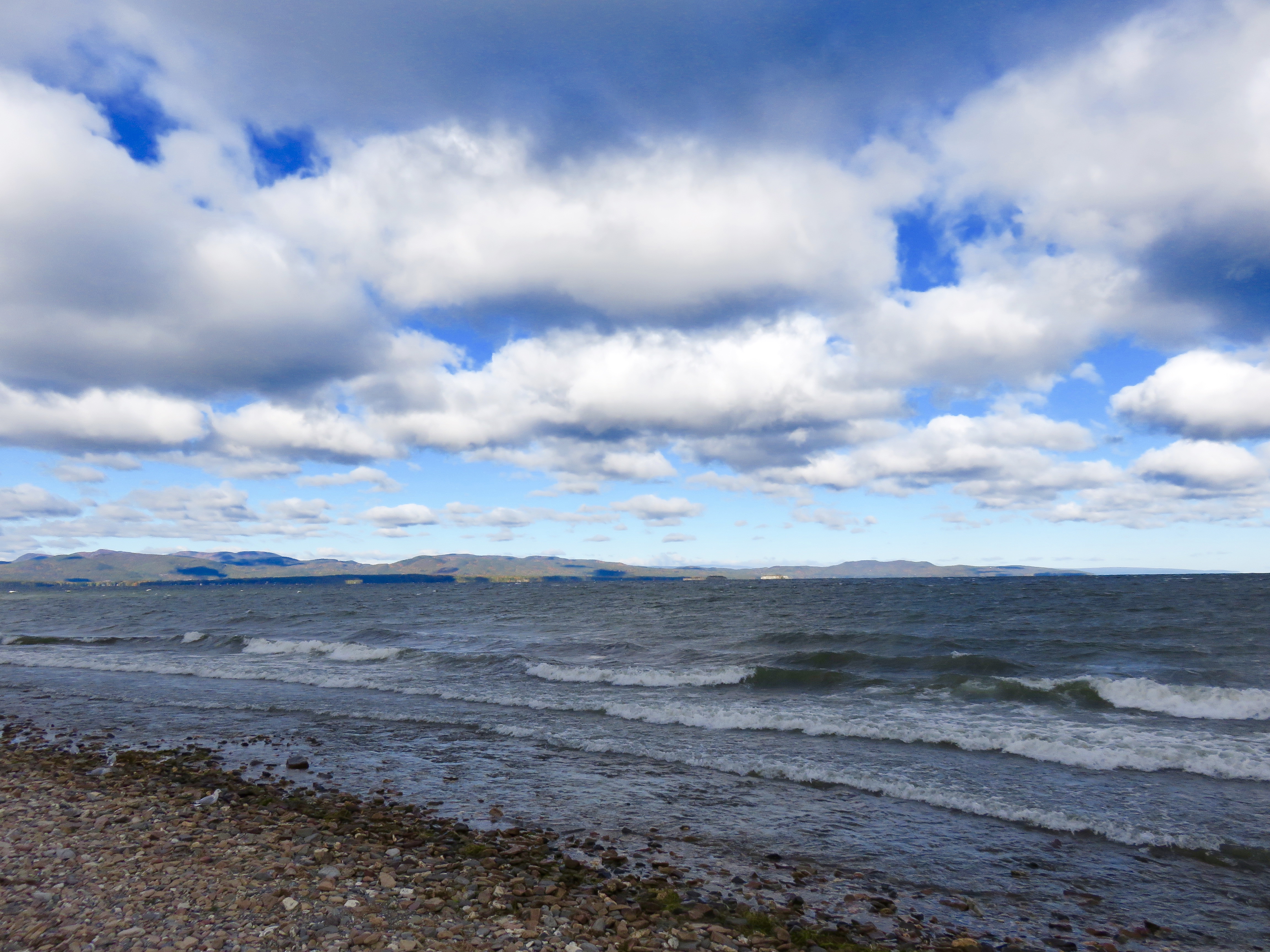
Took a walk at Shelburne Farms the other day. Ka-pow! The lake was roiled. The wind was up. The leaves flashed their colors. The gray clouds skipped across the sky.

Lake Champlain Surf

Lake Champlain Surf

Yesterday rain fell. The sky was dark. By late afternoon the sky was really dark. But then the sun broke through and the hills lit up. Eye candy.

img_4206Suddenly this will all be gone. The wind will rush in and strip the trees. The fields will turn from green to brown. Snow will fall. The world will be beautiful in a new way. But this, this is stunning. It calls for expletives and interjections and exclamations and acclamations. And sometimes all of them in one sentence.

img_4176

Mountain Birdwatch, Worcester Range, 2016

IMG_3765

Every day this June I have woken and looked around and felt lucky to live in such a beautiful place. I mean, seriously, the place is just full of beauty. You have your green meadows and rolling hills and bare peaks. You have tractors tossing bales and Barn Swallows zooming over soccer fields and rabbits chewing clover. Wonder everywhere.

Again this June I have been fortunate to participate in Mountain Birdwatch, a research program that examines high elevation birds. Earlier this month I drove to Stowe, hiked up to the ridge trail on the Worcester Range and tried to find some of these birds. The hike up whooped my can, as it always does, but it was worth the effort.

This hike shouldn’t be that bad. It is about three miles to get to the start of the survey route. Three miles, how tough can that be? That is a 5K. I ran one of those the other day. But this is a challenging three miles. The first part isn’t bad. I hiked up toward the Stowe Pinnacle. That is a standard hiking trail–steep but well worn, fairly smooth, stone steps in some places. Once I have to veer off from that trail, however, the trail is less forgiving. It is steeper, with fallen trees across the trail, scrambles over rocks. It is not well marked and paying attention matters. No zoning out and just putting one foot in front of the other. It is slippery and rugged–a solid challenge.

The ridge trail is also not much used and can be wet, although this year it was pretty dry. There is only one water source so I have to try to time it right to polish off my water to fill up and treat what I collect. Eventually, after I think several times that I must have passed point one, I finally get there. Now I don’t want to be some wussy complainer, but it is a tiring little walk with a full pack (tent, sleeping bag, food and so on) on a steep trail. Or maybe I am just not in my twenties anymore.

IMG_3766

Painted Trilliums growing right on the trail

As in years past, I scouted the route and counted spruce and fir cones that day, after I set up my tent and left some stuff behind. There were Trilliums and Trout Lilies but there were also black flies. I have not seen black flies like that in years. More than once, as I tried to aim my binoculars at tree tops to carefully count cones (this is part of the survey because red squirrels eat the seeds from cones, and when there are more cones there are more squirrels that survive the winter; since squirrels also raid bird nests for their eggs, the number of cones can be an indicator of bird populations the following year) I said aloud, “I don’t think I can do this!” I was, however, not a quitter. I counted my cones, ate a little something, and crawled into my sleeping bag.

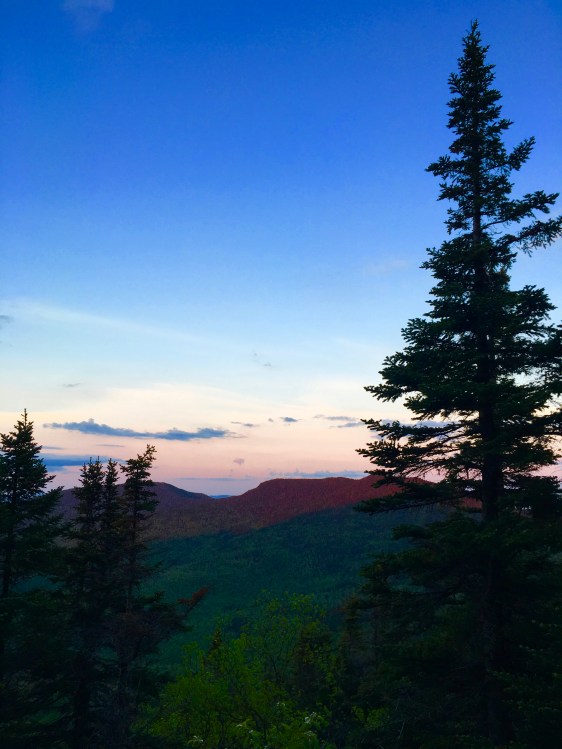
The next morning, rising at 4:00, I had a successful survey. The black flies slept in so I was free to listen and watch and take notes on what I encountered. I found more squirrels up there than ever before but I also heard Bicknell’s Thrush, probably the most important target species, at every survey point. Once I had completed the survey, about four hours later, I took some time to linger. It is beautiful up there, even with limited views, and it smells good. The spruce/fir forest in summer is an olfactory opiate.  It smells like spring after a long winter and Christmas and summer camp and childhood and Life.

I took my time hiking back down. I swatted flies and ran out of water before the stream. I listened for warblers. I soaked in the beauty of the place. Back home, I took a nap. Then I sat on the porch and looked out over the fields. The grass rolled in waves in the wind. Kingbirds snatched insects from the air. Wonder everywhere.