Sugaring Weather

IMG_3560

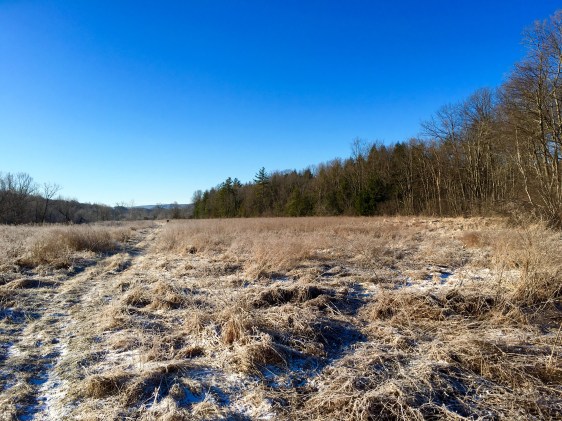
Frosty. That was this morning. Grass, branches, porch railing, stones–all frost-covered. The air was still. I rose before the sun crested the mountains, walked into the morning. The ground was frozen, so walking was easy and quiet. I wore a down jacket.

Despite the cold, a few degrees below freezing, the blackbirds sang. Song Sparrows tried their best to stake out their territories. Over a hundred geese flew overhead. Yesterday’s puddles sported white caps of ice.

In the river, a beaver broke the water’s surface, swimming around the bend. A mink bounded along the shore, pausing to watch me as I watched it. The river babbled its usual course under the bridge.

When the sun appeared, it spread light across the fields, melting the frost. In the shadows, ice held on. Soon enough, those crystals would droop and disappear. The puddles would be free. Bluebirds would sing as the breeze arose.

Freezing nights and warm days. That is just what sugar makers need. There will be some boiling today. I hope to take my empty gallon jugs up the road to Shelburne Sugarworks today to get them filled. They say they will have sugar on snow, but I’m not sure there is snow to be had. Maple cotton candy, perhaps. My guess is they will be boiling today. The weather is just right.

Cold Morning But Spring is Near

image
I needed a new place to go birding, so I looked around and found Cota Field. It is just down the road in Starksboro. I did not know what to expect but hopped in the car and drove down Route 116 and parked next to the pavillion.

The sports fields were frosty. The sun shone. The temperature was in the single digits. I wore my big old down jacket–the Super Poofer as we call it in our house–so I was plenty warm. I found the map tacked to the bulletin board and studied it for a few minutes. Loop trail? Along the brook? Done!

I found some Black Ducks on the water, and some Golden Crowned Kinglets, too. Those are pretty sweet to find–small, secretive, quiet. Getting a good look at those dudes is always a treat. There was not a whole lot of bird activity but enough to keep things interesting. Mostly it was just fun to explore. I want to find several new places to go birding this month. When I started really getting into it a few years ago the exploration piece was one of the best parts about it. Seeing new corners of the place I live connected me more to the place I live.

It was cold but the sun was out. The sun is getting higher as we approach the equinox. So even the cold air feels warmer when the sun shines. I watched the ice melt from the bare branches. Red-Winged Blackbirds started singing–a sure sign of spring on the way. There were no leaves, no flowers, no insects, but the sun glittered in the blue sky and I warmed myself with walking. In several weeks this place will be filled with bird song as that sun rises much earlier. I will be back to explore more then.

Weather all over the place

IMG_2195

It is pretty easy to talk about the weather. Who doesn’t talk about it? Problem is, most of the time what I hear is complaining. It’s too hot. It’s too cold. Too much rain. The snow is a nuisance. That kind of thing. Complaining about the weather is a national pastime and it is something that binds us together. Too bad, I say. Around here the weather is always changing, and I love that.
Last week the temperature got to -18º. The ground finally froze. I couldn’t stir the compost pile–it was solid. A couple of days ago it warmed up. The temperature rose to 52º. Then it rained all day. Then it got cold and snowed. The rain and warm weather made for some flooding. All that floodwater is ice now. The roads turned muddy, got rutted, then froze. Frozen ruts make for sketchy driving. But they look cool.

This month we have had temperatures that ranged 70 degrees, snow, rain, sleet, high winds, ice, mud, fog. Maybe if it were April that would seem right. But it is February. We still have had no major snow storm. There has been some snow in the mountains but we have not had more than two inches of snow at home. It would be nice to have some snow. It is winter after all. We have, however, had some stunning days, and many of them have made me stop in wonder.

Two mornings ago fog filled the field across the road, curling over the temporary ponds and the overflowing river. Tonight as the sun went down it draped its pink light onto the freshly snow-covered mountains. We can complain about the weather. Or we can smile at the beauty of the world. It is beautiful every day. Why can’t that bind us together instead?

Bare Winter

IMG_3380

I took a walk in the town forest yesterday. The temperature was hovering at the freezing mark. Snow was falling. It was a light snow, the flakes floating slowly to the frozen ground in the light wind. It felt like winter wanted to be there–cold, barren.

I walked quickly. I went to the forest because I hoped to find a Red-Breasted Nuthatch, a bird I have found there before, hopping along the trunks of the tall white pines. There was not a lot of bird activity so I was not lingering. It felt good just to move through the woods. I also went there to walk. I took time to stop, to look, to listen; but I also just wanted to feel my breath and warm myself with motion.

The ground was bare. Those gentle snowflakes were beautiful but they did not gather themselves. They broke apart, tucked under leaves, melted when they hit the slightly warmer ground. James Wright’s “Late November in a Field” begins: “Today I am walking alone in a bare place/And winter is here.” It felt like that, only it is February. It felt like winter was about to arrive, but it should be here by now.

We have gotten little snow. In a typical year I would not have gone to the town forest as I did yesterday. I would not have gotten to the parking area and I would not have tried to park, afraid of getting my car stuck. But the dirt road was like pavement. I did not need snowshoes or skis on the trails. I did not have to worry about ice. The temperature popped above freezing by the time I returned to my car. Late November weather.

I heard almost no birds. A few chickadees called their quiet peeps. I heard my nuthatch honking away, plus one or two others. At one point I stood below the pines and thought “it is so quiet today.” But it was not quiet. The wind blew the bare trees. They swayed just enough, and they were cold enough, to creak and pop. Squirrels chattered. Pines whispered. The forest was having a winter conversation with itself. Once I stopped listening with such focus and allowed myself to hear everything around me I found a world of sound. It was not quiet at all.

Winter has a couple months yet to go. Perhaps we will have a solid snowstorm during those couple months. Or perhaps November will blend into spring come April. Outside my window, the tips of crocuses show themselves below the bird feeder. I do not wish them harm but I would like them to be hidden under a deep layer of snow. I would like this bare winter to wear its snowy cloak, at least for a little while. I would like a little more winter before spring arrives.

Dark Early

image

Mid-November it gets dark early. I drove home tonight in the near-dark while the sun set in its rose-colored glory. The crescent moon hung lonely in the sky. Silhouettes of trees, bare branches reaching for the cobalt sky, lined up on the horizon.

Years ago I worked as an outdoor educator. We did group programming into November. On those late fall days we would be putting away equipment in the shed, sometimes struggling to see. The shed had no power but it did have a kerosene lantern that helped, if we cared to use it. We hung ropes and stored belay devices in the shadows, walking out into the twilight after a day outside, feeling the damp and the dark.

These days I spend much less time outside. That is too bad. I appreciated the world more then. I felt I was in the world more. Now I spend more time in windowless spaces and in cars than outside. The world ticks past without me in it. I step outside after a day with too much time at a desk or at a computer screen. I do not notice the leaves falling quietly onto hemlock needles as much as I did.

But I do see the world. I notice what I can. The sky was so beautiful this afternoon I had to stop my car, get out and look up at the moon. I wanted to see it without the window as filter. I wanted, if just for a moment, to be in the world. So I parked on the side of the road, near the top of a hill, and I looked west, the light fading, the darkness pulling the stars from their berths, and I simply stood there.

Afternoon, Stick Season

image

The river runs not high but not low. A sand bank toward the far side pushes the water away, causing the current to run faster. Across the river the banks drop steeply. In spring, Bank Swallows nest here, burrowing into the sand, flying low over the water to catch flies. Today it is not spring. Fall’s glory has passed. The brilliance of turning leaves is over. Those leaves lie in wilted piles among the bare shrubs.

But it is not yet winter. The current flows smoothly over rocks and sand and mud. A few moths still flit among the maples. There is no ice under which the water must crawl, no ice to scrape at the log lodged in the river’s bend. Snow does not yet fall. Today there are no clouds and the air is warm enough for scattered green leaves in the under-story to spread to catch the sun. But the sun is low, and will not last much longer today.

Upstream, at the mouth of the stream that melts into the river, a beaver just stirs in its lodge. It has been waiting for the light to dim, for shadows to grow long. It dips into the water, swims, waits again. Soon it will climb the bank to work at the silver maple it plans to fell. Already it has cleared smaller trees. It will chew away the bark, working steadily, wary of predators. Perhaps this tree will fall before winter sets in. Perhaps spring winds will send it tumbling. Perhaps it may prove more stubborn, standing for years before its top branches dip into the water. The beaver, however, does not concern itself with such possibilities. It simply works.

Two Blue Jays call across the bare trunks. A woodpecker knocks. A second calls to it and sends the first flapping away. A small breeze taps branches together, but mostly it is quiet. Crickets, cicadas, birds do not sing. Squirrels stay still. The woods here rest, exposed, not waiting exactly, not sure or unsure, just knitting the past into the present so the future can be only an imagined thing that does not matter to this day.

Soon the sun will drop below the hills. The day’s heat will drift off, like milkweed seeds across a field. In the dark, the river will seem louder. No bats will dot the skies but owls will call. Already owls are planning for spring, finding mates, starting nests. They plan for the future, like the beaver, doing today what must be done for tomorrow. Mice will crawl under dry leaves, finding seeds that won’t become flowers, feeding the owls, thinking only of right now, this November day next to the river that will not stop flowing, even when the ice comes.

Meadow as Fashion

IMG_1196I was at American Eagle, in the mall, with my daughter two days ago. This is not a frequent haunt of mine but she needed some new shorts and knew she could find some there that fit well, plus there was a sale, and there I was, the dad of the pre-teen in the land of the young. They sell a lot of jeans, and the jeans come in different styles. There are a variety of cuts, of course (narrow, boot), plus multiple materials (standard denim, stretch), but their jeans are also worn differently. They “wash” them so they look worn when you buy them, as has been the trend since the 1900’s. The most dramatic wash is called “destroyed,” which means your jeans come with tears and holes included. I understand the fashion implications of this trend, but still, the practical side of me winces at paying for something that is already “destroyed.”

Yesterday the confluence of factors necessary for brush hogging the field occurred:

  1. I was home.
  2. The equipment to do the job was in working order and ready to be used.
  3. The weather was clear.
  4. Ground nesting birds had fledged.
  5. The wild parsnip was tall but not yet going to seed.
  6. I had the time to get cracking.

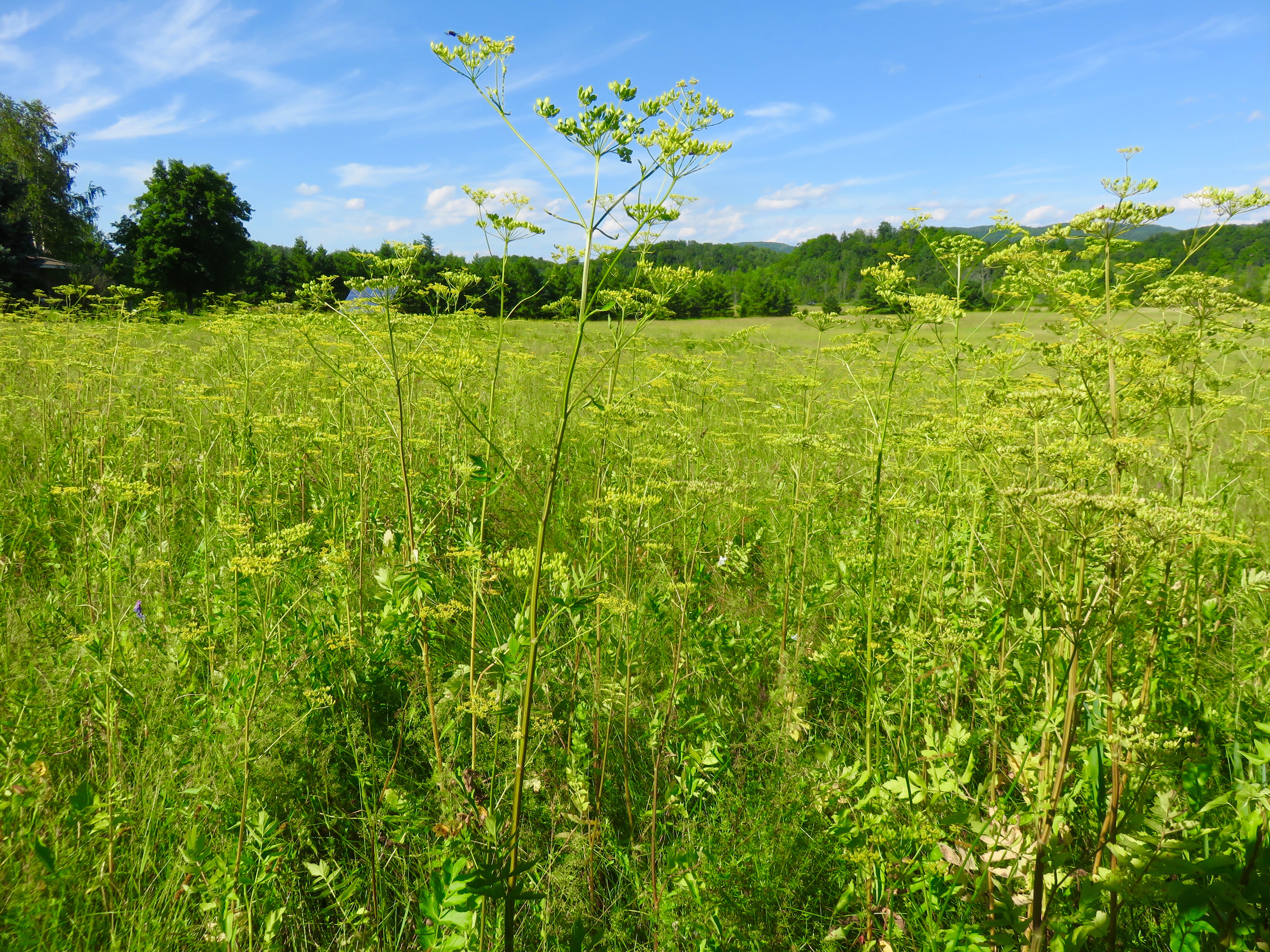
Yesterday morning I sat on the porch and looked out at the meadow. There were a whole lot of Bobolinks out there. I counted at least ten. Savannah Sparrows were singing. I was happy to see the Bobolinks–they successfully fledged some youngsters. It means they are making it here. It also means I could cut without mashing their nests. I also looked out at a field of yellow. The wild parsnip, that invasive plant that takes over and can offer passersby terrible burns, was tall and flowering. If one can feel emotion toward a plant, I feel bitterness toward wild parsnip. I want it gone.

Wild parsnip, some of it eight feet tall

Wild parsnip, some of it eight feet tall

Now is the key window for our meadow–birds that nest on the ground (Bobolinks, Red-Winged Blackbirds, Savannah Sparrows, Meadowlarks) have fledged and the wild parsnip has not yet gone to seed. After I returned from work early in the afternoon, I hopped in the machine and got cutting. We have been trying to get rid of the stuff for years now by cutting. Sometimes I have cut too late, and that just spreads the seeds. It has retreated a bit, growing in less area now, but it still rules parts of the meadow. I cut for several hours yesterday and got the worst of it. In the next couple days, if the weather holds, I hope to get the rest.

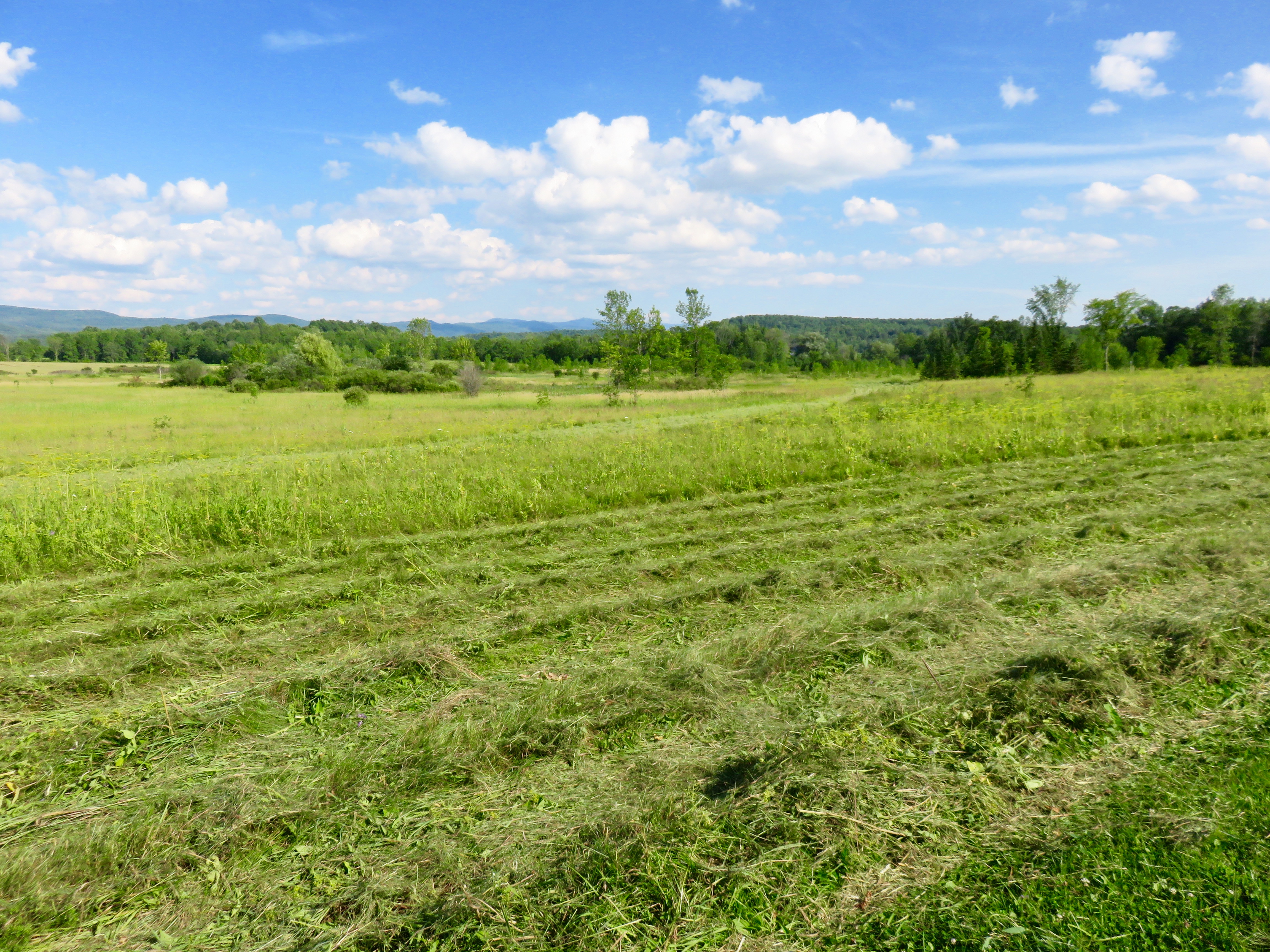
The upper field is now poor habitat. The mice and snakes can’t hide as well. The birds have nowhere to perch. The insects are moving to the field next door. But it does feel good to have sliced down the wild parsnip. The field looks different, some might say ugly, and I have been thinking of it in terms of fashion. It is not a field of grass (your basic new denim). It is not the clean cut-and-remove of a field of grass cut for hay (pre-washed to some degree). It is more the destroyed look. Grass and leaves and stems and flowers are spread across the meadow. It is not neat and tidy. It is not the look for going out to dinner. At the moment, however, it is the look I am going for, just right for late July.

Paying Attention

IMG_0538I started birding in earnest after I had a stroke. Instead of going to therapy, I went outside and paid attention to the world around me. I tried to run, but I found that I just kept thinking inwardly, going to dark places. It wasn’t fun. When I went birding, however, I was looking outward rather than inward. I was focused on sights and sounds, on the wind and the river under the bridge, on finding something new wherever I was. I returned feeling better, feeling more perspective on my place in the world.

Getting out in nature can have this impact for many people. It is hard not to notice what is around when you are hiking a mountain trail or canoeing a river. Birding for me gave me more of a focus. I had to pay attention. If my goal was to find as many different birds as possible, I had to be aware. Being passive was not an option. So I got out there and I paid attention and it healed my mind. Having a task, a focus, was key. I stopped paying attention to me when I paid attention to what I heard and saw.

Yesterday morning I visited the Catamount Outdoor Family Center in Williston to go birding. This was part of a bird walk sponsored by Green Mountain Audubon. There were quite a few people there, maybe 20 or so. I meant to count the people but I was too focused on counting birds. We walked the trails for over two hours and, despite the hundreds of mosquitoes, found 45 species of birds. Two highlights were the flock of Blue Jays mobbing a Barred Owl and a Red-Winged Blackbird chasing a Green Heron. We also heard, however, a Brown Creeper, a shy bird who looks like tree bark and whose song is high and hard to hear. Finding that bird means really paying attention so it is rewarding to discover it.

The photo above has a Cedar Waxwing in it. It is perched at the top of a fir. It is hard to see, but I heard its high trilling song, then narrowed down its location and saw it well with binoculars. Birding is not about seeing the birds that make themselves obvious. It is about seeking out the birds that are there, finding them even when they are not obvious. That is the therapy for me in birding.

Cedar Waxwing, not hiding at all

Cedar Waxwing, not hiding at all

I will keep at it for now. There are multiple levels of challenge. How many birds can I find with each outing? How many birds can I find each year? How many birds can I find this year in my county? What might I find new today? Can I finally learn the song of the Blackburnian Warlber? There is the life list to consider as well: how many birds can I find ever? I won’t get bored. I will continue to learn and to discover new things. I will keep my mind healthy. And while I’m at it, I will have fun. That’s some good therapy right there.

Signs of Early Summer

IMG_0519I found this American Robin while I was on a walk in Colchester. I noticed it as it flew into a tree right near the path. As I looked more closely I could see that it had landed on a nest. Cool! But check out the beak poking out from under that mama Robin’s belly. She’s got a brood in there. Cooler!

And check out that nest. That thing was crafted with a beak. You can see the softer materials near the top, where the chicks are. All these people are walking past talking about challenges at work or local politics or relationship challenges, and there this Robin family is just getting on with it while we pass it by.

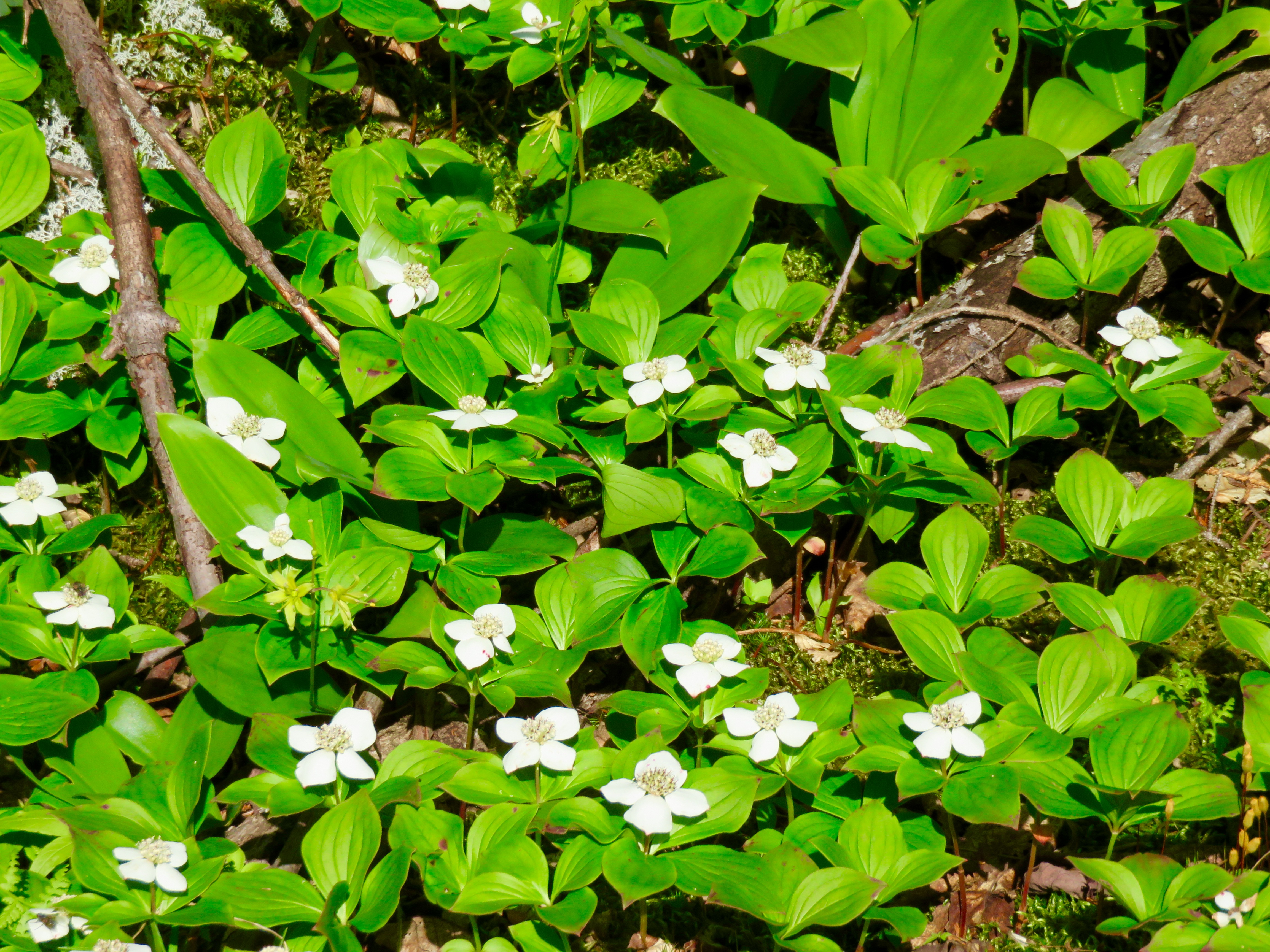
IMG_0514Earlier in the day I had gone for a hike up high. I wanted to see if I could find Bicknell’s Thrush where I used to search for it several years ago. Along with the Thrush I found this patch of bunchberry blooming on the trail, popping out at me in the morning sun light. Later in the summer they will produce small red berries that taste like tomatoes. And down near the left corner there is a yellow trout lily still blooming. It is a little late for those. Down in the valley they flowered out by early May.

IMG_0510And here is a view I caught as I hiked down from listening for various birds. I spent the day finding signs that summer is unfolding as it should. Birds are calling out for mates or marking territory. They are building nests and raising chicks. Flowers are blooming. Leaves are shushing in the wind. Again, this transition each year, the shutting down of so much life that slowly emerges with spring and then summer, the richness and diversity of it all, it elates me. All this life just keeps keeping on, doing what it needs to do to continue. Humans have big brains; they create and destroy and mold the world. But only humans have the capacity to be fools. That is easy to see if you look at all the other life that fills the planet.

Mountain Birdwatch Survey on Mount Mansfield 2015

Late day light after counting spruce and fir cones

Late day light after counting spruce and fir cones

Sunday morning I got up early, again, to listen for high elevation birds. I had just done this the week before on the Worcester Range, across the valley, so this was take two in a new place. Stowe Mountain Resort is generous enough to let employees and volunteers of Vermont Center for Ecostudies, who manages the survey, use the ski patrol hut near the summit of Mount Mansfield. So I got to drive up the toll road and stay there for the night. That was much easier, and quicker, than hiking up and tenting, as I did a week ago.

There were a couple other volunteers, there to survey another nearby route, also staying in the ski patrol hut. We did not chat much before I was packed up and out of there, however. The resort charges for use of the toll road for most people; they let volunteers go up for free, but not until they close it to other traffic at 4:00. So I was at the hut around 5:00. I wanted to get one part of the survey, the count count, out of the way, and I wanted to get up there and do it before it got too late. So after I dropped my bag, off I went for a hike.
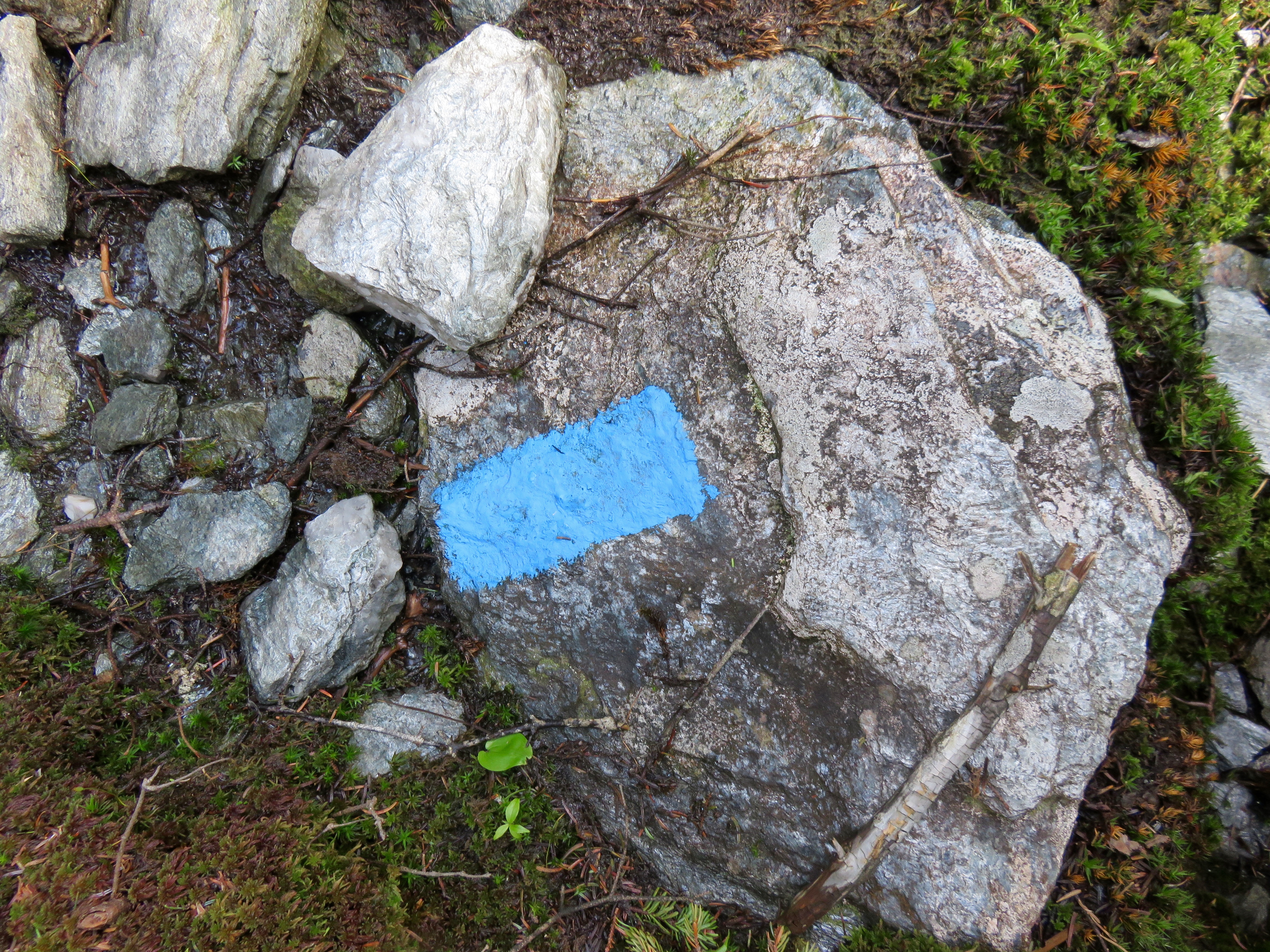
Trail marker along the route

Trail marker along the route

It was a beautiful night, golden light in a partly cloudy sky. My hike was not long to get to the first survey point, maybe 30 minutes. There were a lot of cones when I could see them. In some spots the trees were too dense for me to see the tops where the cones are. In some spots, on the open ridge line, there were no trees with cones to be had. As I mentioned in my last post about this, there is a correlation between cone density and squirrel populations. When the squirrel population booms after a good cone year, they predate bird eggs when the cones don’t aren’t there to eat. Hence the cone counting, to see how much it affects birds populations.

I got back to the ski patrol hut before 8:00, ready to eat the sandwich (plus the beer) I had brought up with me. The other folks were still out on their cone survey so we did not get to chat yet again as I was ready to hit the sack early. After a night of tossing and turning I was ready to get up when my alarm went off at 3:30. And I was off for another hike.

Not all the points are easy to reach--this is the actual trail to one of them

Not all the points are easy to reach–this is the actual trail to one of them

Scouting the points made easier it to find them in the early hours. I sat at each point for 20 minutes, according to the survey protocol, listening and looking for several bird species. I heard many of them and saw a couple birds to boot. It was a successful survey. I got to spend some quiet time (except for all that avian singing) on Mount Mansfield, getting fantastic views at three of the six points. By 8:00 I was done, and the singing slowed down. I took a few minutes to admire the beautiful state in which I live–the Worcester Range to the east, Lake Champlain to the west, the Green Mountains stretching north and south. The overcast skies cleared and the sun dappled the rolling green landscape. Hard not to appreciate that.

Morning view from Mount Mansfield ridge

Morning view from Mount Mansfield ridge

Back at my car I changed from synthetic clothes to cotton and headed down the hill. I hadn’t even broken a sweat for this survey; sure I hiked less than my other route, but the weather was pretty much ideal. I stopped for a bagel in Stowe on the way home, mingling my unshaven mug with those of diners just risen for the day. I had already put in a good day’s work. Coffee in hand, I headed back home, the songs of thrushes and warblers dancing around in my tired brain.