Fine Summer Day

Perfect Summerness

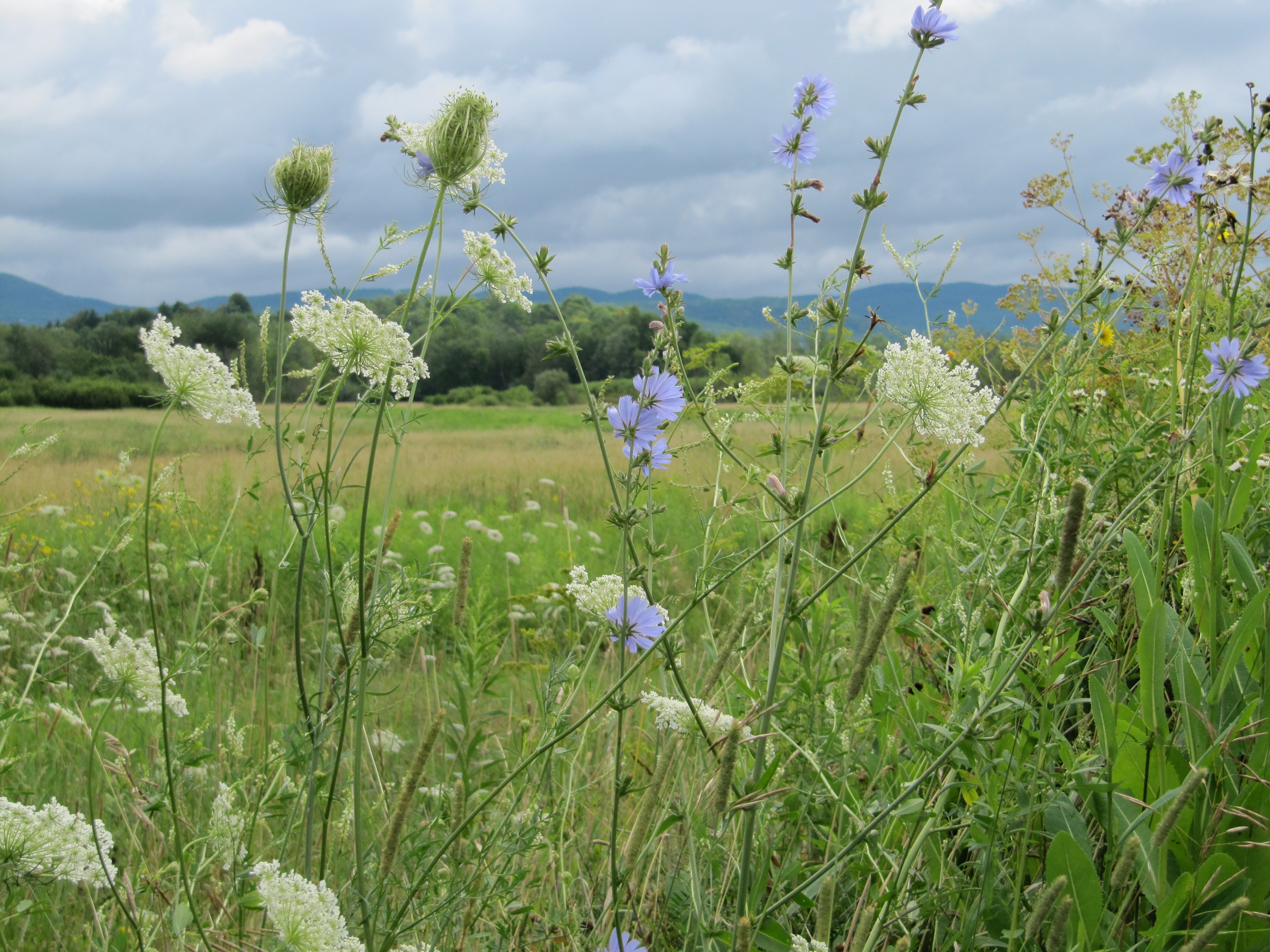
We had some friends visiting these past couple of days and we got out and enjoyed them, both the friends and the days. This morning included a bike ride nearby and I was struck by the beauty of the clouds, the wildflowers, and the mountains in the high contrast light. The wind blew, bending the tall stems in the field. Smells of earth and flowers wafted about about. The river flowed cloudy with yesterday’s rain. We sat and, well, just sat for a while, before heading back home.

Queen Anne's Lace and Chicory

Late in the day, our friends headed home, I finally stained the deck. It took longer than I anticipated, as it always does, but I am glad to have that done. Now I just hope the rain holds off long enough for it to dry. I really should have 24 hours for it to dry, but I guess this will have to do. We are forecast to get rain showers by early afternoon. Maybe they will hold off until at least late afternoon. The forecast seems to change every day. It must be summer.

Field of Flowers

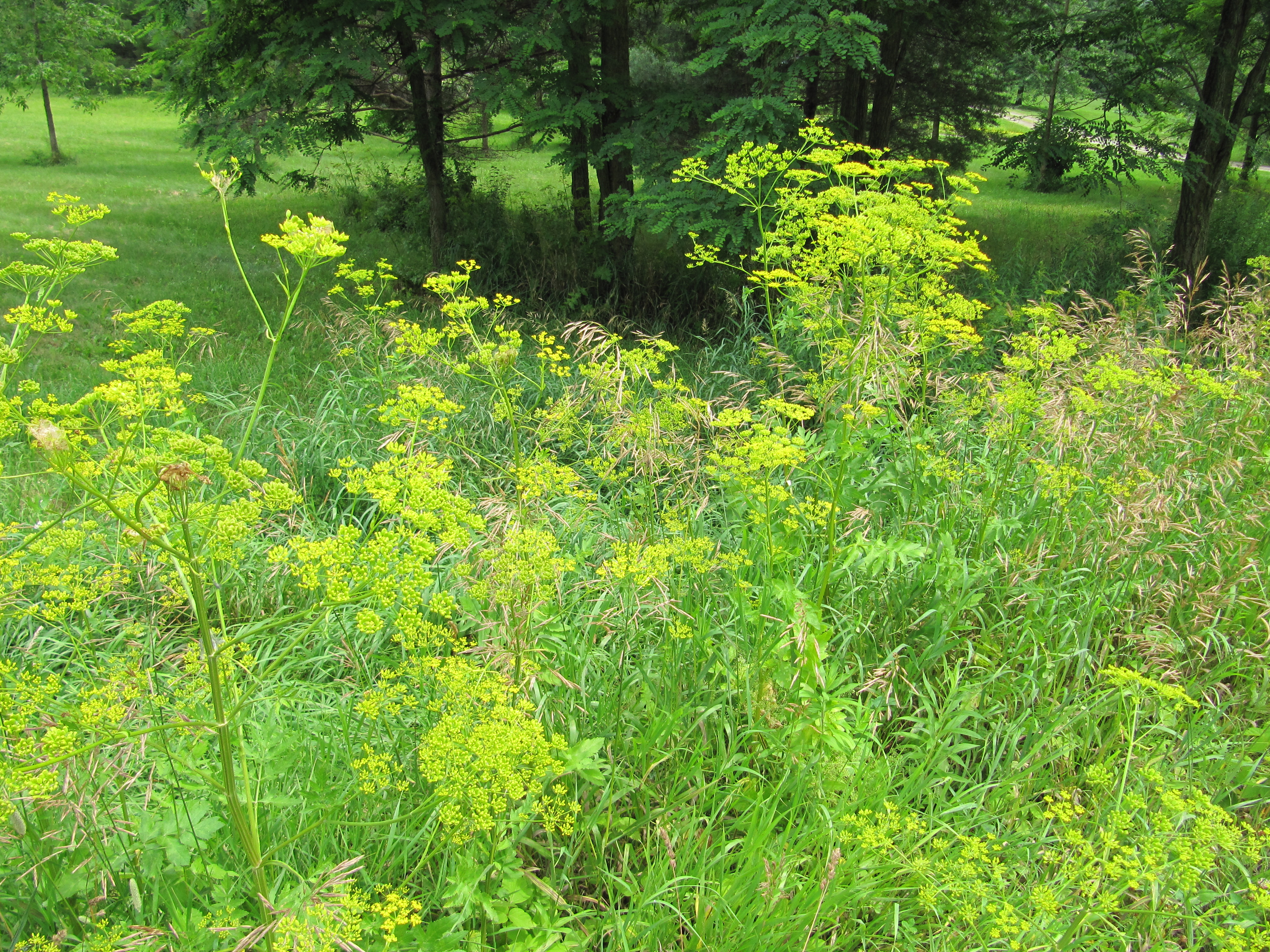
More Wild Parsnip

I wrote about the wild parsnip growing at our place a few days ago. I have certainly been aware of it all along but since then I have been hyper aware, even more than I had been. And let me tell you, that stuff is everywhere. Any open field that hasn’t been cut recently is just covered. It is so tall that it drowns out everything else. When I look out over a field that has been taken over, I can’t see much of anything else–no grass, no flowers, no milkweed, no nothin’.

I drove today on the back roads from Hinesburg to Charlotte (which means, well, almost any road from Hinesburg to Charlotte) and there was a clear distinction between hayed fields and those that have been let lie. I saw a couple of fields where large patches had been left uncut. There was a rock or a wet area or some other obstruction to the mower. These were deep in wild parsnip. I mean, invasive species can be pretty aggressive. This one hits home for me. I mean, it really does hit home.

The problem is that the fields become a danger zone. Forget poison ivy. This is worse. Sure ticks are out there, but they are not nearly as likely to be an issue as wild parsnip. I am afraid to send my children out in the field because I do not want them to have chemical burns. Ouch. It is just a plant for chimney’s sake, but it is a ubiquitous and menacing plant.

This stuff has been around for many years, maybe even for over 400 years. It may have been brought here on purpose, as a food source, but no one really knows how it came to North America from Eurasia. It has certainly made itself at home, however. I see tons of it all over the place and, frankly, it creeps me out. Aside from the fact that I am in awe of how any species can be so adaptable and can just make it over other species, I am in awe of its bully-ness and unhappy about it. I guess I need to do what I can to control it in our part of the world and hope conditions for it deteriorate at some point so its presence lessens in the future.

For more good information about this plant you can check out the Eastern Forest Environmental Threat Assessment Center’s page, or the US Forest Services “Weed of the Week” page on it.

Wild Parsnip

Wild Parsnip

Up Close

I first noticed it in 2006, a tall yellow flower growing in the field. It was just one of several other plants, including Queen Anne’s lace, a couple varieties of goldenrod, and all those grasses I can’t identify. I looked it up. It wasn’t easy to find in the Vermont flower guide but I did find it in the edible wild plant guide. And I thought: Wild parsnip, huh? Interesting. Edible roots, related to carrots and cultivated parsnip. Worth trying one of these days?

But this plant has a nasty side. Rub up against it and get its oils on your skin, then hang out in the sun and watch out. Sunlight brings on burns and blistering because the plant goo is photoreactive. The result is ugly and painful. Not a plant to mess with, especially in summer. Unfortunately, that is when it grows. And grows.

Last summer the stuff took off. Road crews mowed less, so it grew more than usual, and it just had a banner year. This summer it has taken over roadsides and fields pretty much anywhere that isn’t cut. It grows tall, too–taller than me. Over six feet sometimes. There used to be a mix of plants, but where this grows it seems to dominate. Queen Anne’s lace just can’t compete. Late in summer its seeds will spread all over and it will grow even more next year.

That is one reason we want to cut our own field more often–to get rid of this plant. We can’t let it go to seed, that is for sure. The field was cut last month and it still is coming back, stretching its yellow flowers above everything else that is growing. We need to cut again soon to repel it once more.

So, yes, apparently, one can eat the roots–boil them up and have oneself a meal. It would feed many people, the way it grows around here. It isn’t native but it sure has made itself at home. I like to be welcoming, but I wouldn’t miss this plant if it decided to take up and move away. At least purple loosestrife has beautiful flowers and doesn’t cause wounds (except when I try to pull it up by the roots with bare hands). Wild parsnip is a fine plant, I am sure, once you get to know it. If it were not so aggressive I might even appreciate it. This bully, however, needs to keep it in check and learn to play nice.

Unfortunately, as the world of flora goes, I don’t see that happening.

Meadowlark

Blurry but an Eastern Meadowlark Nonetheless

When we moved off the mountain to our home in the valley a few years ago, it gave me a chance to learn some new birds. I knew most of the birds I saw and heard when we lived a couple thousand feet higher, but those birds do not live down here. I learned the bobolink, flitting about the fields, and was happy to know they were fairly abundant. I learned the song sparrow. I got to know the barn swallow. This year I heard a song I had been missing, either because it was not there, or because I simply wasn’t paying attention. I thought it was a meadowlark.

So I looked it up with the power of the internets. Sure enough, at the Cornell Lab of Ornithology and its All About Birds web site, I checked the song I was hearing with a recorded one. Eastern Meadowlark is what we had. I kept looking for them and not seeing them. I would hear the yellowish rascal but not see it craftily hiding in the tall grass. See See SEE-yeer. I saw one today, however.

I sat drinking my foamy coffee drink, eating raspberries and peaches with yogurt and granola, when I heard the call. I mean, I literally heard the call, of the meadowlark. So I scanned the field with binos and eventually saw the little dude poking his head up and singing. It kept popping up and down in the grass but I got a good enough look to get a visual confirmation of the species.

Meadowlarks are ground nesters, so now we have a dilemma. We plan to cut the field more than once this summer but I would hate to destroy a nest. They take around 4 weeks from laying eggs to the young flying solo, so I guess as long as we give over a month between cuttings we might save a nest or two. Or maybe not, depending on the timing of things. First bobolinks and now meadowlarks. These field nesting birds make for some mental figure eights. We want to cut the field to provide, eventually, hay for local cows. We also want to cut it to reduce the amount of wild parsnip we have. That plant pretty much takes over and is a nasty invasive that can cause terrible skin burns, so we want it gone from here if we can help it. But the birds…

I do not want to drive away the meadowlarks (or bobolinks or song sparrows) but I do want to cut the field. We will have to monitor the birds to see that we do as little damage as possible. It is good to know that these birds are definitely here. I would hate to push them out just as I am getting to know them.

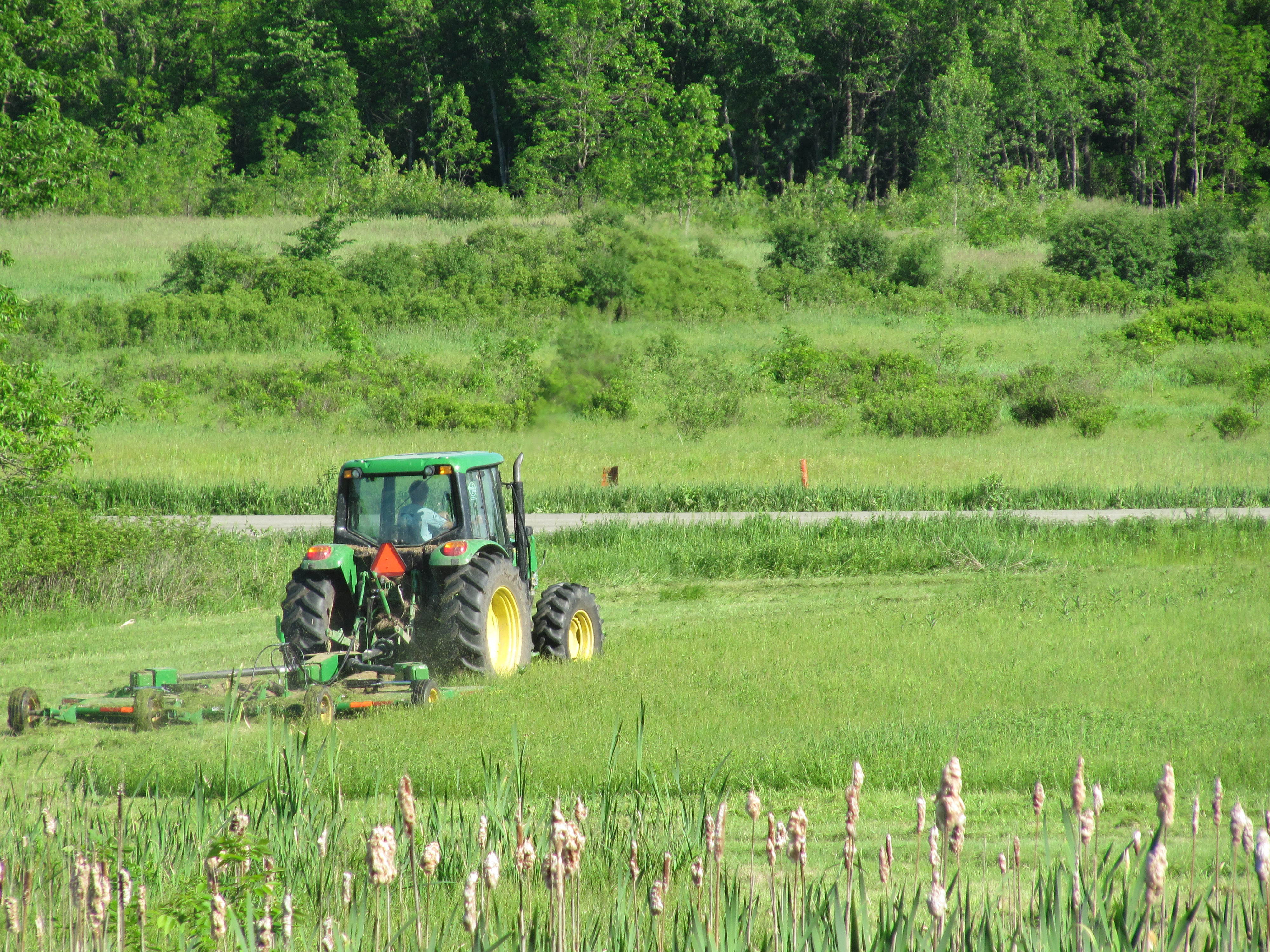
Tractors Getting the Job Done

My son and I took a walk this afternoon to see if we could spot any interesting critters, like we did yesterday. No dice. Too sunny and too hot. The critters were all holed up. We did, however, see a neighbor plowing his fields, ready to plant corn.

Digging Things Up

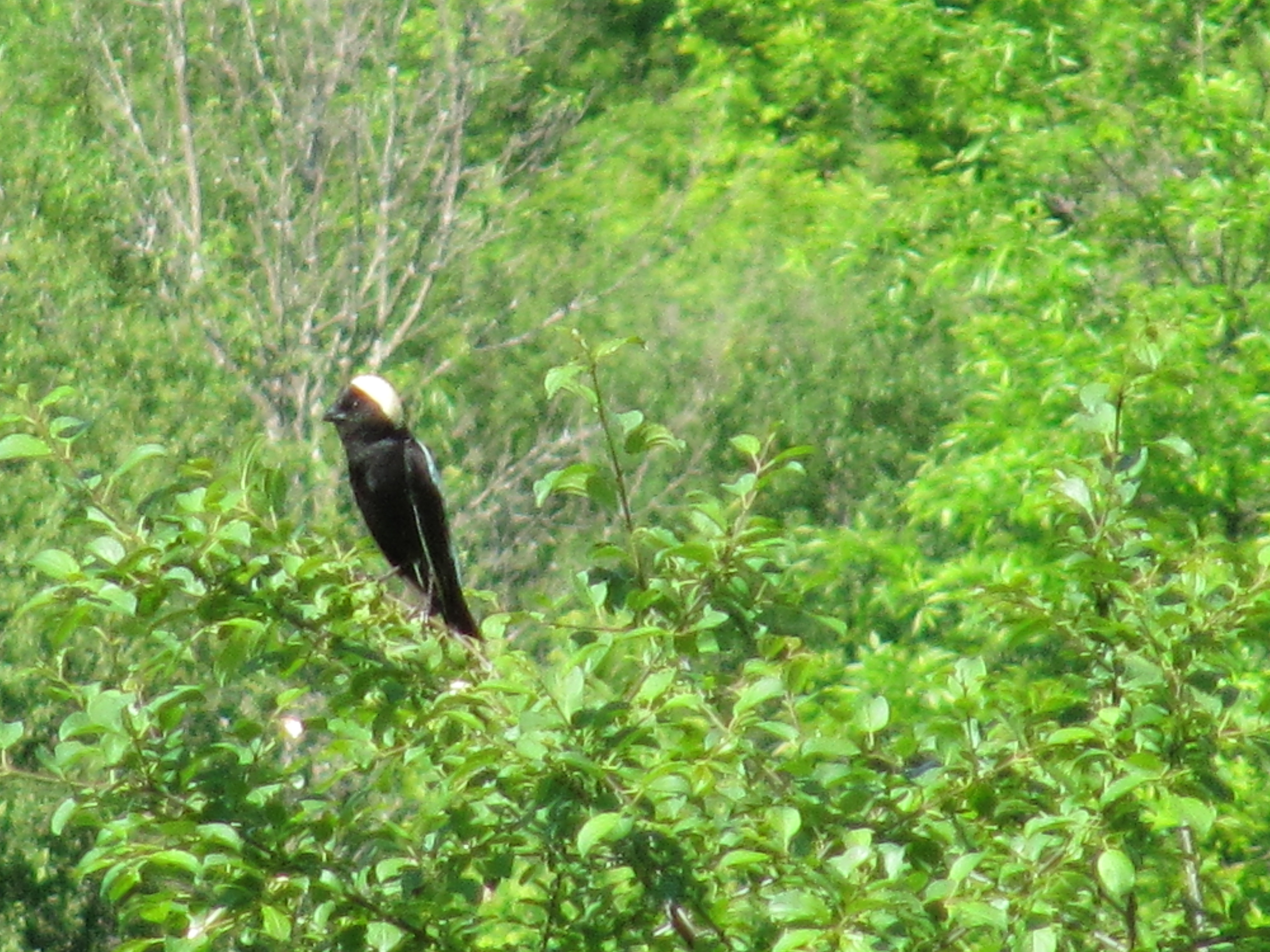
Then another neighbor came by to ask if he could cut our field. He wants to cut it for hay but it needs some work before that can happen. There isn’t much grass but there is a lot of other plant life. I took a walk while he went to get his tractor to see if there were any ground nests. My hesitation with cutting the field this early is nesting bobolinks. They seem to like the adjacent fields better than ours, however, and we are clear of bobolink nests for the time being.  I did see a couple of the warbling birds just beyond our field but none were hanging out in ours.

Bobolink in the Shrubbery

So he mowed. With the big honking tractor, unlike the one we used ourselves to mow in the past, the one that now seems what one might call wee, it took less than two hours. It took us eight to ten hours with the smaller tractor. He got the job done before we knew it, waved and headed back up the road.

Upper Part of the Field

Lower Part of the Field

The gulls had a time with it, picking up the mice that tried to run away. Poor mice. This is the first of perhaps three cuts for the summer. Eventually, we hope, grass will outcompete the “weeds” and will fill in the meadow. Then, bail it and feed it to the cows over the hill.

It looks all right, and it smells great. And I can’t say I will miss the wild parsnip that was starting to get way too tall. That stuff is trouble, and I am happy to see the fat stems of that invasive plant get chopped. Let’s see some timothy take its place. That will feed some animals. Even better than the mice fed the gulls.

Like I said, poor mice.

Shortest Day

It was hard to get up again this morning. Of course, I had stayed up late to watch It’s a Wonderful Life, the annual viewing that couldn’t be put off. And I did get up at 5:30. And it was dark on this solstice morning. But I did it, and was rewarded with bright stars and a good run, despite the dusting I got by a few passing cars. After I got home, the sky turned pink before the sun peeked over the mountains at about 7:40.
The sun stayed out most of the day. It was a cold one but it did get up to 23 degrees. Heat wave. It was bee-yoo-ti-ful in the afternoon, short as the afternoon was. The sun shone on the snow in the mountains. And the sky was clear. It was good for a peramble out into the field with my son. We ogled the view:

A Little Snow Close, A Lot of Snow Up High

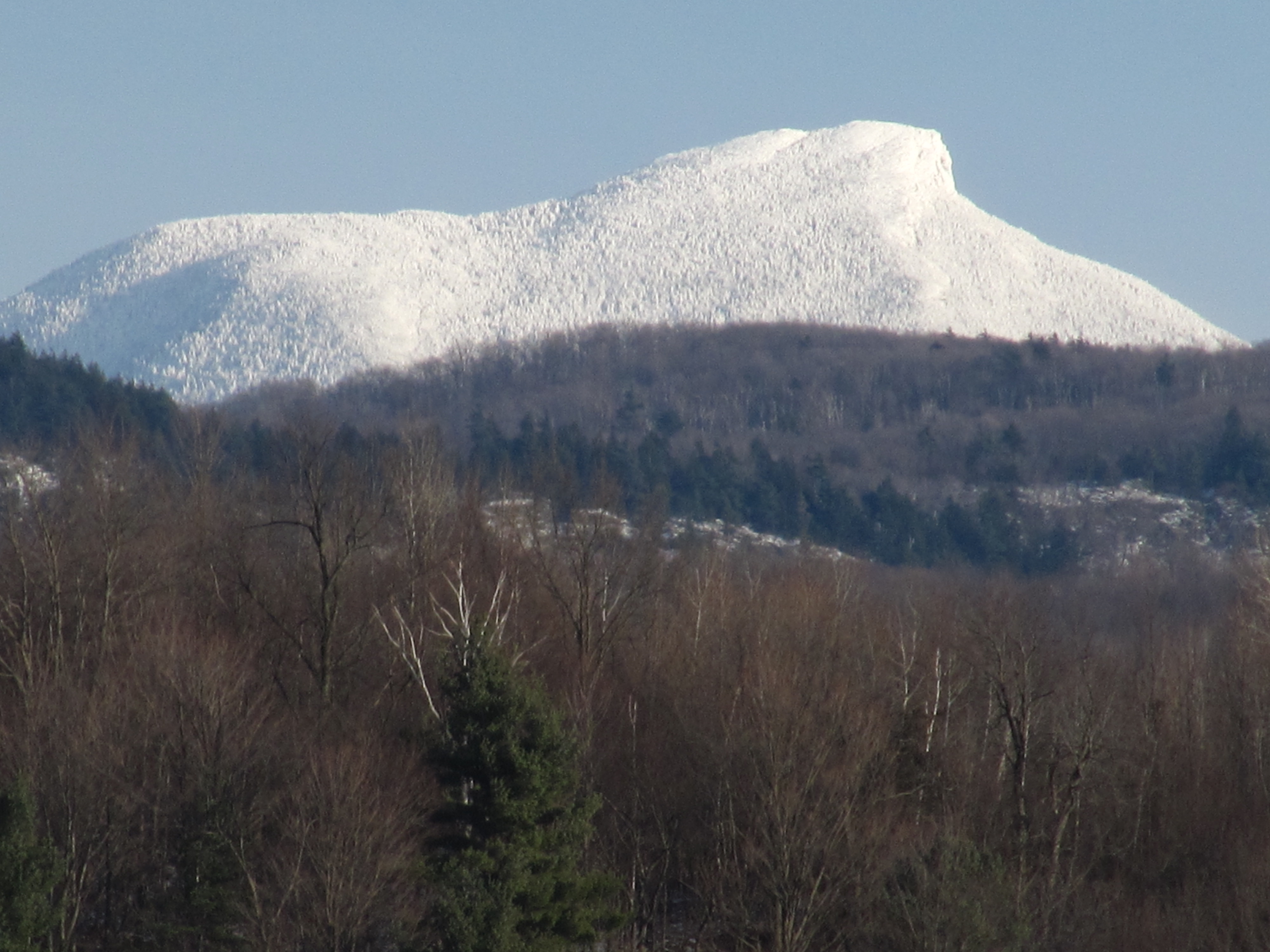
Camel’s Hump was wearing her finest. Here is what she looked like a little closer:

Snow on the Hump

We followed some coyote tracks for a while. They were old and faded and disappeared on us. And we saw turkey tracks as well:

Prints in the Snow, Turkey

The days get longer every day now. I was envisioning, literally, running in the morning without a light. It will be nice to be able to run faster since I won’t be afraid of slipping on ice. It will be nice to not worry as much about being seen by drivers. It will be nice to see what is around me a little more. I love the darkness, and heck, I’ve got lots of it left. It will be a couple of months before I’m looking at brighter mornings at the hour I get up. The sun will rise again tomorrow. The days will go on. Happy solstice. Let’s celebrate some light.

December in its Glory

Snow in the Fields

It snowed again today. Not much, but it was coming down. It felt more like the holidays. Of course, now that it is dark, I can hear the rain drumming on the deck. Rain. Perfect November night.

It was a cold one today. And yesterday. Windy. The wind was what made it feel cold. It was in the twenties today, so fairly typical of the month. But bitter with the breeze cutting through it all. I (finally) hammered in our snow stakes so the plow guy knows where the driveway is when the snow gets deep. Only a couple were trouble in the frozen ground. In most spots the frost isn’t that deep yet. If we do get a storm at least that will be done.

No running today. Or yesterday. An off week I guess. This head cold had me with a full head, pounding with sinus pressure. I registered for the marathon in Burlington on May 30. I should have time to be ready. I will get out there in the morning, in the dark, whatever the weather.

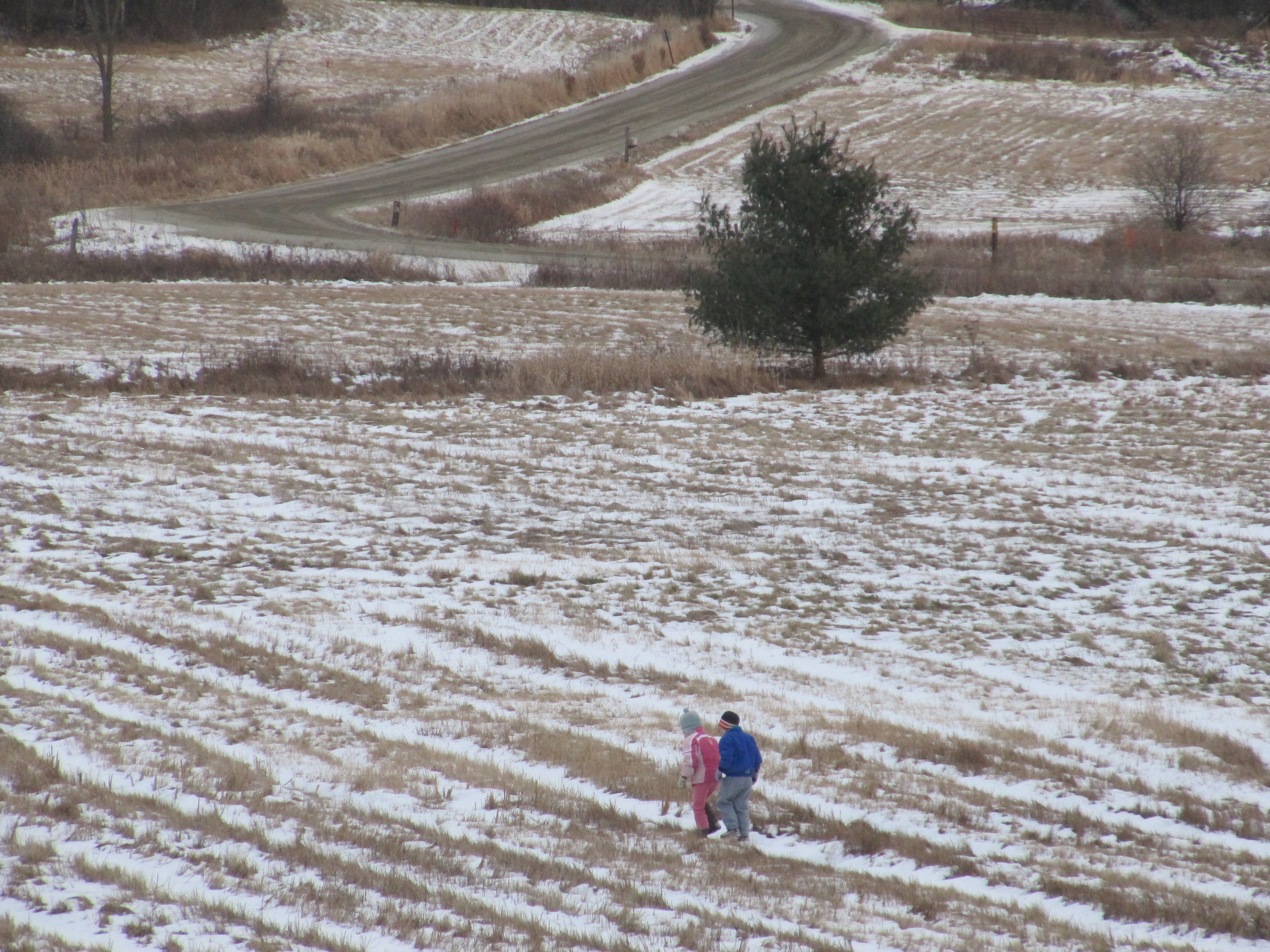
The kids got out into the field yesterday. They romped across the semi-snowiness. They were tuckered by the time they got back into the house. Made me proud.

Exploring the Frozen Wastes

Morning Webs

Every morning the spiders get to show off their evening work.  They spin during the night and in the morning have crafted their best to catch breakfast.  I see them when I head out for a run, if the sky is bright enough by the time I get back.  We see them when we walk down to meet the school bus.  If we are lucky, the dew has been heavy.  If we are even luckier, the sun angles just right to catch the dew-covered webs.  There are hundreds of them, so many it would be impossible to count them all in the short window of time when the light reveals them. Once the day advances too far, they disappear.  I have tried to photograph them but haven’t gotten a good broad shot of many of them at once.  You’ll have to settle for a close-up:

Webs in the Field

Webs in the Field

Frosty Foggy Morning

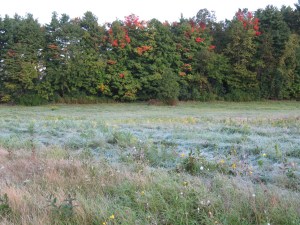
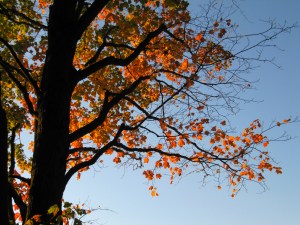
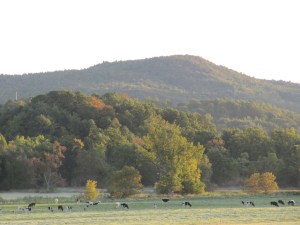
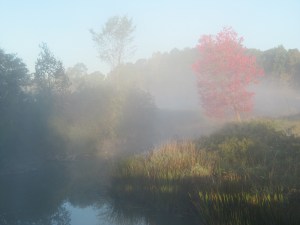
We got our first frost this morning.  It was chilly and foggy, with ice settled on the grass and leaves and rocks.  Mist rose from the river.  I ran early again, determined to keep getting out there before the day gets too far underway. It always seems worth rising early, and today was no exception.  I ran into the fog across the river, I watched the sun tip over the hills, and I saw the color seep into the leaves with the morning light.  It was the last morning of summer.  It let me know that fall is here.  Apparently it arrived a day early.

Fog Over the River

Mist in the Valley

Running Into the Fog

Running Into the Fog

Frost on the Cut Field

Frost on the Cut Field

First Light on a Turning Maple

First Light on a Turning Maple

Cows Appreciate the Sun's Warmth

Cows Ready for the Sun's Warmth

Running Back

Running Back

Fog Lingering Over the River

Fog Lingering Over the River

Frost Lingering in the Field

Frost Lingering in the Field

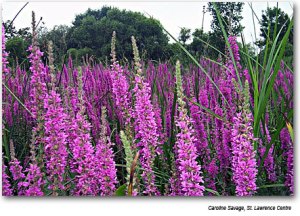
Purple Loosestrife

Purple Loosestrife (Caroline Savage, Saint Lawrence Centre)

Purple Loosestrife (Caroline Savage, Saint Lawrence Centre)

I noticed it two years ago.  The showy purple flowers, standing tall like spears amongst the cattails.  I knew what it was and thought, “I should get rid of that stuff.”  I pulled some of it, in the ditch next to the road, but the plants deep in the wet part of the field I just left.  Next year I would get it.

By this year it was well established.  It has really spread from the few plants I saw two years ago.  A few weeks ago I pulled some of it.  I tried to get all of it at one end of the field, where there were only a few plants.  I dug up a few more in the broad field and along the road.  Then I put it off.  That stuff is hard to pull out of the ground.  I got out there today and had some work to do.

Purple Loosestrife was brought to North America in the 19th century as a source for medicines and through ship balast.  It was further introduced when it was brought to gardens as a perennial flower.  Canals and roads helped it spread.  It is beautiful.  The flowers are tall and colorful and shine in the sun.  But it is also trouble.  The plant likes wet areas and can take over, outcompeting native plants and clogging the place right up.  It spreads underground, roots sprouting new stalks, and it also produces zillions of tiny seeds.  I had to take action.

Let me say right off that I did not get the job done.  I pulled some up by the roots, prying with a fork, but most of it I just clipped with pruning shears.  I would have preferred to yank it out but there is too much at this point.  I needed to at least get the flowers out so they don’t go to seed.  I clipped and dragged and pulled and piled for a while.  I got cut up and sweaty and tired and had three huge piles of stalks.  When I looked back, I could see that it at least was contained a little more.  I had kept it from spreading, a little.  If I can get out there again this week, the field will be better off.  If I can at least cut it all, I will have a head start next summer.

There is no way it is going away any time soon.  Even if I were to dig up all of it, it would likely come back sooner or later.  It is tenacious and voracious.  And we have a great spot for it.  I may be pulling it for as long as we live here.  Apparently one can use herbicides to control it.  I say no thanks to that.  And there are some insects that might snack on it, but I hesitate to take that route. One invasive species is enough.  If I can scale the plant back every year, there is a chance I might get rid of it eventually.  It will take some time, however, and a lot of work.  For our field to stay healthy, however, it needs to be done.  And ain’t nobody else taking on that task.