Alone on Top of Mount Mansfield

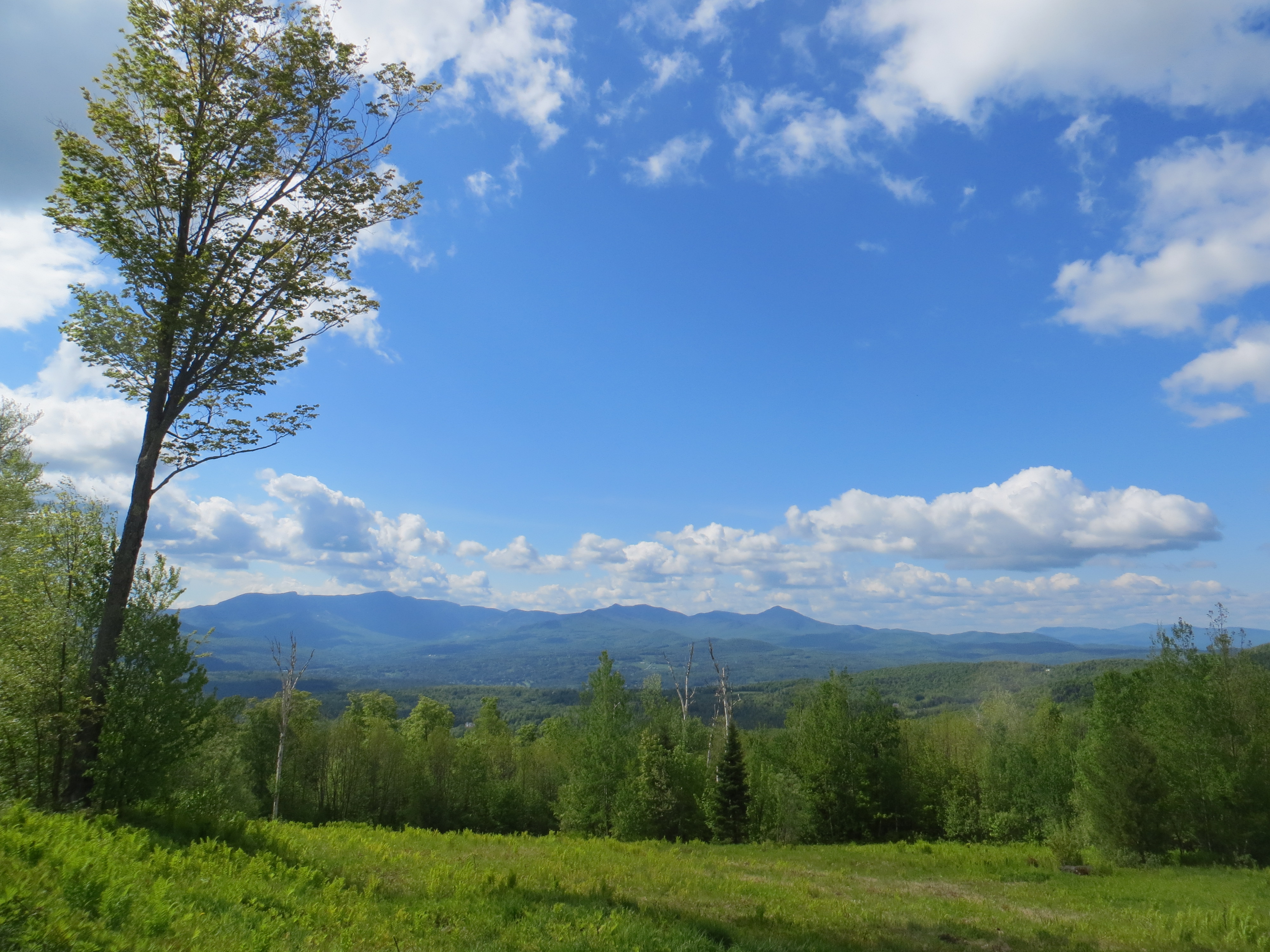
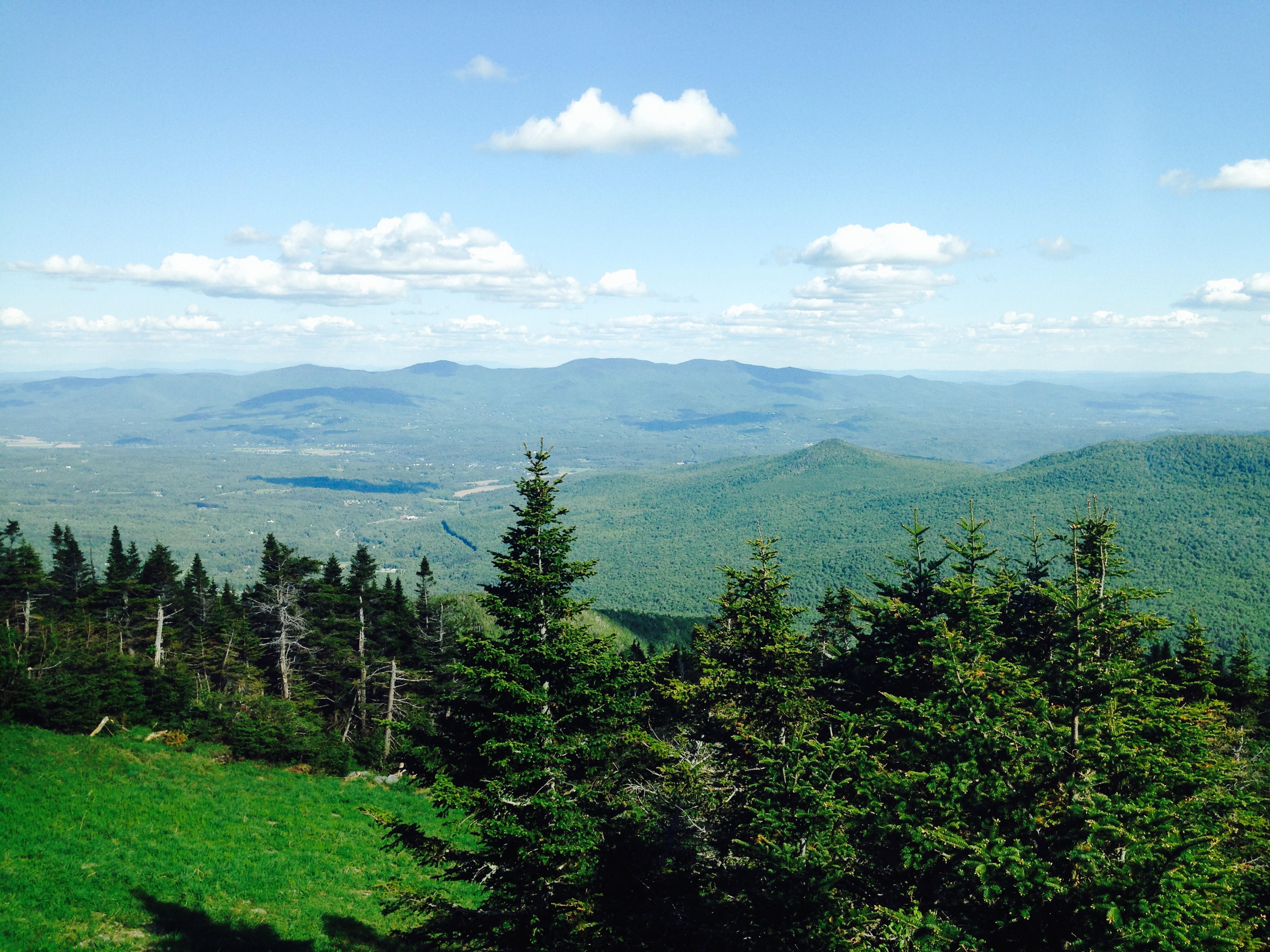
Afternoon view for near the summit

Afternoon view from near the summit

Some years in the past I have done more than one Mountain Birdwatch route, rather than just one, making the effort to get up early to try to find birds at (relatively) high elevation, in the name of science. I have done the Mount Worcester route for four years now and I agreed to take on a second route this year. I agreed to this because I had hoped I could simply get up early at home, hike to the survey route and then do the survey. This would mean I would not have to spend the night out and therefore would not need to take most of the weekend to get it done. Several years ago, before the protocol for the survey changed to make it take longer, I could rise at 1:00 or 2:00 in the morning, drive, hike, do the survey, and be back in town in time for breakfast. So I had hoped I could do that again this year. It did not, of course, quite work out that way.

Vermont Center for Ecostudies, who manages the Mountain Birdwatch survey in the United States, has the benefit of the use of the Stowe Mountain ski patrol hut to aid in its science projects on Mount Mansfield. This means I got to stay there so I could get up early to do the survey. At first I was going to decline this offer and try to drive up super early. But, I thought, what the heck? Why not make things easier? I mean, I am supposed to start the survey at 4:00 in the morning.

So last Saturday afternoon I drove to Stowe. I stopped at the base of the toll road and checked in. I had to sign a couple of release forms. One was for use of the hut and one was for use of the toll road. The toll road snakes its way up and ends close to the summit of the mountain. It provides access for the buildings and towers up there. The towers mean access to television and radio and cell phone signals for all of us. The road means those towers get serviced. It also meant I could drive up rather than hike, saving myself several hours.

In the winter the road is a long and easy ski trail. I had skied it for the first time just this past season. It looked a little bit different without snow. Since it was so late in the day, I only met a few cars coming down and soon arrived at Parking Lot B.  I unloaded my pack and prepared to scout the route. I had never been there so I wanted to make sure I could find each of the survey points. I also wanted to do the cone count.

The survey requires counting fir and spruce cones at each point. This is because of squirrels. Squirrels eat the seeds in the cones. They love those things. So when there are lots of cones (a mast year), the squirrel population grows. The year after a mast year there usually are not so many cones, but there are still a lot of squirrels. So what do they do? They eat the eggs in bird nests. Counting cones can help determine how much of a relationship exists between cones and bird populations. I wanted to get that part done the day before.

I am so glad I scouted the route. The points for this route are all in a straight line but they are not along the same trail.  I had to hike up the access road, down the Long Trail, back up the Long Trail, down the road again, down a side trail, back up the side trail, back down the road, down another side trail, then back to the Long Trail for the last three points. It took some problem-solving and some serious effort as the trails were not all marked well and some were dang rugged.
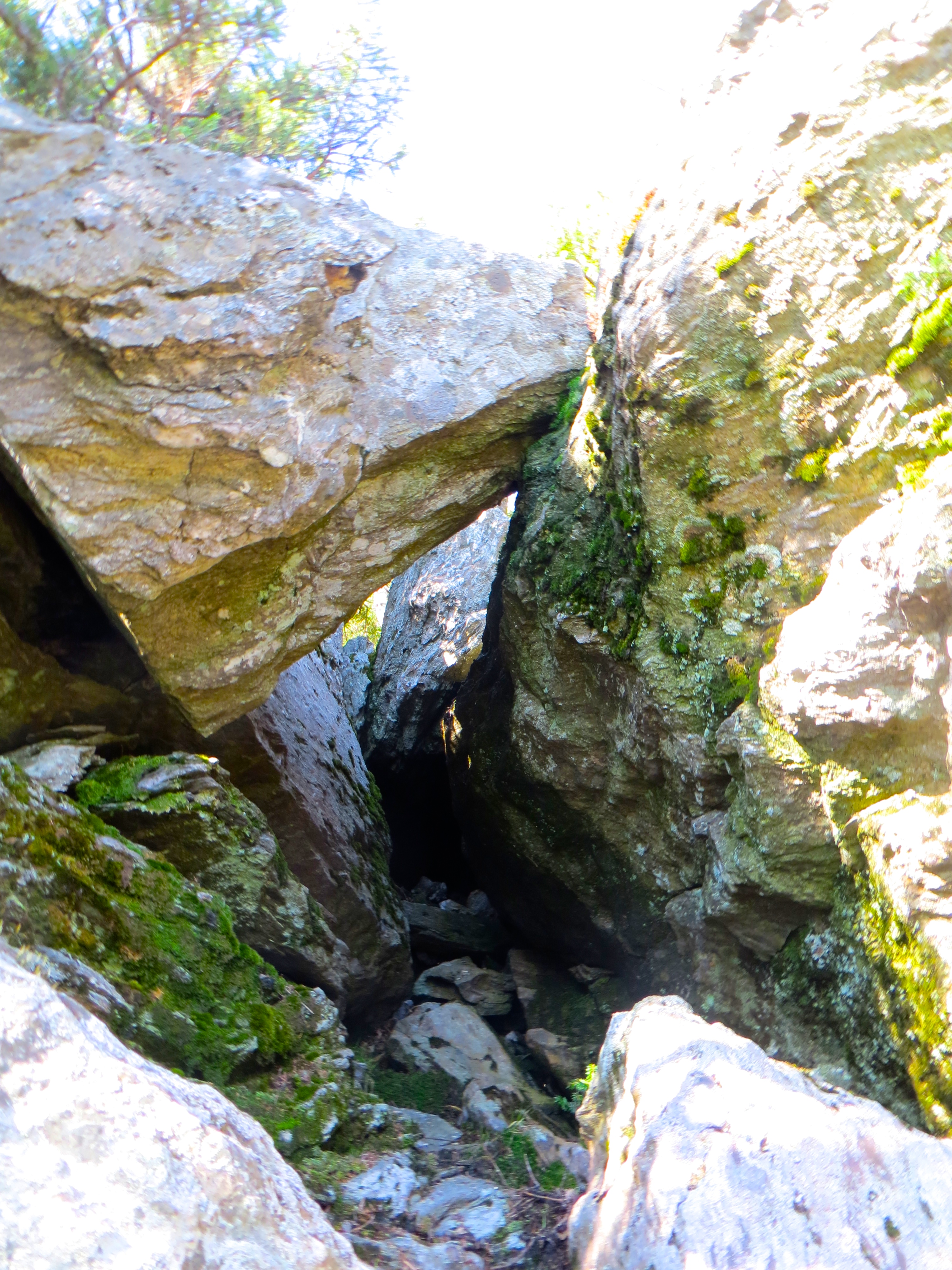
Boulder suspended over the trail

Boulder suspended over the trail

I couldn’t find one of the side trails and so couldn’t find one of the points. I figured out a way to go the opposite way down the trail and assumed I could follow it all the way through to find the access point on the other end. This was the Canyon Trail, well-named. At one point I came to a canyon. The trail ended in a cliff. “You’ve got to be kidding me,” I said aloud. More than once. There was just no simple way down. I could see trail markers painted on rocks far below, and I could see a ladder down there as well, I supposed to aid in getting up a steep section. But there was no ladder for me at the top. I envisioned how it might be possible to scale the rocks to get down, but it was 7:00 p.m. by that point, and I was alone, and I was feeling a little tired, and I had not eaten dinner. “Ain’t happening I said aloud.” More than once.

Eventually I did find the point from the other end, and I did count cones, and I got back to the hut to eat and sleep, much later than I wanted. I slept on the couch, fitfully, alarm set to wake me at 3:30 a.m. At 2:30 a.m., however, loud country music started playing. I was confused. I hoped it would stop. I thought I might be able to sleep through it. Then I got up. It turns out there was a huge old boom box in the basement, with giant speakers and double tape deck. It was playing the loud country music. I found the power button and pushed it. The loud country music stopped. I still have no idea what the heck that was about. Timer? Ghost? Mouse?
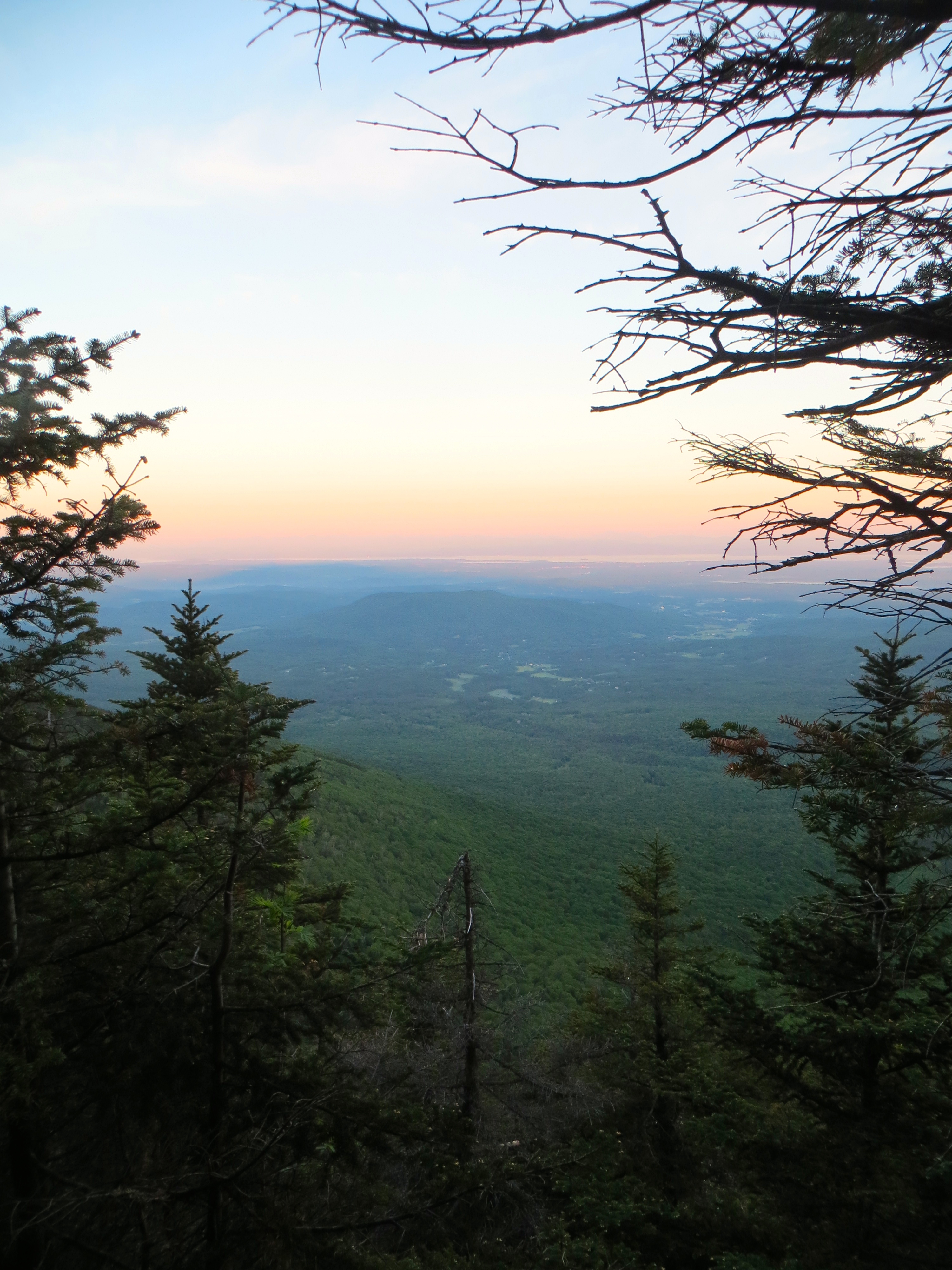
IMG_4006

On the trail at 4:30 a.m

Ultimately, I did get up. I did hike back up to do the survey. I found all the points easily this time. I heard the birds I had come to find. It could not have been a more perfect morning–no clouds, no wind, a little cool at 45 degrees. When I was finished I sat on the ridge and looked out at this beautiful place on that beautiful day. No one else was around. After enjoying the stillness and the view for a bit, I starting hiking back down, trying hard not to hum a country tune.
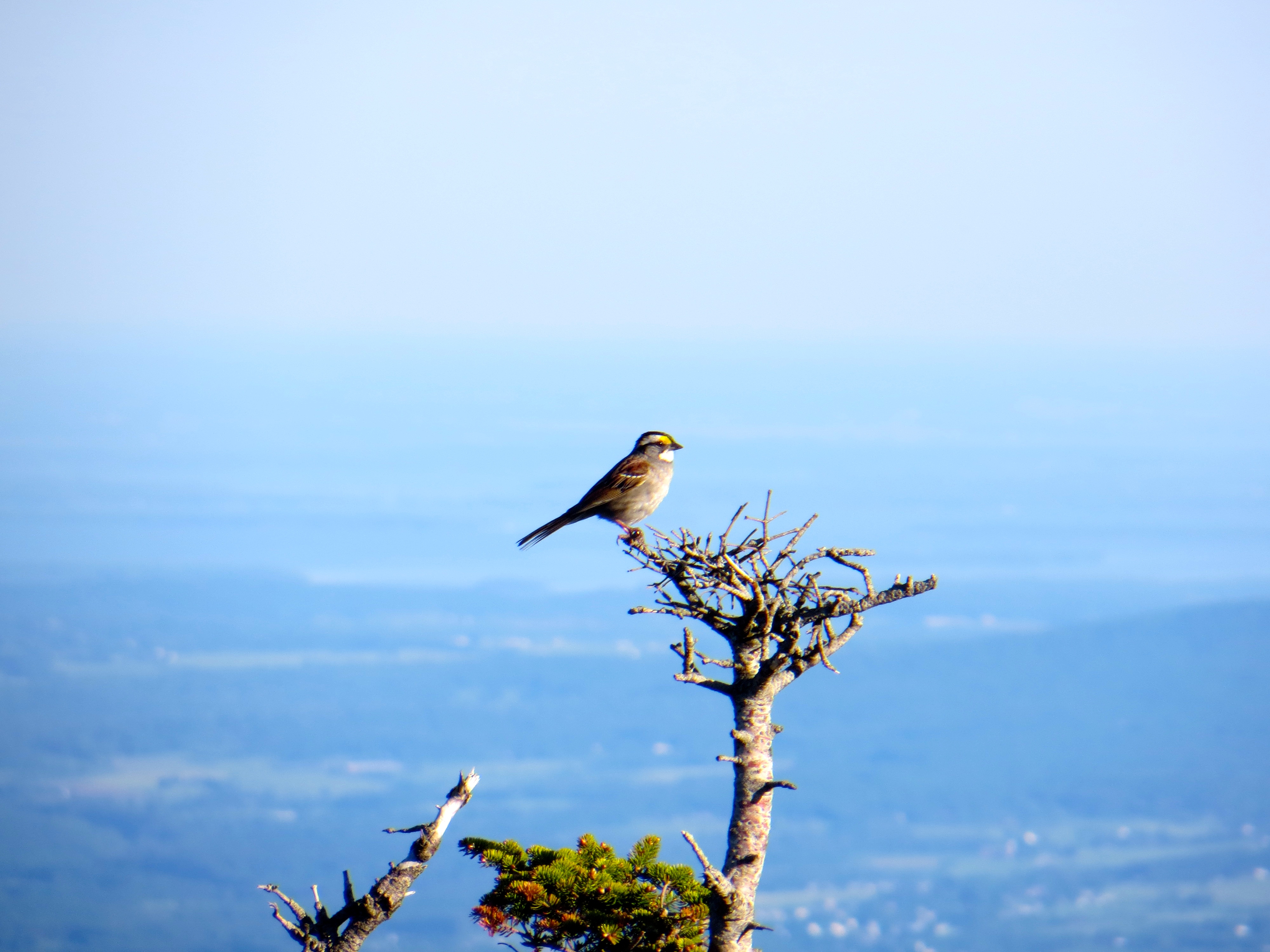
White-Throated Sparrow on the ridge

White-Throated Sparrow on the ridge, not singing a country tune

A Great Day to Get Up at 4:00 A.M.

IMG_3957The hike up is not that long but it is a bit brutal. After taking one route up a couple of times I realized there is a shorter and easier route, at least for the first bit of the hike. That shorter route cuts off about a half mile of hiking but still, it ain’t easy. This isn’t one of the highest peaks in Vermont and I don’t even end up on a summit, but I tell you it is a tough one.

I hiked up to the Skyline Trail that connects Mount Worcester and Mount Hunger in the Worcester Range, which parallels the Green Mountains. This was my fourth year doing it and each time I think it won’t be so tough. Each time I am humbled. I hike up there so I can camp out and then get up at 4:00 in the morning to find birds. Most of the birds I don’t even see but simply hear. I know, it sounds silly–take a tough hike to rise super early to find birds you can’t see? But it is pretty great.

This is my 15th year volunteering for the Mountain Birdwatch program, which surveys high elevation birds in the Northeast. You know, Bicknell’s Thrush, Blackpoll Warbler, Winter Wren, those birds most people have never heard of. That is part of why I do it, I guess. To hear a Bicknells’s Thrush sing, which only happens in early summer and only and higher elevations in northeastern North America, is a treat. Most people simply are not going to hear that song. It is a rare sound and something I cherish. It gives me hope each year that things are not as bad in the world as they might be.

The survey protocols require listening and looking early in the morning. The birds sing the most just as it is getting light and a little while after the sun rises. Being high on a mountain as the world awakens, the smell of firs floating over the trail, bird song ringing out–seriously, it is life lived at its most divine. Of course, I also have to take care to mark down all the birds I detect of specific target species, how far away they are, if I saw or heard them, how many, that science-type stuff, but it feels then like I am doing something that maybe matters, that maybe will help to keep these places and moments around just a little longer.

I agreed to take this route after the one I had been doing for a decade had been discontinued. So it goes when scientific rigor comes into play. The old route just didn’t make the cut when the protocols got changed a few years ago. It was a bummer to let that route go but it gave me a chance to see someplace new. I had heard the new route was tough and it was. It is steep and rugged and not often used. It is slippery and sometimes hard to follow. And it is a just a little more challenging with a pack full of a tent and binoculars and warm clothes and a notebook and so on. I have given up on bringing a stove to cook dinner–too much extra weight; I just bring food I can eat straight up.

This year was particularly nice. It was clear and sunny and just a gem of a June day on both the hike in and the day of the survey. There were no clouds and there was no wind. The birds were out. Last year I hiked in and had to abort because it was too windy in the morning. I had to go back and try again the next weekend. This year the weather could not have been more perfect. OK, it was 35 degrees when I started at 4:00, and I did keep my sleeping bag wrapped around me for the first hour, but it warmed up soon enough. I heard all the birds I expected to hear plus another rare one for that area (a Boreal Chickadee) and called it good after collecting some data.

The hike out was tough but not as tough with the gravity assist. Back at the car I changed into clean shorts and shirt, opened the car windows and headed into Waterbury for a slice of pizza. I was tired–not enough sleep and some solid hiking–but I watched the sky turn pink at the beginning of day, and I heard rare birds sing, and for a full cycle of the sun I was immersed in a beautiful place. If my wife could have been there it would have been perfect. I guess perfection will have to wait, for now at least.

Bluebird day on the hike down

Bluebird day on the hike down

Too Hot

I love how there are still scientists out there who will not commit to saying that climate change is at least part of the cause of our recent severe weather. July was the hottest on record of any month since such records have been kept, and the last 12 months were the warmest such stretch. This isn’t a new thing here people. How many times do we get to hear “last month was the warmest on record” before enough of us wise up to the problem. The New York times reported this today, interviewing Jake Crouch, “a climatologist at the agency’s National Climatic Data Center in Asheville, N.C.” They wrote “Asked whether the July heat record was linked to rising atmospheric concentrations of greenhouse gases, Mr. Crouch said he could not draw that conclusion.” I get the impression that scientists are afraid to draw the obvious conclusion not because they are scientists but because they are afraid.

At least three scientists, James Hanson, Makiko Sato and Reto Reudy, have been willing to state that climate change is making a difference is out weather. In their report, Perception of Climate Change, they write:

“Climate dice,” describing the chance of unusually warm or cool seasons, have become more and more “loaded” in the past 30 y, coincident with rapid global warming. The distribution of seasonal mean temperature anomalies has shifted toward higher temperatures and the range of anomalies has increased. An important change is the emergence of a category of summertime extremely hot outliers, more than three standard deviations (3σ) warmer than the climatology of the 1951–1980 base period. This hot extreme, which covered much less than 1% of Earth’s surface during the base period, now typically covers about 10% of the land area. It follows that we can state, with a high degree of confidence, that extreme anomalies such as those in Texas and Oklahoma in 2011 and Moscow in 2010 were a consequence of global warming because their likelihood in the absence of global warming was exceedingly small. 

Note the last sentence. They took some heat for this. There are plenty of people who, mysteriously, continue to look (or not look) at the science and fail to see the problem for what it is. I am a bit mystified by what anyone has to gain by perpetuating the “hoax” of global warming. What scientist wants to be wrong? Why claim something isn’t true? In the science community a falsehood will get found out eventually. It’s not like this is a good thing. That is why it is a problem. Sure, you can call global warming a theory and say it isn’t proven. You wouldn’t be wrong. But you can say gravity is a theory, too. Go ahead and tell people that isn’t real.

Anyway, it has been to hot around here this summer. When we get rain, we get a big storm blasting through. Eighty degrees is now a normal daily temperature. That used to be hot, and plenty uncommon for me. We now use an air conditioner at night too often. What gives with that here? It is not just because we are getting older and can’t stand the same old heat. It ain’t the same old heat. Somebody needs to put in a lake at our house.

Call it controversial. Call it a theory. Call it a debate. Heck, call it Fred. It is not going away. It is hot and the weather is crazy. At some point human caused climate change will be a matter of general knowledge in the United States. We’ll catch up to the rest of the world eventually. In the meantime I am going to go make some cool drinks.


UPDATE: Here is another Times article that offers some perspective on the “new normal” with this gem: “it is increasingly clear that we already live in the era of human-induced climate change, with a growing frequency of weather and climate extremes like heat waves, droughts, floods and fires.” That cool drink is going to come in handy.