Windy Enough to Blow Me Over

IMG_5671 I worked at home today and was remarkably productive. By 11:00 I had gotten most of the things on my to-do list completed. I can’t say that happens every time I work at home. Today, however, I managed to crank it out. Mid-day I took a break, suited up for the weather and headed to the lake. I was hoping to see ducks on the open water.

The first spot I stopped was a no go–it was frozen solid as far as I could see. No ducks to be found there. So I headed south and found some water that was less solid. The Shelburne Town Beach can be iced in early, depending on the wind and the temperatures. If wind blows into the bay it can be iced over; if not it stays open. Today the wind was blowing right toward shore but the ice was hardly piled up. It has been cold lately so there is plenty of ice on the lake. There just wasn’t much ice right there. I did see some birds. There were scores of Mallards and several Common Goldeneye but it was hard to see them well. The wind was blowing so hard it was difficult to keep my spotting scope steady. It was even a challenge to keep binoculars steady. I had to lean into the wind to keep from blowing over. I got to see a Bald Eagle soar overhead a couple of times. It was a beautiful mature bird. Unfortunately, it scared away most of the ducks.

I got cold, as you can imagine, but only partly. My hands were getting numb but the rest of me, thanks to my awesome down jacket, was toasty. I moved on to another site and saw even fewer birds. I tried to stick it out but the wind was fierce. Even the birds were having a hard time. Mallards were surfing and getting dunked under the waves curling at the shore. It was a harsh situation. I didn’t see any new birds for the year but it was pretty amazing to see the lake like that. Every time I go it looks different–blowing one day and calm the next, green sometimes, clear others, frozen water or calm water. It is never the same so is always amazing to see.

My year list stands at 33, not terrible for mid-January in Vermont. I missed the Harlequin Duck when I went up to Grand Isle briefly to find that rarity, so bummer for me. I do plan to head to Florida later this month. I am sure that will prove to be a birding foray to write about. Until then, I don’t expect much. If I could get out there every day and really explore, maybe I might find all the avian treasures. But I do have to work.

After I got back home today I tossed a log into the woodstove and got down to some email. I did some scheduling and printed a letter to mail and generally got some more office-type stuff done. It was a lot warmer at my desk. But not nearly as fun.

New Year Birding Goal

IMG_5539

Last year I had a goal to see 175 birds in my home county. My goal for 2013 was to see 150 and I got up to 174. The 175 goal was simply to surpass that 174. By December 31 I had encountered 194. At one point in October I thought I might be able to get to 200, a lofty goal for one county in Vermont. I had seen three new birds for the year in one day and thought I only needed to find a few more to reach the 200 mark. In the last two months of the year, however, I found only one new one–a snowy owl by Lake Champlain, just inside the county line. Still, 194 ain’t bad.

I could have simply increased my goal to 200 for the county. That would, perhaps, seem logical. I wanted, however, to try something new, something broader. Staying in the county is fairly easy, as I live year and it means I do not travel far. But I will travel a few times in any case. In 2014 I encountered 177 different birds. I traveled to Florida and to California, plus looked on the Connecticut and Maine coasts. I was happy with that. I have no California trip planned but I do have a trip to Wyoming planned. Wyoming does not have quite the diversity that California offers but will offer some great birding I am sure.

My birding goal for 2015 is simply to find 250 birds, anywhere. I know this is less than 2014 but I will not be in California. I saw 88 species there. Half of those I saw nowhere else. It can be tempting to just up the ante and go for more, but attempting to find 250 unique bird species is a reasonable goal for me. If I could take all the time I wanted and travel all over I could try to find twice that number but that is not in the cards, not this year.

Noah Strycker is one man trying to find as many birds as he can in one year by traveling all over the world. He is now in Antarctica, where he started two days ago. There are about 10,000 bird species in the world and he is hoping to see half that many. That is a lofty goal. You can check out his progress on his blog, Birding Without Borders, on the Audubon website. If you want to follow my progress you will have to check back here. It won’t be nearly as exciting, but I hope to get a few interesting species and maybe some photos. So far I am at 28 species for the year, including the Snow Goose that eluded me all last year. Not a bad way to start a new year, goal or no.

Cold Day to Look for Birds

IMG_5429


December is well under way, which means I only have a few days left to see how many birds I can find in my home county. Last year my count was 174 so I wanted to best that this year. I reached that goal months ago but kept going. I figured 200 was just a little too far out of reach but as I inched closer I thought it just might be possible. Yesterday I was at 193. Today I got up to 194.

I had heard that snowy owls had been seen on the lake and I wanted to try to see one myself. I have tried to find them, but I have struck out. I headed to Sand Bar State Park early this morning even though it was cold–18 degrees–and it was windy. With ice on the lake, and the wind blowing in right off the water, it was bitterly cold. I started off well by seeing a Rough Legged Hawk. They are not common but head south to our area in the winter. I got a really close look at it so felt the morning was a win already. I also saw ten Northern Pintails, beautiful ducks with a brown face and white neck. Again, I got close enough to see them well, and ten is a lot to see at once. So I was happy enough.

As I was watching the ducks (and there were many other ducks there as well) I missed a Snowy Owl glide in and land on a log nearby. I looked up and couldn’t believe it had landed right there. I watched it through binoculars and through my spotting scope and then figured I might as well try to get closer. I walked toward it and it did not fly away. I got close enough to get the above shot.

I watched it for a while. I had seen one last winter but this was a much better sighting. The sun had come up by then and was low in the sky, so when it peeked out from the clouds, the owl was bathed in golden light. But mostly it was cloudy, and did I mention the wind? I had on lots of warm duds, including snow pants and a down jacket, but the wind managed to creep in. My hands, especially, got cold. I kept warming them and they kept getting cold. Apparently t is time to break out the thicker gloves.

The owl, and the Pintails, were still there when I walked away; I was too cold to observe any longer. I warmed up in the car and headed to the corner store for a cup of hot coffee for the ride home. The owl was still on that log, a white ghost in my rear view mirror as I drove off. All those people driving by on Route 2 couldn’t see it, but there was an unusual and beautiful creature right there if they slowed down and looked. It is easy to miss things of beauty as we race along. It was seriously cold this morning, but I am glad I slowed down to look. Six more species by the end of December? I’ve got a bit more slowing down to do in these next weeks to reach that goal.

October Birding in the Northeast Kingdom

My family went away for a few days last week–took a trip south while I stayed home and worked. Since they were gone for a while I thought I would take a weekend day to do some birding some place new. I thought about driving out of state–maybe to Plum Island or to the Maine coast somewhere. But then I thought I would stay close to home. There are lots of places in Vermont I have not been at all, and plenty where I have not been birding. So I headed north and east on Sunday morning to see what I could find.

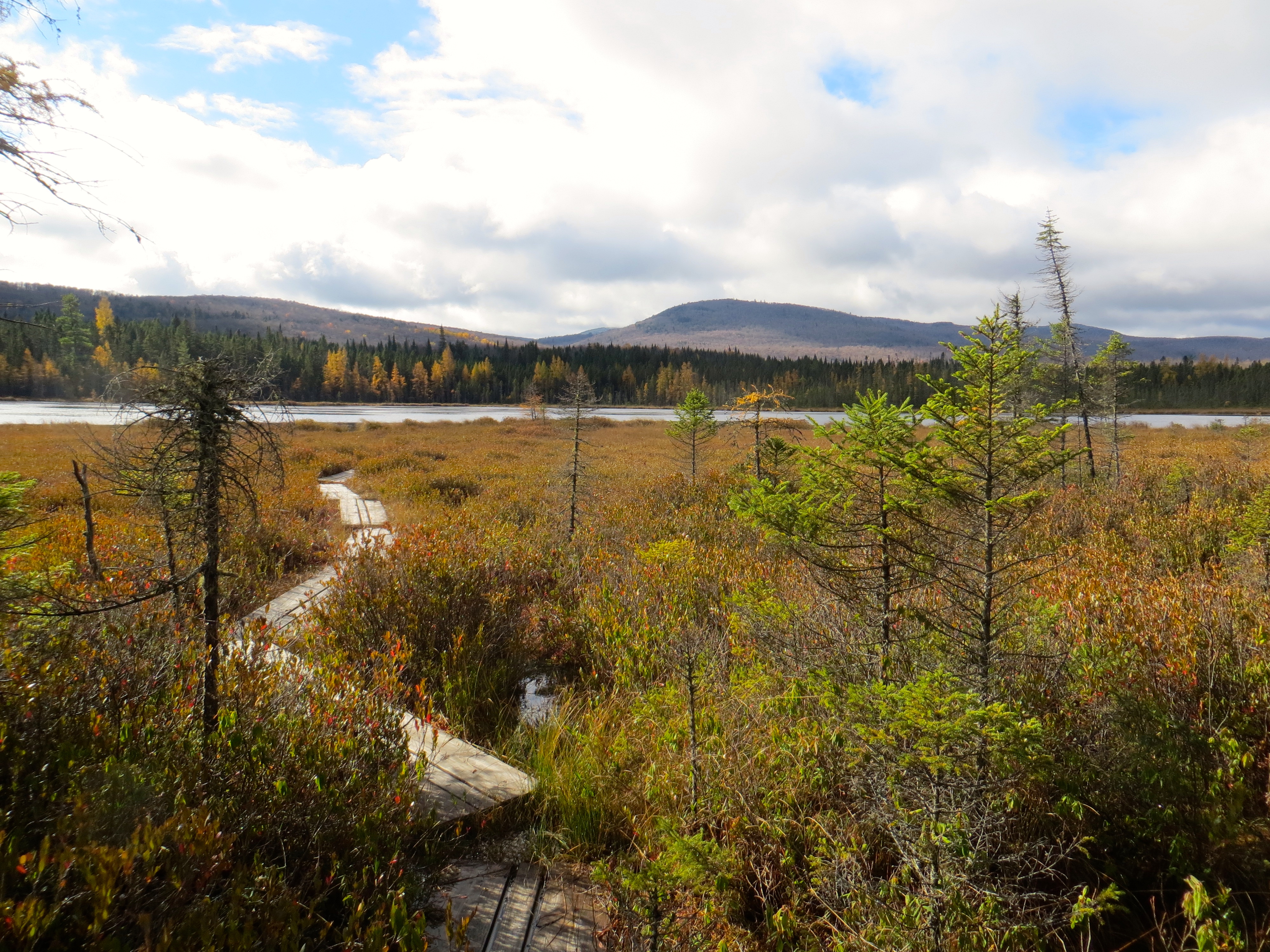
A couple hours of driving took me to Wenlock Wildlife Management Area. I parked in a pull-off on a dirt road and headed out with binoculars in hand. Just down the road was a bog with lots of standing dead trees. I thought this might be a good spot to find Black-Backed Woodpeckers. That was a no go, but I did see and hear lots of other birds–Juncos, White Throated Sparrows, Ruby Crowned and Golden Crowned Kinglets. I had read about a trail off this road that offered good birding habitat and and access to Moose Bog. It took me a bit to be sure I had the right spot, but eventually I turned off into the woods.

IMG_5232

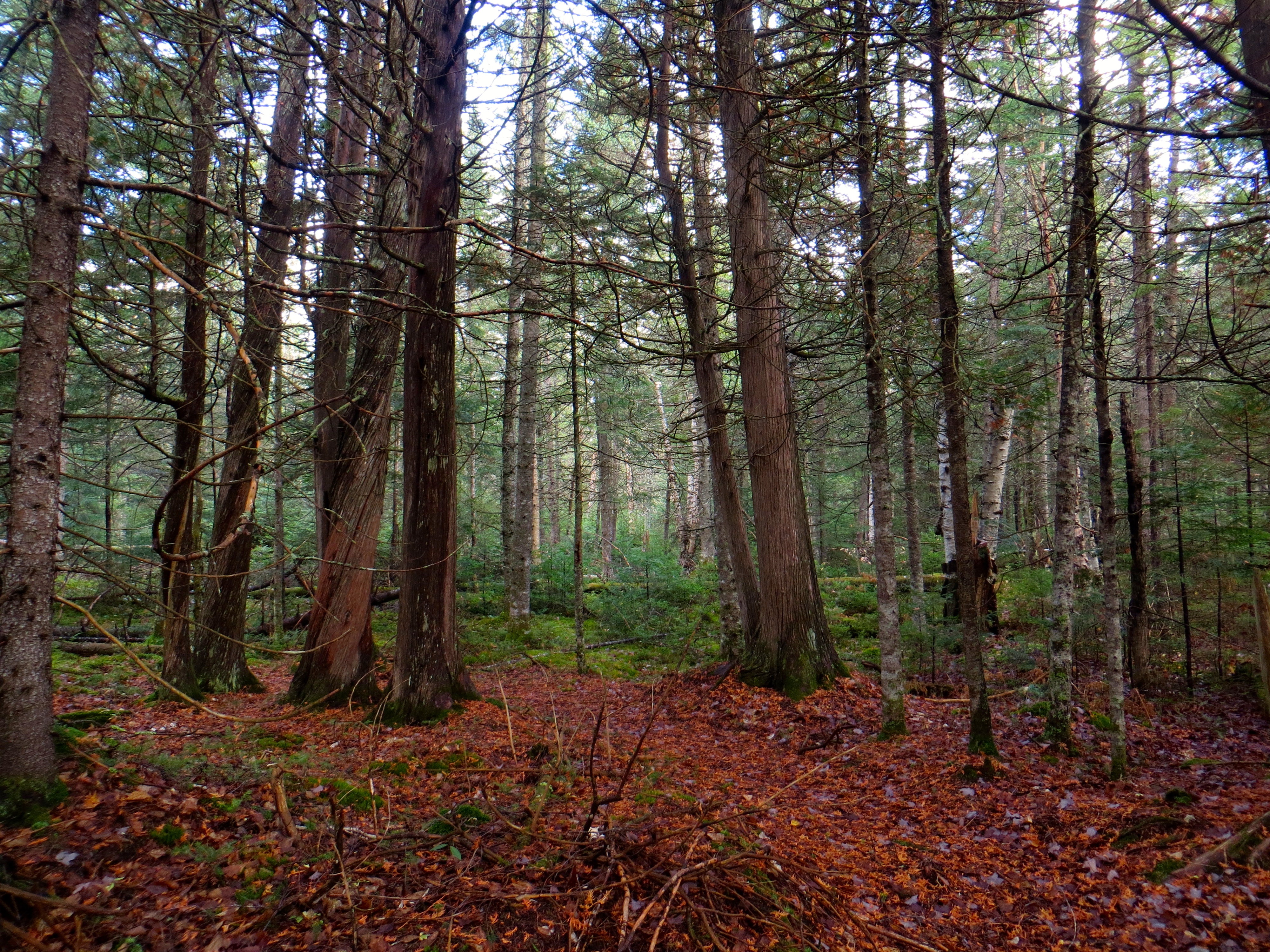
Cedar and spruce and moss–where are the Spruce Grouse?

The day was cold (eventually it hit 40 degrees but not until the afternoon) and the woods were quiet. I was hoping to find at least one of four species I can’t find at home: Gray Jay, Boreal Chickadee, Black Backed Woodpecker and Spruce Grouse. The habitat was there but the birds were not. I walked slowly, headed down a side trail to Moose Bog in a couple of spots but I struck out. Maybe it was too cold, maybe it was just the wrong time of year. It was certainly beautiful, and peaceful, and I was happy to explore.

Moose Bog

Moose Bog

Once I tapped out Wenlock I drove up the road to find the Sylvio O. Conte National Wildlife Refuge. I found a loop trail and tried that, with only a few Black Capped Chickadees, more Golden Crowned Kinglets, and a Robin or two. Again, quiet. I headed back up the road to the visitor’s center to try there. That place is beautiful–a stone and wood building with a fine view, some displays, information and lots to learn. I tried the river trail that loops from there.

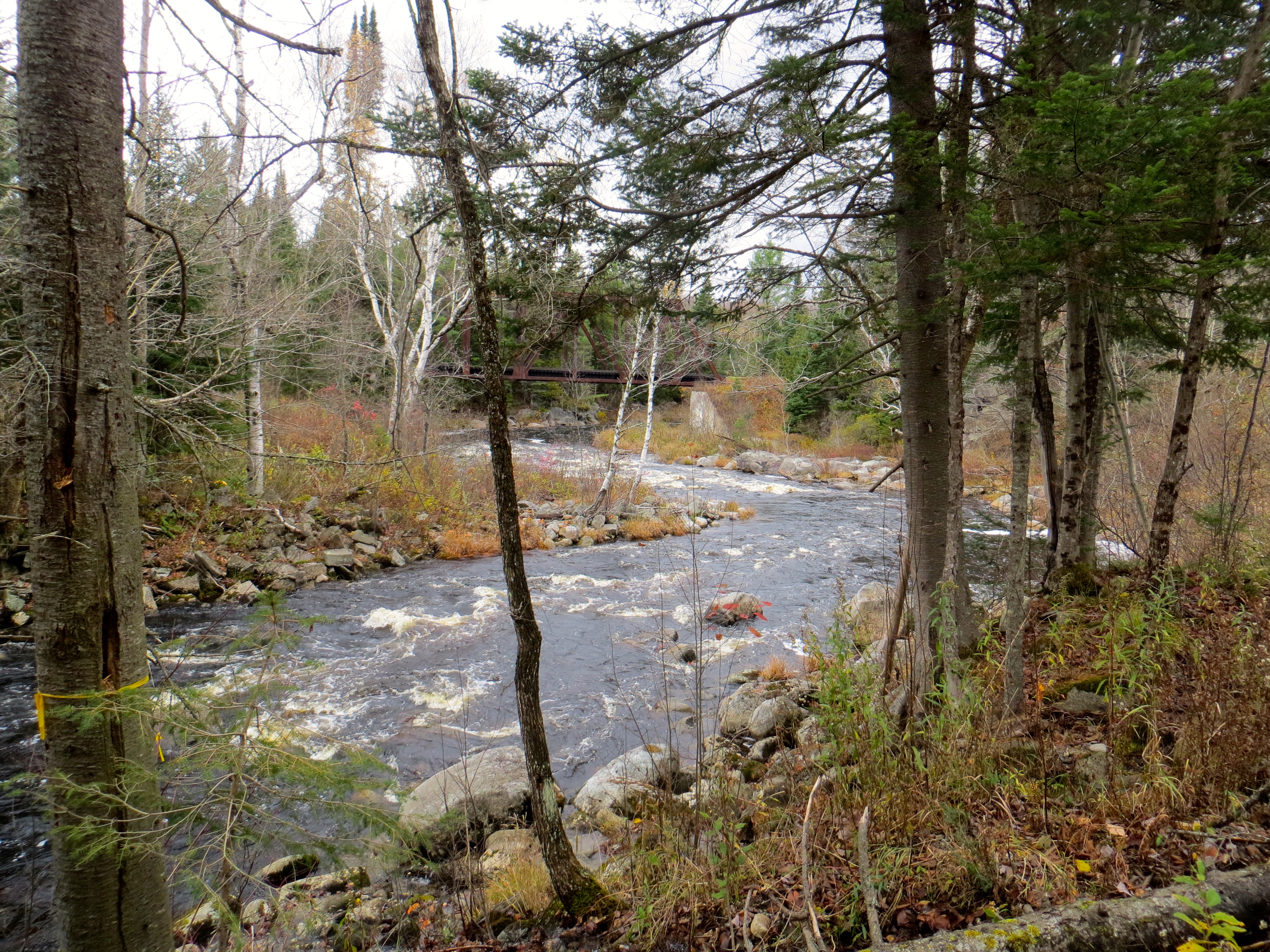
Golden Crowned Kinglets were the bird of the day for sure. There was another passel of them here, flitting and singing and making themselves known. The trail wound by the river, which was high, so I couldn’t hear much for a good ways. Again, I found few birds but the place was beautiful, even after peak foliage had passed. If felt great just to be out there. I just don’t do that enough.

Nulhegan River

Nulhegan River

The color to be noted that day was yellow. Aspens were still holding on to yellow leaves and tamaracks were turning and shedding needles. Yellow dotted the hills and any open spots in the woods, and a carpet of yellow needles covered the ground in spots. It was cold, it was calm, and I felt energized by the quiet of it all.

Tamarack needles on the trail

Tamarack needles on the trail

If you see all those four species I was seeking in one day you can call it the Northeast Kingdom birding grand slam. I was pitched a no-hitter. But I will go back there one of these days. There is a state park nearby and maybe this summer we can go up as a family. Maybe in the summer I can manage to get a hit, even if I don’t hit it over the fence.

Birds I saw that day:

Canada Goose
American Crow
Common Raven
Downy Woodpecker
Northern Flicker
Black Capped Chickadee
Red Breasted Nuthatch
American Robin
Eastern Bluebird
Golden Crowned Kinglet
Ruby Crowned Kinglet
Swamp Sparrow
White Throated Sparrow
Dark Eyed Junco

Autumn Around Here

IMG_2118

Driving back from the market yesterday morning I rounded the corner and was taken aback, as they used to say, by the beauty of the view. I saw my house across the field, the hill behind it lit up with autumn color. Early yesterday fog rolled out and clouds tossed around the sunlight and it was a stunner of a day.

I started off my morning a trip to Shelburne Pond to look for birds. I was rewarded with a new one for the year for my county list–five Ruddy Ducks were swimming and diving just out from shore. They are not common around here so it was a treat to watch them for a while. I saw some late Red-Winged Blackbirds and heard a Song Sparrow singing. I came home to hear Meadowlarks calling and chattering in our field. There were half a dozen of them, pausing on their way south.

I am fortunate to have an amazing view right from my house. I can watch the hills, this time of year, as the leaves turn yellow and red and orange as color makes its way down the hills. Soon I will be seeing snow on the summits and we will be thinking of skiing. I will seek out more migrating birds today at some point, get out there and enjoy these colors while they last. Halloween isn’t far off. By the time we carve up pumpkins and get some costumes ready and collect all that candy, these leaves will already be turning to dirt.

Wandering Back to the House

IMG_2061

This morning after I saw the kids onto the school bus, I wandered back to the house. I worked at home today and I knew I would have a lot to do. I did not have many hours to accomplish all I needed to accomplish. So I wandered back to the house. Our driveway is about a quarter mile long so wandering is easy anyway. I took to the field, however, looking and listening, taking my time to attend to the duties I have accepted to make a living.

I saw five bluebirds land in a tree, with two chipping sparrows accompanying them. I heard a Canada goose honk in the distance and I wondered if it was alone. I stooped to look at the purple asters, some light purple, some dark purple. I looked under the milkweed for monarch butterfly caterpillars and watched the chaotic flight of one of those orange and black beauties.

The sun came out today for a few minutes this morning, but mostly it was just plain old cloudy. A few ducks flew off, blue wings flashing in the morning’s dimness. A breeze pushed the grass around in waves. I thought of the meadowlarks, so recently singing across this same field. I thought of seeing a crowd of them last October, late migrators stopping by our meadow. No meadowlarks sang today. But for the few cars passing and a handful of crickets, it was quiet.

I got back to the house too soon, of course. I would have been happy to lie down and to watch the clouds, to look for spiders in the goldenrod, to smell the dampness, to watch the ash trees flutter their fading leaves. Reluctantly, I pushed open the door and got to work. I was not too distracted by the glory of the day so I did mange to get things done. I met my obligations, indeed, but I would have preferred to have shunned them today. I feel that way often these days. I want to soak up the world while I can. I don’t want to miss the butterfly that stops to sip at the last touch-me-not. I don’t want to miss the squirrel squirreling acorns.

Each day passes and I miss most of it. We all do. We complain when the days are cloudy, but the cloudy days are as full of wonder as the sunny days. I have to choose to pay attention if I want to see it. I have to choose to be a part of the world, rather than to just watch. I have to choose to wander.

Mowing and Meadowlarks

IMG_4554

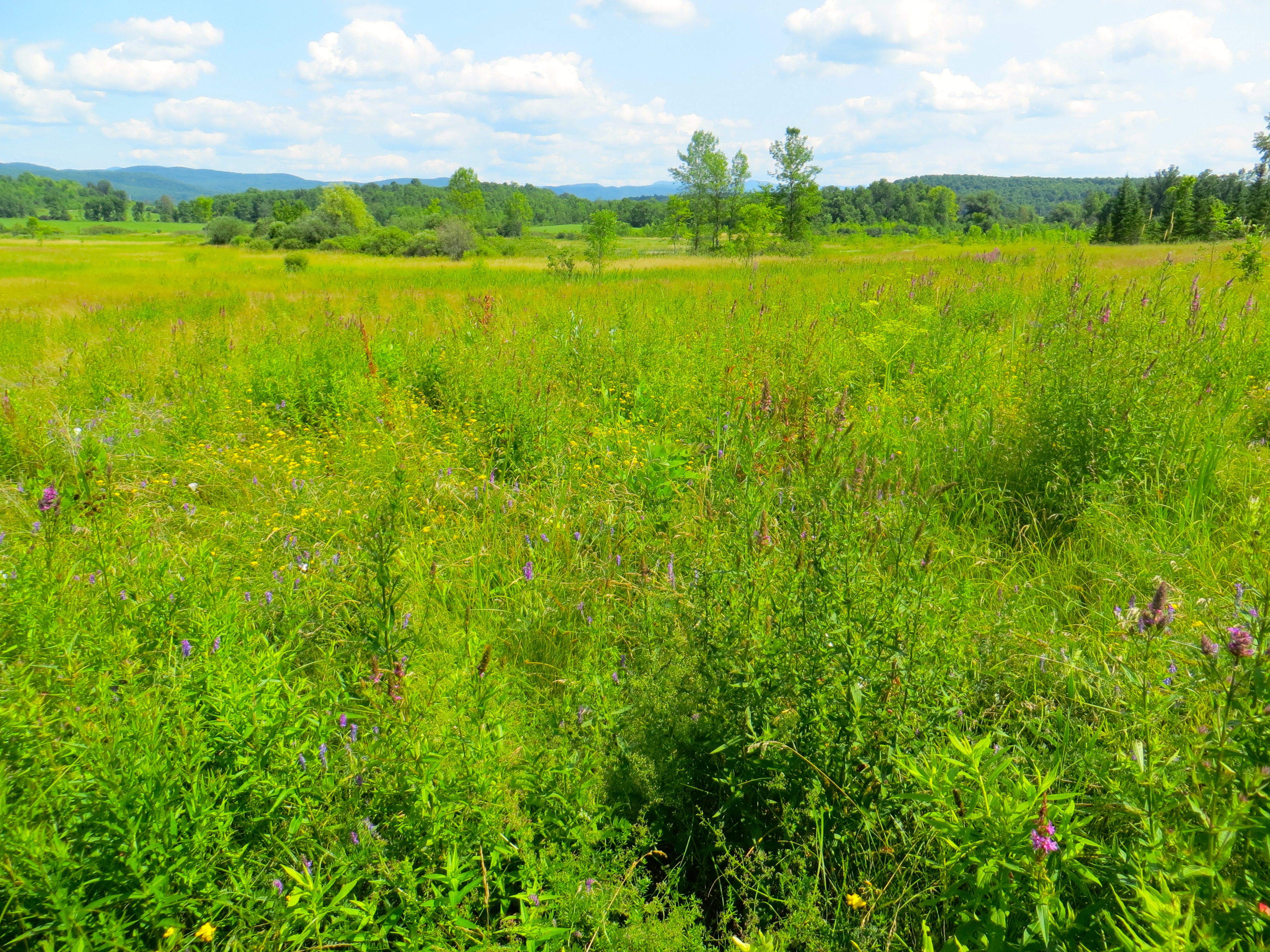
This is the time of year when we get around to mowing our field. We have ten acres of meadow. When we moved here it had not been cut in several years and it was starting to get scrubby. Cattails grew in a wide swath. Ash trees were sprouting and willows were standing out among the grasses and wildflowers. Actually, the grasses were pretty limited. The field had long passed the point of being suitable for haying. We wanted to turn that around.

One reason we wanted to turn it around was Bobolinks. There were Bobolinks nearby, in adjacent fields and up the road, but none in our field. It was just too overgrown. They like to nest in grasslands and our meadow was quickly reverting to woodland. We borrowed a tractor with a brush hog and cut it, cattails and all. We did the same thing the next year. We were not, however, especially deliberate about it. We cut it when we had access to a tractor and it worked. Grasses started to grow and it looked good.

I have learned a bit about this small habitat of ours since those early years. First, we have three invasive plants (more I am sure but three major ones): wild parsnip, purple loosestrife and reed canary grass. The purple loosestrife was the worst at first and those early cuttings really made a difference. We still have it but it hardly dominates like it did. It has beautiful flowers which get visited by butterflies and hummingbirds, so it is hard to hate it, but I would rather it did not take over.

The reed canary grass I started learning about recently, even though it was pointed out a few years ago. It, too, is a beautiful plant, which is why it and purple loosestrife are both used as ornamentals. It grows in thick mats and apparently can be hard to eradicate. This grass isn’t too bad yet–we have a few patches but it has not taken over.

The real villain is the wild parsnip. When we first encountered this plant we thought it might be wild dill. It is tall with yellow large-headed flowers. I looked it up and learned that the roots are edible, hence the name. It is, however, not a pleasant smelling herb or a ready food source. It is a menace.

There are fields where wild parsnip has simply taken over. The plants can get to be super tall–eight feet sometimes–and they will push out native plants. I have seen fields where it is the only plant visible. If those fields eventually grow up into woods the wild parsnip will disappear, but in sunny fields it is a bully. Moreover, the plant is toxic. The oil from the plant can rub off and, when exposed to sunlight, can cause chemical burns. Photoreactive is the word. In short, we wanted to make sure it does not live in our field.

The solution would be to simply cut the field several times a year to keep invasive plants from growing and to let native grasses grow up. So simple. The problem is that birds nest on the ground. Bobolinks have started to nest in our field since we started cutting. Also nesting on the ground: Red-Winged Blackbirds, Savannah Sparrows and, most recently, Eastern Meadowlarks. The biggest enemy of these birds is the mower, so cutting when the birds are nesting is bad juju.

Now we try to be deliberate about when we mow. The trick is to wait long enough for chicks to have fledged but to get to it before the wild parsnip has gone to seed. That would be right about now. Pretty much. Red-Winged Blackbirds and Bobolinks are hardly around at this point, so I am not worried about them. The Meadowlarks, however, are still chattering away and flying all over. They may be on egg clutch number two, and there are at least two pairs.

This year the compromise was clear–cut the front part of the field where the parsnip is the worst and leave the back part of the field, where the birds are nesting, to be cut in a couple of weeks. Yesterday, after mechanical issues that finally got solved, I got on that. It was like scratching an itch. Mowing down those wild parsnip plants, several of which were taller than me, felt good. I was relieved that, unlike last year when I cut it, none of it had gone to seed yet. Phew.

IMG_4557

Brush hog doing its work

There is still more of the field to cut, of course, and wild parsnip is in there. Hopefully, however, because so much of it is newer growth, it won’t be too bad. I may look to do a second cutting in October or November. That would help with the canary grass, and the birds will be heading south by then. I thought I might do that last year and never got to it, however, so I’m making no promises.

As I write this Meadowlarks are calling and Savannah Sparrows are singing. Leaving the most grassy part of the field for now is clearly the right choice, but I will look forward to seeing those yellow wild parsnip heads get shredded when I finish the job.

Upper field cut

Upper field cut with a couple of small trees left for birds to perch

Breakfast and Biking and Building

IMG_4055

A stop on the Burlington bike path

We slept out on the porch last night. A section of it is screened, so we set up cozy beds on the couch and had our Z’s outside. We woke up later than I thought we would, given that the birds are singing at 4:00, about 7:00. I gathered some things while my son rubbed the bleariness from his eyes and then we headed to town.

First stop was Penny Cluse Cafe. They have the best breakfast around. My son had buttermilk pancakes, which he said were almost as good as mine. Right thing to say. And he wasn’t even after ice cream. I had beans and eggs and corn muffins–not something I typically have at home, which was the idea. Coffee, fresh-squeezed orange juice–we were good to go on the meal front.

Next stop was the Ski Rack to pick up my son’s bike that had gotten some service. We rolled that outside, pulled my bike from the roof rack and, with full water bottles and some snacks, we headed to the lake. We passed the waterfront area and headed north on the bike path.

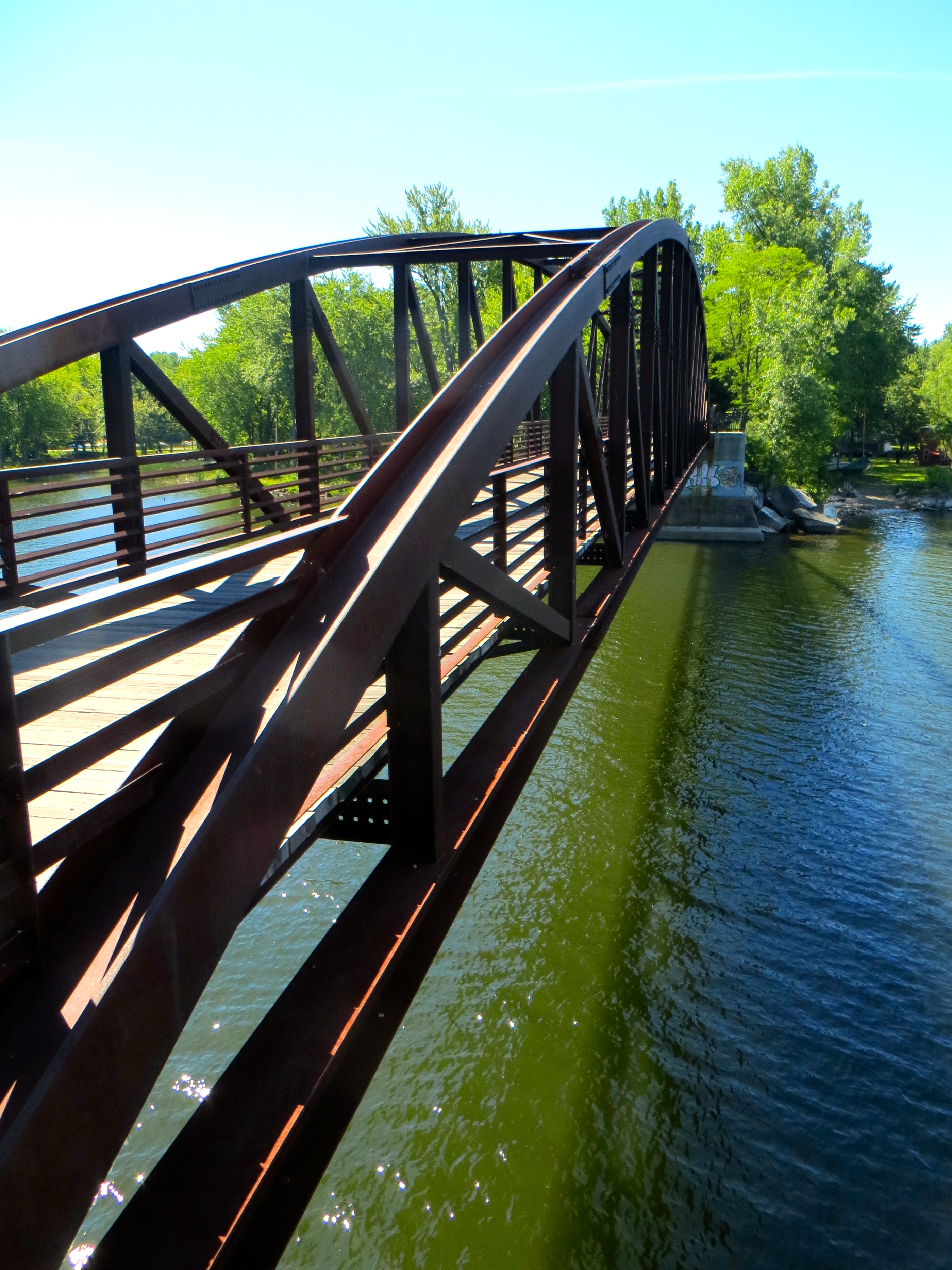
It could not have been a more perfect morning. Sunny, just warm enough, the lake and sky a summer blue. We pedaled our way several miles until we came to the bridge across the Winooski River. We stopped to look out at the river and the lake and the wetlands. Then we went a little further into Colchester.

Looking back toward Burlington

Looking back toward Burlington

We parked our bikes and checked out the lake, just off the bike path. Now that the water is finally low enough we could walk out to the marsh. We saw a couple of great egrets, a great blue heron and I finally heard marsh wrens. Those marsh wrens bring me up to 172 different bird species I have found in Chittenden County this year. I am aiming for 175, at least. I think I’ll make it.

We also saw basking map turtles

We also saw basking map turtles

Then we headed back south and parked our bikes outside ECHO, Burlington’s science center, to do some building. The rotating exhibit currently features KEVA planks, flattish rectangular blocks. There are some amazing structures there on display. We got there just in time for one of their daily challenges. We had five minutes to build a bridge. We teamworked it and did pretty well:

IMG_4061

I had started my own bridge before the challenge started and decided to enhance that one:

IMG_4064

We will be back to build some more this summer while the exhibit lasts. It is way fun.

Back home, my son got picked up to hang with a friend. I got some more painting done once the shade shifted around to right spot. We won’t have quite the blast tomorrow, but I am hoping it will be a decent one. We will sleep on the porch again and wake to the morning sun. No Penny Cluse tomorrow, but I can make pancakes at home. Apparently, they are pretty good.

Alone on Top of Mount Mansfield

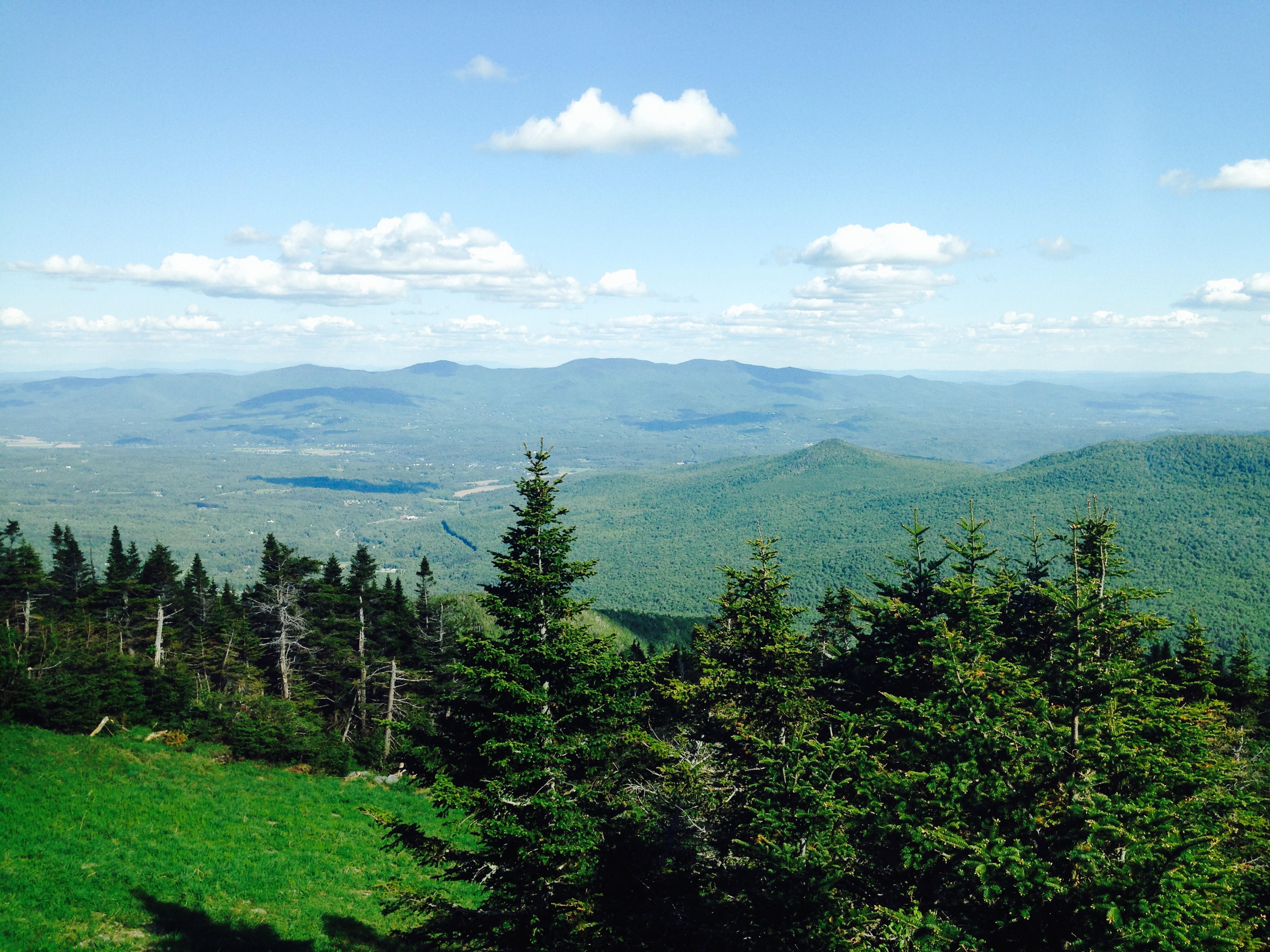
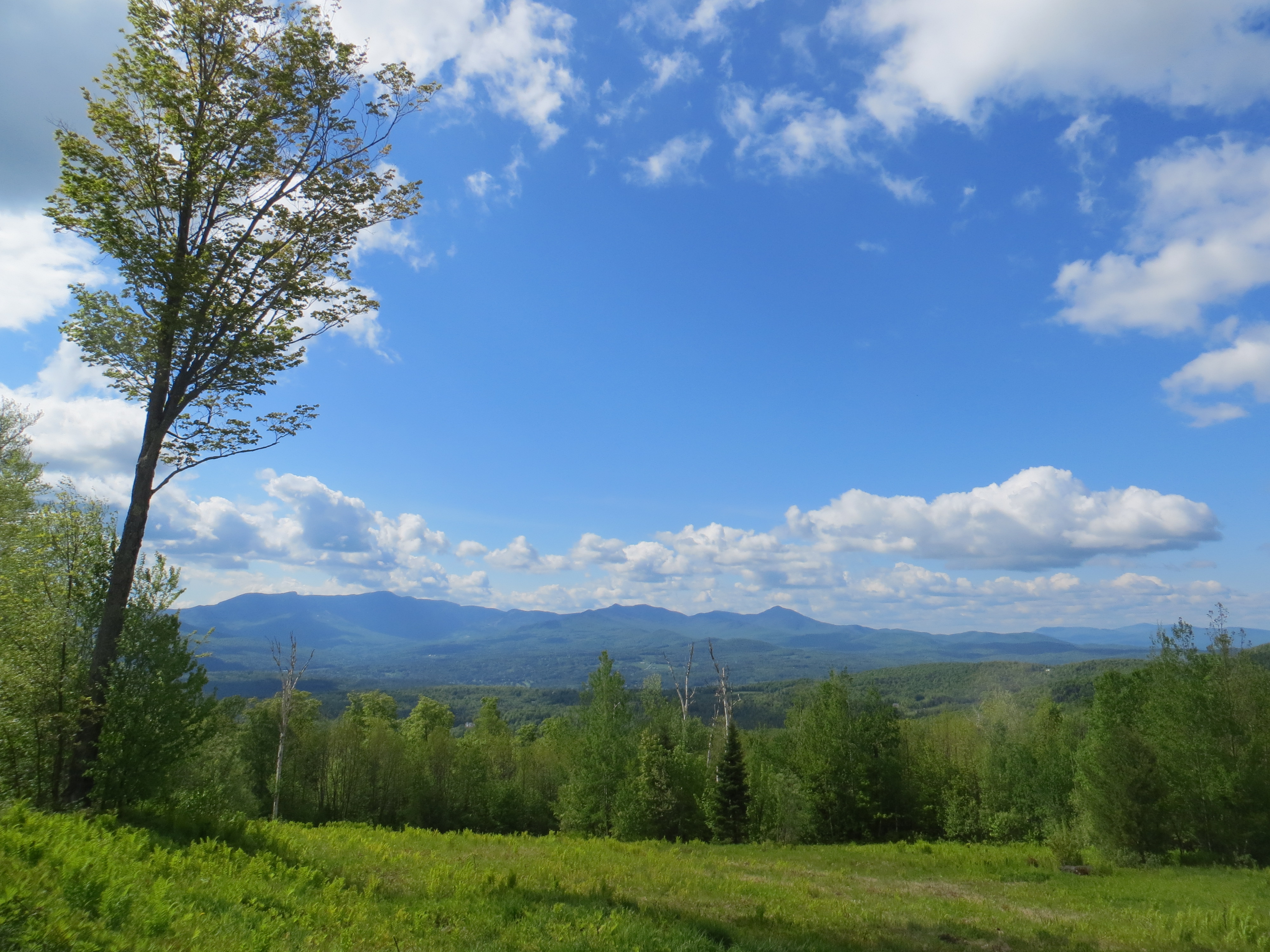
Afternoon view for near the summit

Afternoon view from near the summit

Some years in the past I have done more than one Mountain Birdwatch route, rather than just one, making the effort to get up early to try to find birds at (relatively) high elevation, in the name of science. I have done the Mount Worcester route for four years now and I agreed to take on a second route this year. I agreed to this because I had hoped I could simply get up early at home, hike to the survey route and then do the survey. This would mean I would not have to spend the night out and therefore would not need to take most of the weekend to get it done. Several years ago, before the protocol for the survey changed to make it take longer, I could rise at 1:00 or 2:00 in the morning, drive, hike, do the survey, and be back in town in time for breakfast. So I had hoped I could do that again this year. It did not, of course, quite work out that way.

Vermont Center for Ecostudies, who manages the Mountain Birdwatch survey in the United States, has the benefit of the use of the Stowe Mountain ski patrol hut to aid in its science projects on Mount Mansfield. This means I got to stay there so I could get up early to do the survey. At first I was going to decline this offer and try to drive up super early. But, I thought, what the heck? Why not make things easier? I mean, I am supposed to start the survey at 4:00 in the morning.

So last Saturday afternoon I drove to Stowe. I stopped at the base of the toll road and checked in. I had to sign a couple of release forms. One was for use of the hut and one was for use of the toll road. The toll road snakes its way up and ends close to the summit of the mountain. It provides access for the buildings and towers up there. The towers mean access to television and radio and cell phone signals for all of us. The road means those towers get serviced. It also meant I could drive up rather than hike, saving myself several hours.

In the winter the road is a long and easy ski trail. I had skied it for the first time just this past season. It looked a little bit different without snow. Since it was so late in the day, I only met a few cars coming down and soon arrived at Parking Lot B.  I unloaded my pack and prepared to scout the route. I had never been there so I wanted to make sure I could find each of the survey points. I also wanted to do the cone count.

The survey requires counting fir and spruce cones at each point. This is because of squirrels. Squirrels eat the seeds in the cones. They love those things. So when there are lots of cones (a mast year), the squirrel population grows. The year after a mast year there usually are not so many cones, but there are still a lot of squirrels. So what do they do? They eat the eggs in bird nests. Counting cones can help determine how much of a relationship exists between cones and bird populations. I wanted to get that part done the day before.

I am so glad I scouted the route. The points for this route are all in a straight line but they are not along the same trail.  I had to hike up the access road, down the Long Trail, back up the Long Trail, down the road again, down a side trail, back up the side trail, back down the road, down another side trail, then back to the Long Trail for the last three points. It took some problem-solving and some serious effort as the trails were not all marked well and some were dang rugged.

Boulder suspended over the trail

Boulder suspended over the trail

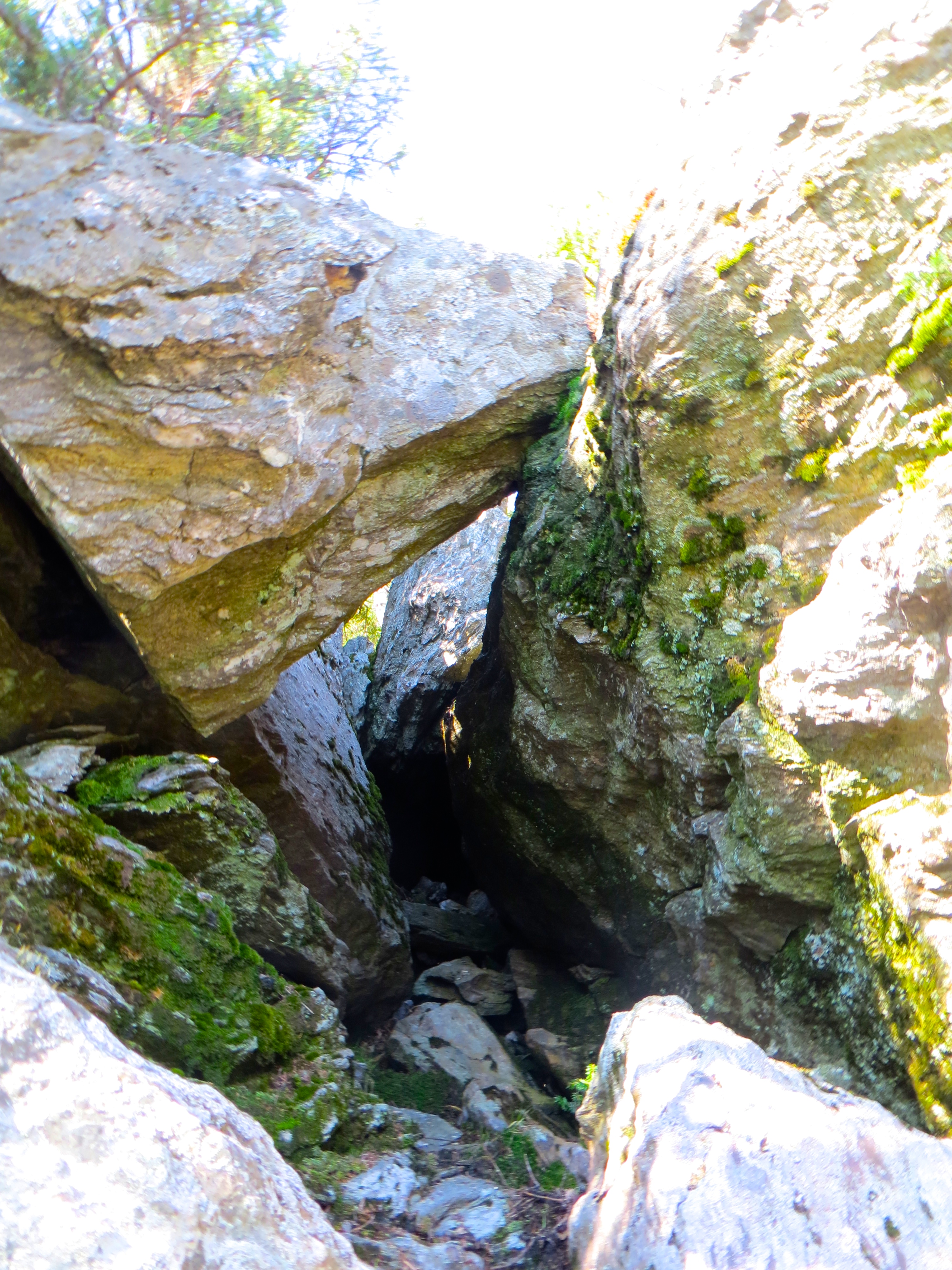
I couldn’t find one of the side trails and so couldn’t find one of the points. I figured out a way to go the opposite way down the trail and assumed I could follow it all the way through to find the access point on the other end. This was the Canyon Trail, well-named. At one point I came to a canyon. The trail ended in a cliff. “You’ve got to be kidding me,” I said aloud. More than once. There was just no simple way down. I could see trail markers painted on rocks far below, and I could see a ladder down there as well, I supposed to aid in getting up a steep section. But there was no ladder for me at the top. I envisioned how it might be possible to scale the rocks to get down, but it was 7:00 p.m. by that point, and I was alone, and I was feeling a little tired, and I had not eaten dinner. “Ain’t happening I said aloud.” More than once.

Eventually I did find the point from the other end, and I did count cones, and I got back to the hut to eat and sleep, much later than I wanted. I slept on the couch, fitfully, alarm set to wake me at 3:30 a.m. At 2:30 a.m., however, loud country music started playing. I was confused. I hoped it would stop. I thought I might be able to sleep through it. Then I got up. It turns out there was a huge old boom box in the basement, with giant speakers and double tape deck. It was playing the loud country music. I found the power button and pushed it. The loud country music stopped. I still have no idea what the heck that was about. Timer? Ghost? Mouse?

IMG_4006

On the trail at 4:30 a.m

Ultimately, I did get up. I did hike back up to do the survey. I found all the points easily this time. I heard the birds I had come to find. It could not have been a more perfect morning–no clouds, no wind, a little cool at 45 degrees. When I was finished I sat on the ridge and looked out at this beautiful place on that beautiful day. No one else was around. After enjoying the stillness and the view for a bit, I starting hiking back down, trying hard not to hum a country tune.

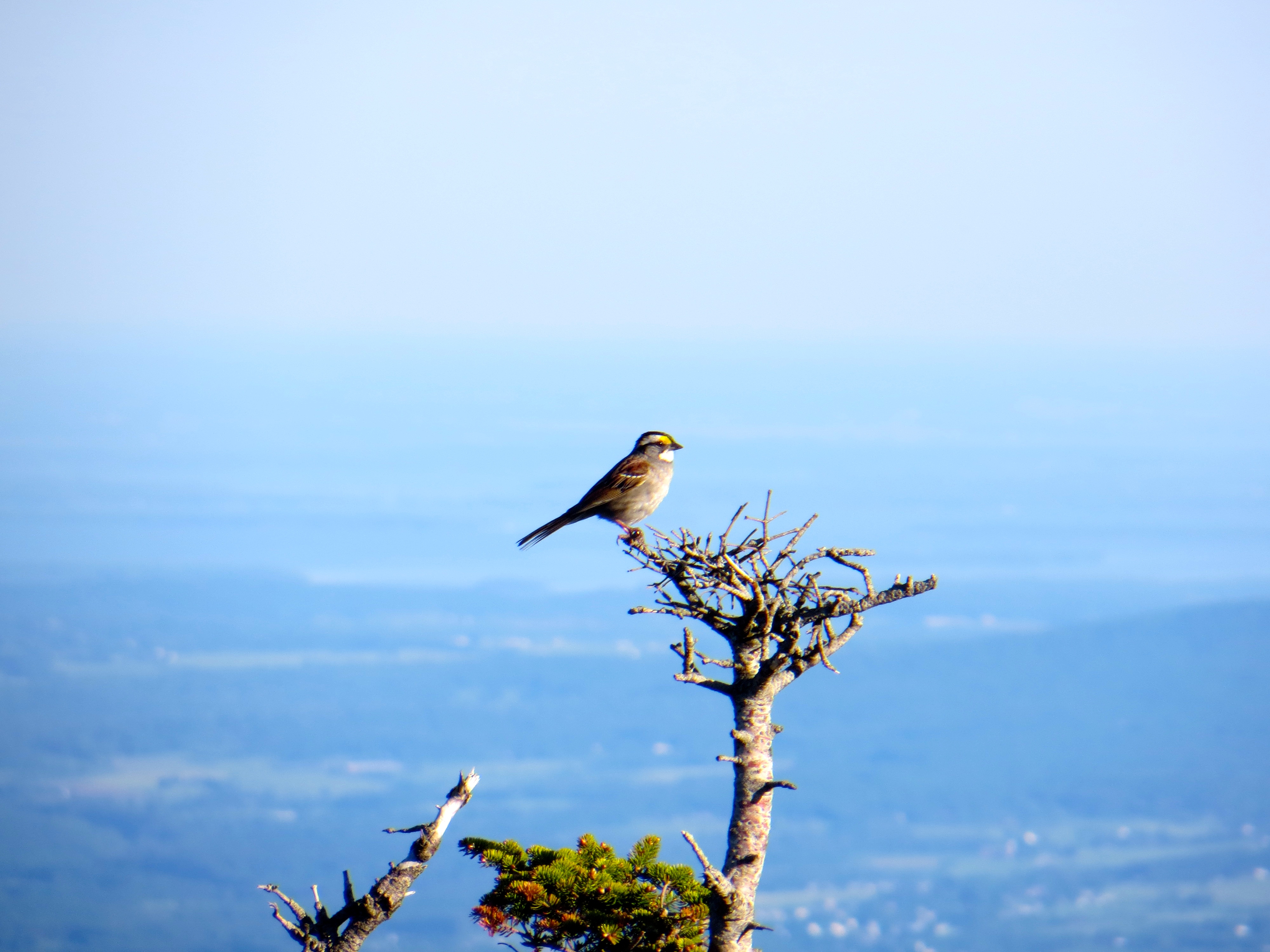
White-Throated Sparrow on the ridge

White-Throated Sparrow on the ridge, not singing a country tune

A Great Day to Get Up at 4:00 A.M.

IMG_3957The hike up is not that long but it is a bit brutal. After taking one route up a couple of times I realized there is a shorter and easier route, at least for the first bit of the hike. That shorter route cuts off about a half mile of hiking but still, it ain’t easy. This isn’t one of the highest peaks in Vermont and I don’t even end up on a summit, but I tell you it is a tough one.

I hiked up to the Skyline Trail that connects Mount Worcester and Mount Hunger in the Worcester Range, which parallels the Green Mountains. This was my fourth year doing it and each time I think it won’t be so tough. Each time I am humbled. I hike up there so I can camp out and then get up at 4:00 in the morning to find birds. Most of the birds I don’t even see but simply hear. I know, it sounds silly–take a tough hike to rise super early to find birds you can’t see? But it is pretty great.

This is my 15th year volunteering for the Mountain Birdwatch program, which surveys high elevation birds in the Northeast. You know, Bicknell’s Thrush, Blackpoll Warbler, Winter Wren, those birds most people have never heard of. That is part of why I do it, I guess. To hear a Bicknells’s Thrush sing, which only happens in early summer and only and higher elevations in northeastern North America, is a treat. Most people simply are not going to hear that song. It is a rare sound and something I cherish. It gives me hope each year that things are not as bad in the world as they might be.

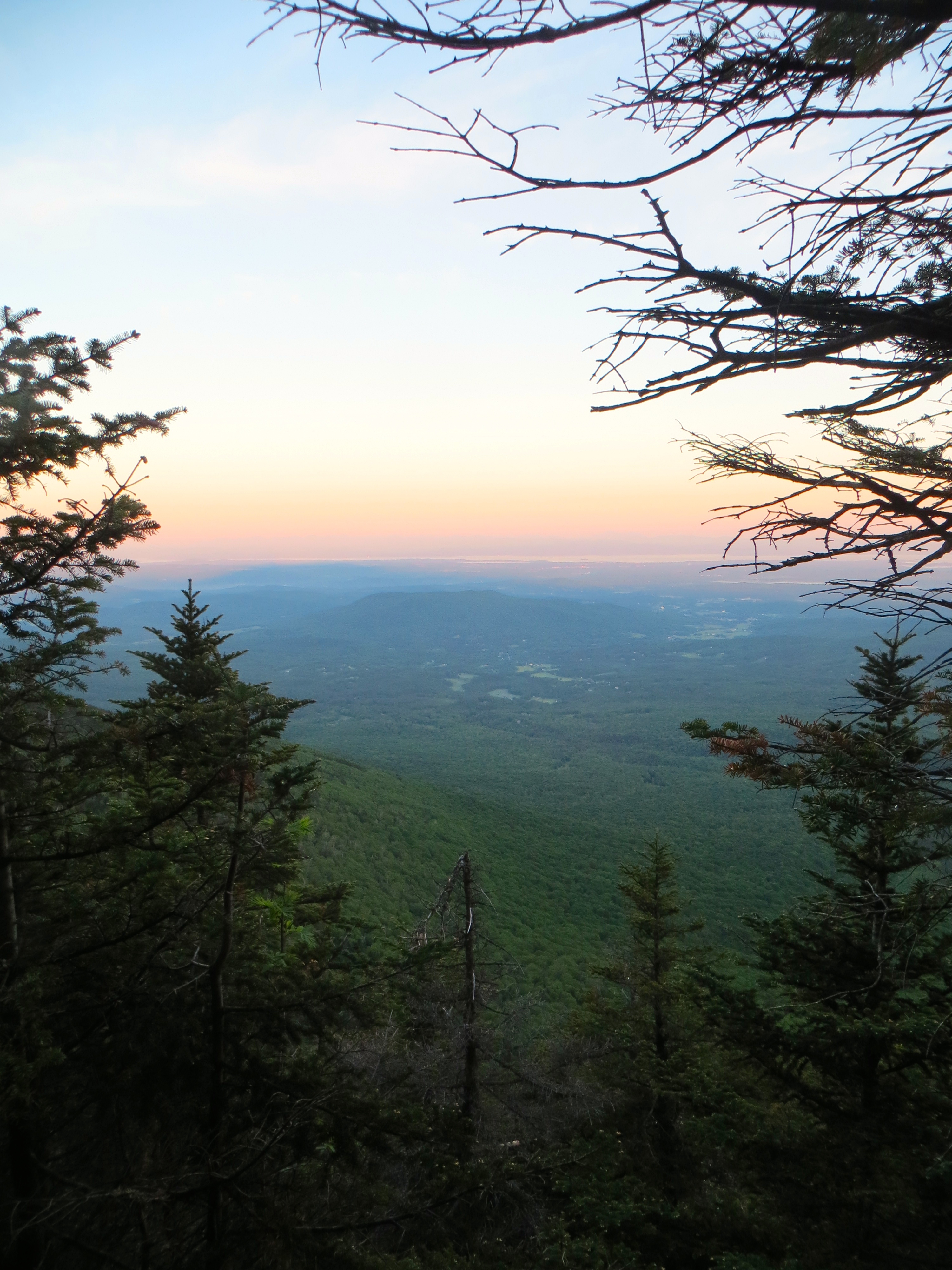
The survey protocols require listening and looking early in the morning. The birds sing the most just as it is getting light and a little while after the sun rises. Being high on a mountain as the world awakens, the smell of firs floating over the trail, bird song ringing out–seriously, it is life lived at its most divine. Of course, I also have to take care to mark down all the birds I detect of specific target species, how far away they are, if I saw or heard them, how many, that science-type stuff, but it feels then like I am doing something that maybe matters, that maybe will help to keep these places and moments around just a little longer.

I agreed to take this route after the one I had been doing for a decade had been discontinued. So it goes when scientific rigor comes into play. The old route just didn’t make the cut when the protocols got changed a few years ago. It was a bummer to let that route go but it gave me a chance to see someplace new. I had heard the new route was tough and it was. It is steep and rugged and not often used. It is slippery and sometimes hard to follow. And it is a just a little more challenging with a pack full of a tent and binoculars and warm clothes and a notebook and so on. I have given up on bringing a stove to cook dinner–too much extra weight; I just bring food I can eat straight up.

This year was particularly nice. It was clear and sunny and just a gem of a June day on both the hike in and the day of the survey. There were no clouds and there was no wind. The birds were out. Last year I hiked in and had to abort because it was too windy in the morning. I had to go back and try again the next weekend. This year the weather could not have been more perfect. OK, it was 35 degrees when I started at 4:00, and I did keep my sleeping bag wrapped around me for the first hour, but it warmed up soon enough. I heard all the birds I expected to hear plus another rare one for that area (a Boreal Chickadee) and called it good after collecting some data.

The hike out was tough but not as tough with the gravity assist. Back at the car I changed into clean shorts and shirt, opened the car windows and headed into Waterbury for a slice of pizza. I was tired–not enough sleep and some solid hiking–but I watched the sky turn pink at the beginning of day, and I heard rare birds sing, and for a full cycle of the sun I was immersed in a beautiful place. If my wife could have been there it would have been perfect. I guess perfection will have to wait, for now at least.

Bluebird day on the hike down

Bluebird day on the hike down