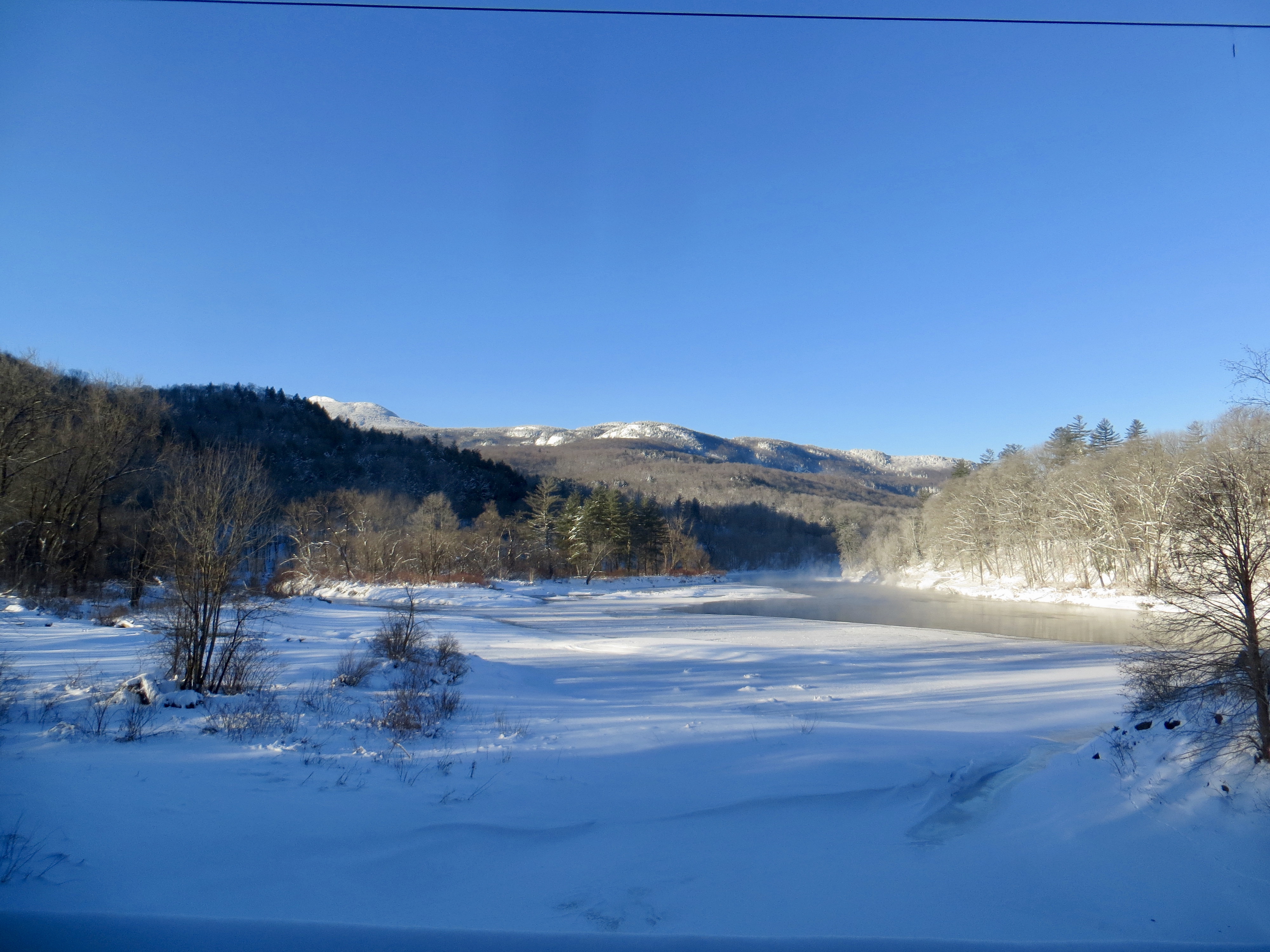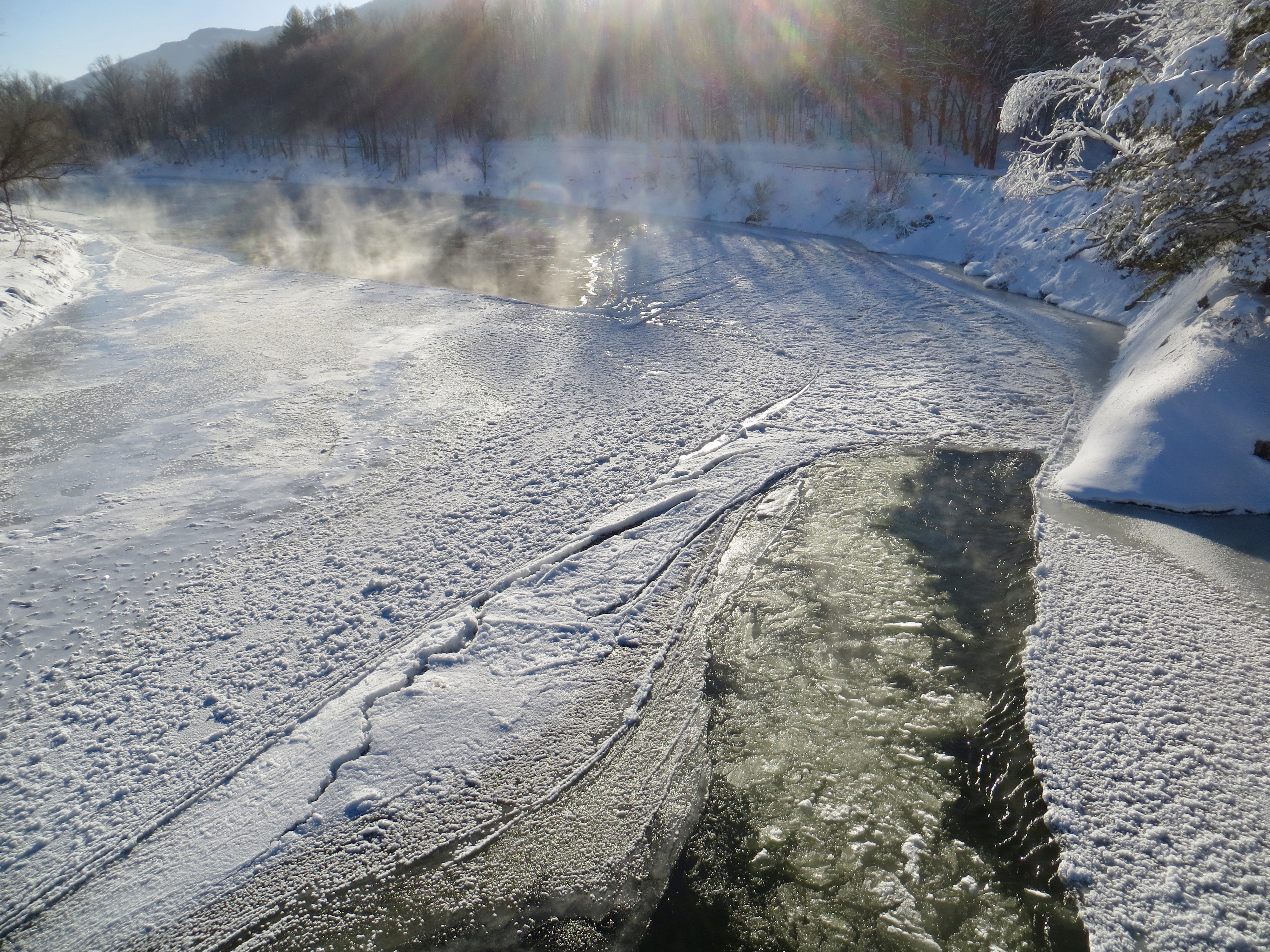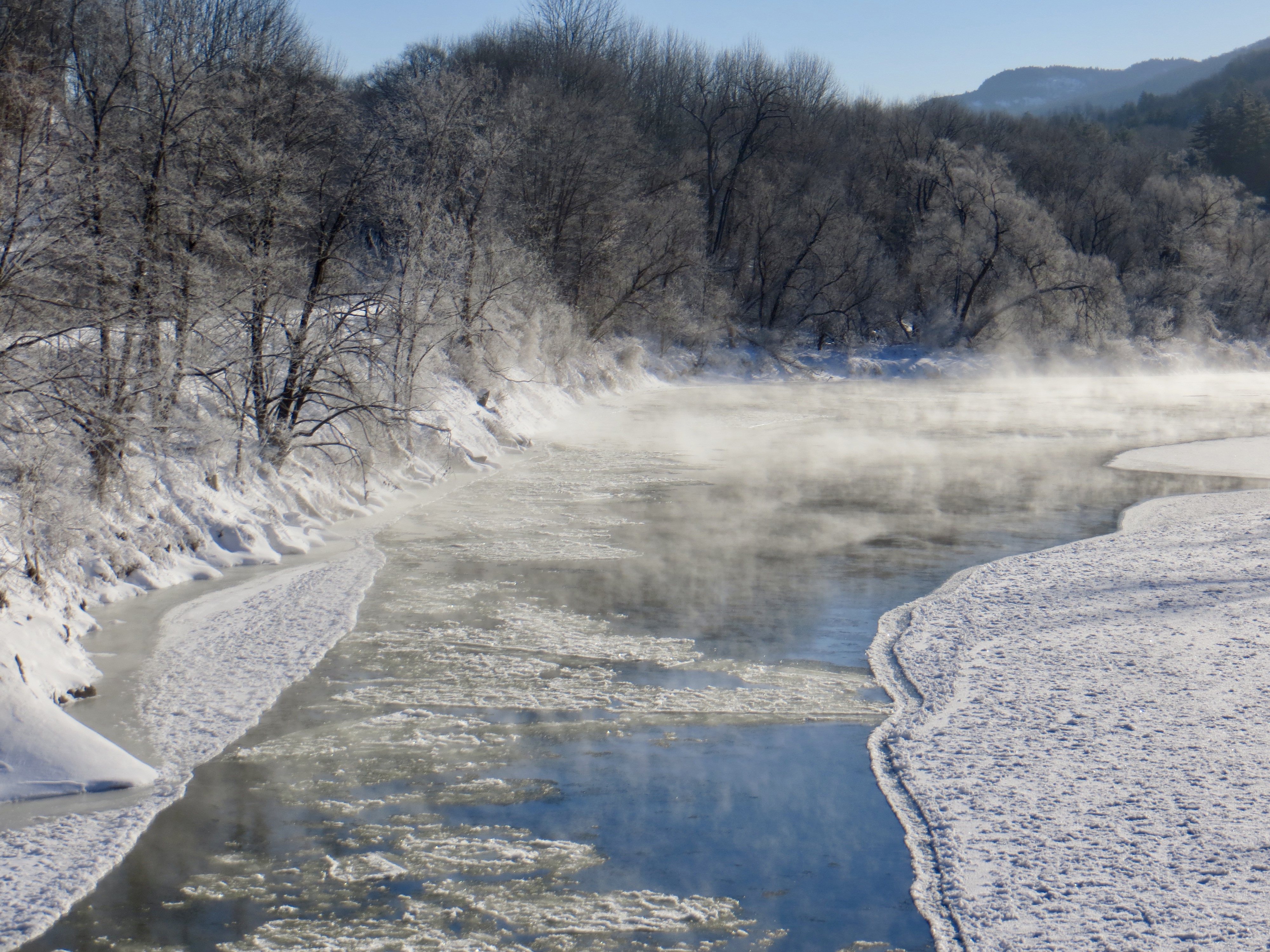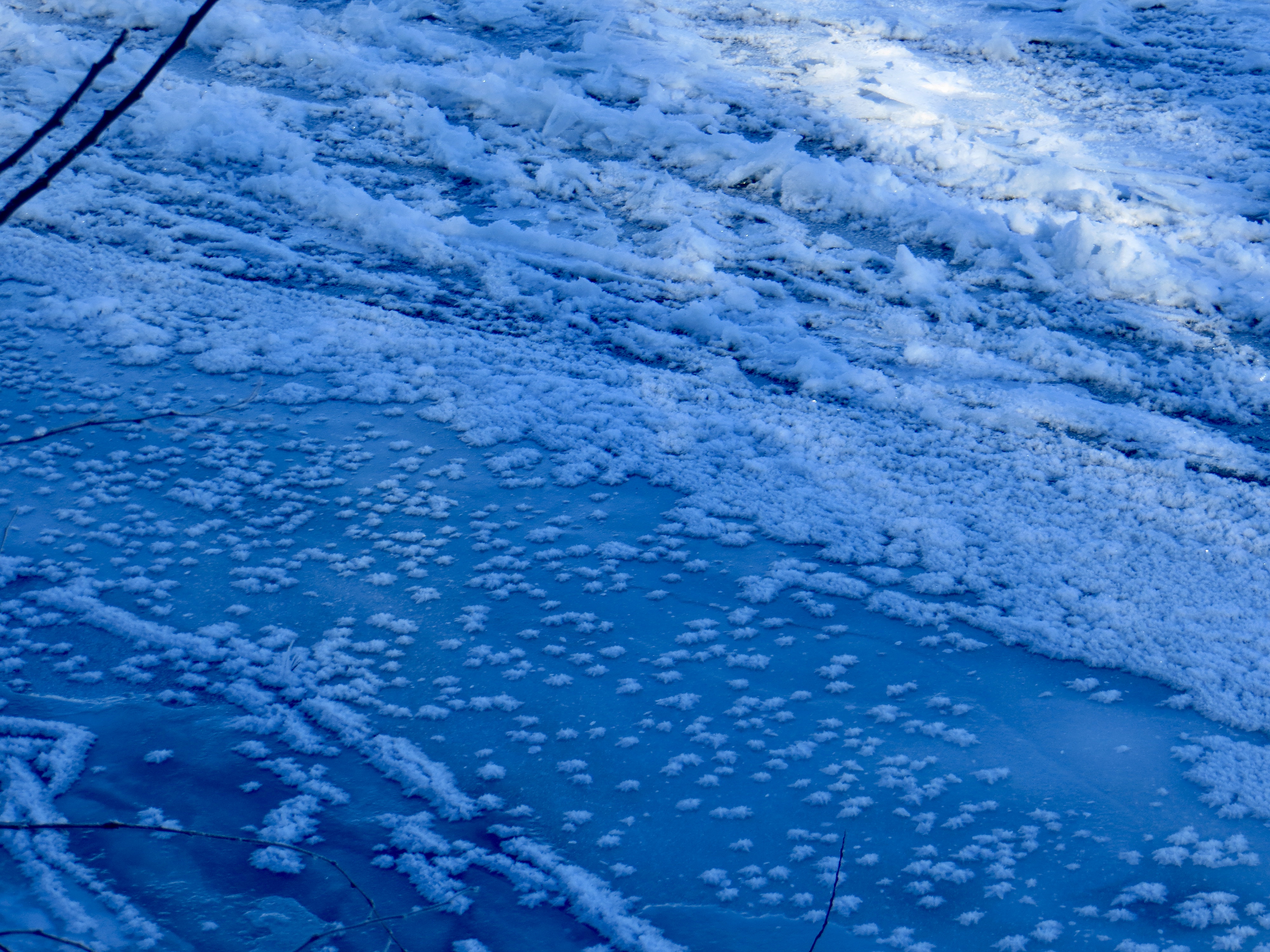
Mountain Birdwatch 2024

Last weekend I completed my latest high elevation bird survey for the Vermont Center for EcostudiesMountain Birdwatch program. Every June people head to the highest points of the northeast to search for bird species that hang out up there. I have been doing it since 2000, so this is my 25th year participating.

I heard about this program because the Green Mountain Club put it in a newsletter or an email. I had already been volunteering for the GMC as a corridor monitor, scoping out this big piece of land next to the Long Trail in Bolton. I enjoyed getting out in the woods for that, so why not one other opportunity to explore the mountains and to help out at the same time? At the time the survey was hosted by the Vermont Institute of Natural Science (VINS). I got in touch and signed up.

My spouse and I lived up the mountain in Bolton then and I was assigned to survey Ricker Peak, between Bolton Mountain and Camel’s Hump. It isn’t on the Long Trail, but there was an old access road that went most of the way there, used by Bolton Valley Resort and whoever maintained the cell tower up there. Because it was so close I could hike right from the house, starting on the alpine ski trails, to get to that access road. It meant getting up early, since that is when the birds are active, but that was not a problem. Have you been up in the mountains when the day wakes? It is magical.

Because these birds nest up high, and because vegetation there is so dense (spruce and fir, mostly), seeing the birds was a rare thing. Mostly it required hearing them. So the training for the survey meant learning bird songs and calls. That is when I learned that birds have songs and calls, and learning both would be helpful. The training required listening to recordings to memorize them. This was 2000, before smart phones, before iPods even, so I recevied a CD in the mail. Mostly I listened in the car until I knew all those bird sounds.

When the program started there were only five focal species, the ones to pay attention to and to mark on data sheets for the study. These were Bicknell’s Thrush, Swainson’s Thrush, Blackpol Warbler, Winter Wren and White-Throated Sparrow. Plus Red Squirrel. Since squirrels will eat bird eggs, bird populations can be affected when squirrel populations jump. I knew the sound of all those critters well. Of course, they were not the only birds I heard so, using other CDs of bird songs, I eventually learned more bird songs and calls. I was too curious not to learn them.

The thing about learning all those bird songs was that it expanded my world. If I went for a hike, or a walk anywhere, I could hear birds singing, often pretty far away. Instead of just the trail in front of me and the woods beside me, I experienced what was beyond what I could see. That Black-Throated Blue Warbler was way off in those maples. It made the woods bigger. And once you start hearing it, it is hard to turn off. The world grows beyond what you can see.

I had several routes over the years, all in Vermont. At one point, however, they decided it made sense to be consistent. Rather than survey any of the peaks that might have those high elevation species, especially Bicknell’s Thrush, the long-term reliability of the data depended on surveying the same places repeatedly. Now there are fewer routes but, if possible, all the peaks in the study get surveyed each year. Ricker Peak didn’t make the cut, so I ended up with a route in the Worcester Range, incredibly beautiful if a tough hike. Now, I have two routes, one on Mount Mansfield and one on Bolton Mountain.

Another change was the timing. At first it was acceptable to do the survey at dusk, since birds are active then as well. The preference was morning, and that was when I did it, but at least dusk was an option. And the morning survey had to be completed between 6:00 and 10:00. That shifted to a 4:00 am start time and eventually each route had a specific start time. When I surveyed the route on Ricker Peak, I would wake up, grab my stuff, and hike up in time to be at the first survey point at 6:00 am. Now when I survey the Bolton Mountain route, I have to hike in the day before and get up before 4:00 am to be at the first survey point by 4:20 am. I wrap things up by 8:00.

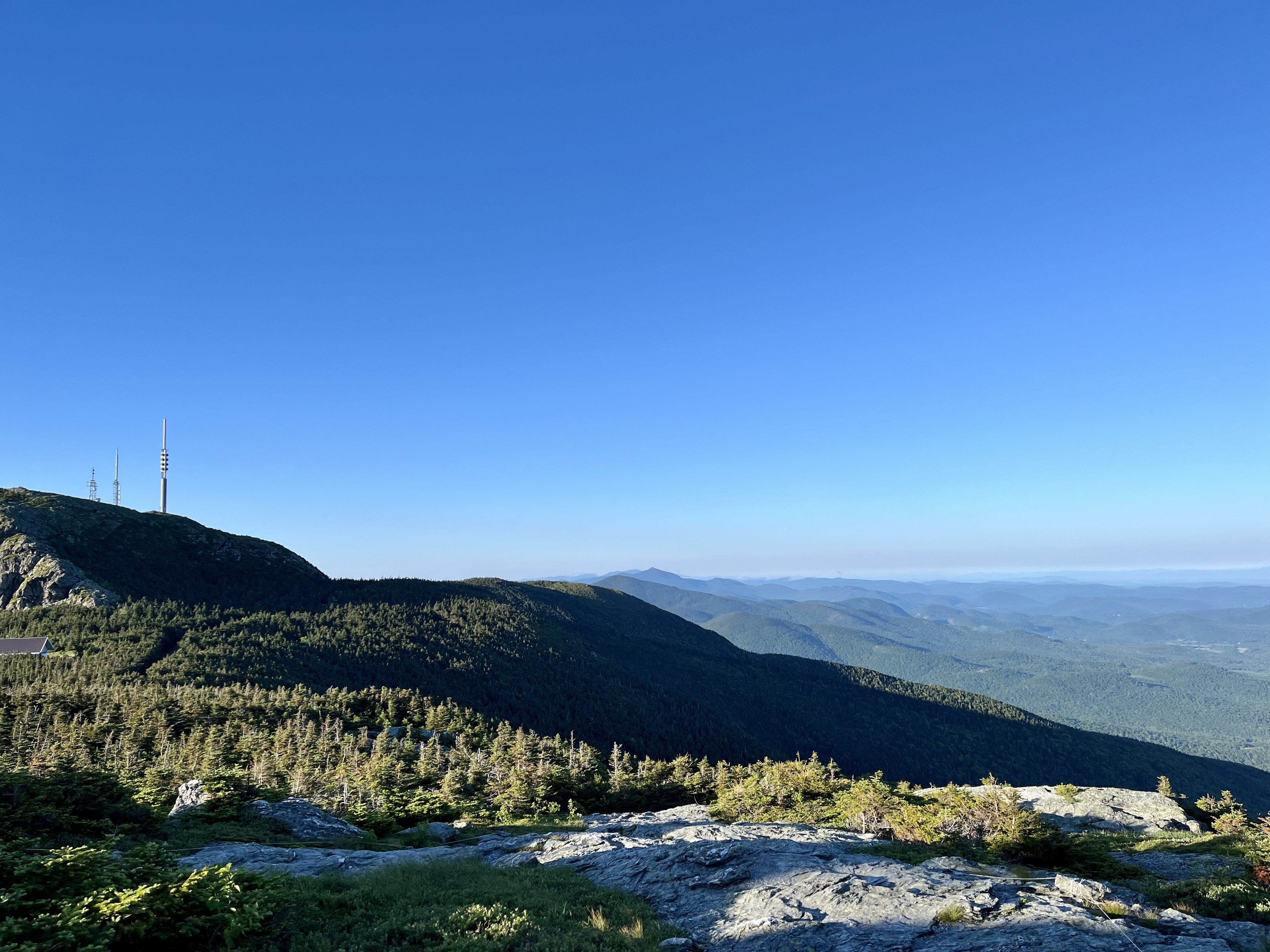
Due to some good luck I managed to get the route I just completed on Mount Mansfield. The first point is not far from the visitor center at the top of the toll road. Vermont Center for Ecostudies, who manages the survey, has permission to use the toll road off-hours. They do other bird studies up there as well– with mist nets and all that jazz. I benefit from access to the road. For this route I get up in the wee hours, drive to Stowe, pass through the gate and sign in, then drive up the road. I park in the visitor center lot and hike 15 minutes to the first survey point. This year I was there by 4:00 am just as it was getting light, and started soon after that.

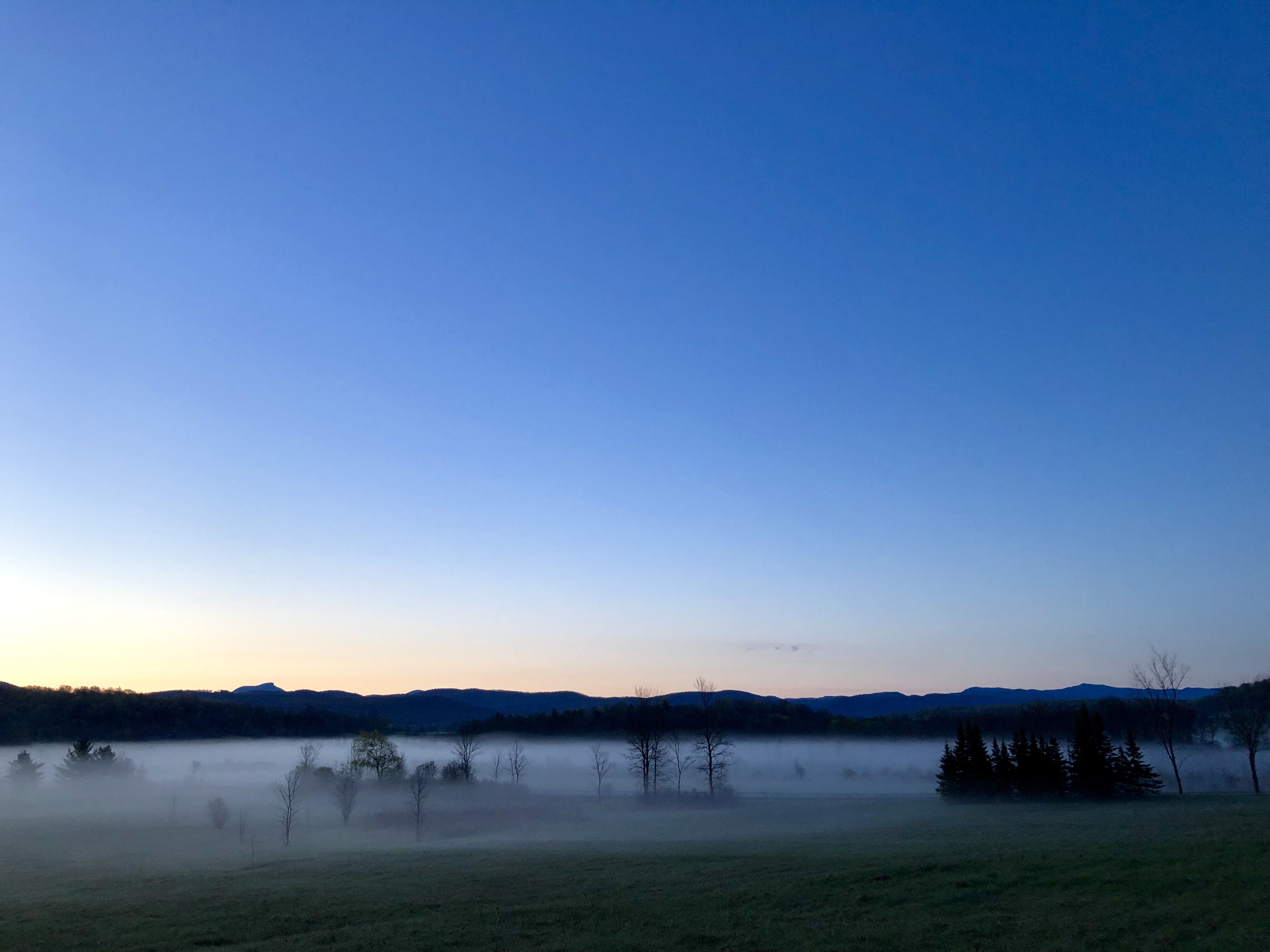
There are some challenging points on the route, but the last three are on the ridge. This time the birds at those ridge points were much quieter than usual, but there is little better than being close to the highest point in the state as the sun comes up. The fog floats in the valleys, Lake Champlain shines, ravens soar over the hills, and it easy to forget all the garbage that is happening in the world. For the first time this year I saw several people by the time I hit my end time at the last survey point–a couple of hikers and several trail runners. Apparently I am not the only one who finds morning in the high peaks enjoyable.

So one more year in the books for this survey. I do wonder how many more years I will continue to do this. I have a couple of sweet routes so one of these days I should pass them on to someone else, someone who will enjoy it, I hope, I much as I do. I feel good about getting up on so many peaks for so many years to help out with this. Hearing a Bicknell’s Thrush sing, which you can only hear way up there, is magic every time. I hope they keep coming back for a long time, whether I am there to hear them or not.

Wet wetland

I have been busy enough with work lately that I have not wanted to go birding early during the week, even though it is the season for it. So on Saturday I don’t want to give up the chance. Friday night the weather looked good for some morning exploring, so I planned to go. Saturday morning, however, brought light rain. Rain? Seriously? But I went anyway. It was bound to stop soon.

It kept raining. I turned on the windshield wipers. I went to a local nature reserve–it is fairly new and I had not seen much of it. I parked along the road where I thought a trail started. It sort of did start, in the woods, then fizzled when it opened onto a field. I went the way I thought seemed most likely, but it wasn’t much of a trail. I got to the wetland but then was stymied.

By then it was hardly raining, but it had been raining. That meant the tall grass though which I meandered was a bit wet. Dripping, really. Soggy. Soaked. In my haste to leave the house I had put on pants, to avoid ticks, but they were cotton pants. That was dumb. By the time I walked back the way I had come and got to my car, those pants were most definitely not dry.

But there had to be a better access point to this wetland. I drove up the road and found it, hidden in the trees, no parking except along the road. Yes I was soaked but it was Saturday and I did not want to give up and what’s a little cold and wet? So up the hill into the woods I headed, then down the hill in the woods I went, until it opened again in tall grass. There was a clear path but it went both left and right. I went left.

And that way was just as wet as my first attempt. I got even more wet, even though the rain had passed by now. That grass can hold some water. I had a better view of the wetland, saw some ducks, heard a gallinule calling, listened to an Alder Flycatcher and a couple of Veeries singing. I turned around again and thought I would try going right. This was was less wet but the rain started to fall again.

I did find some birds, although not as many as I might have on a clearer day. Back in the car I polished off my warm coffee, waiting for me in the cup holder. I drove home with the wipers on, those cotton pants wicking all that grass water the whole time. I arrived home wet and chilled, satisfied that I had tried and at least had a good walk in a beautiful place. After a hot shower I got some sourdough bread started. I had a day ahead of me yet.

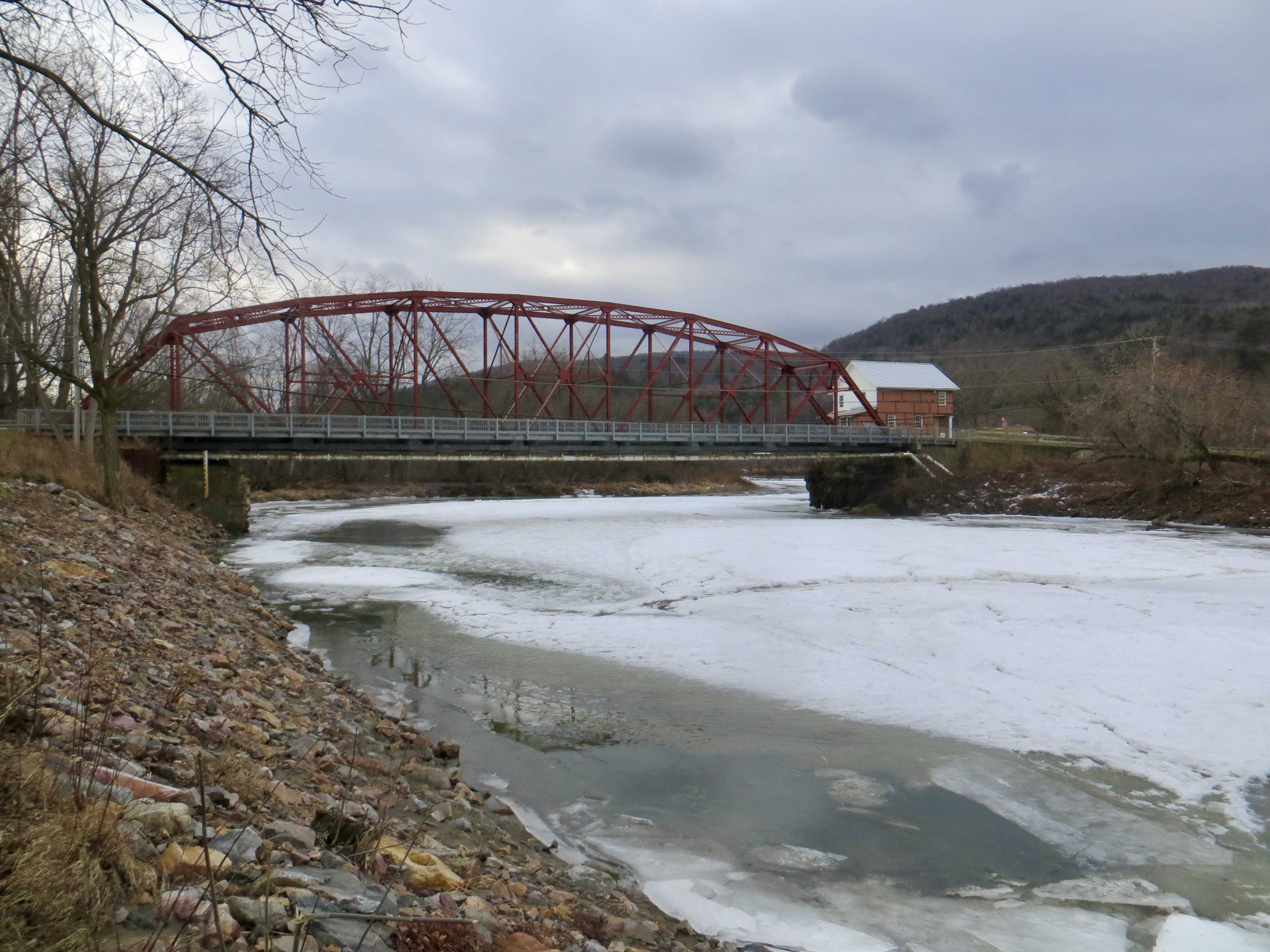
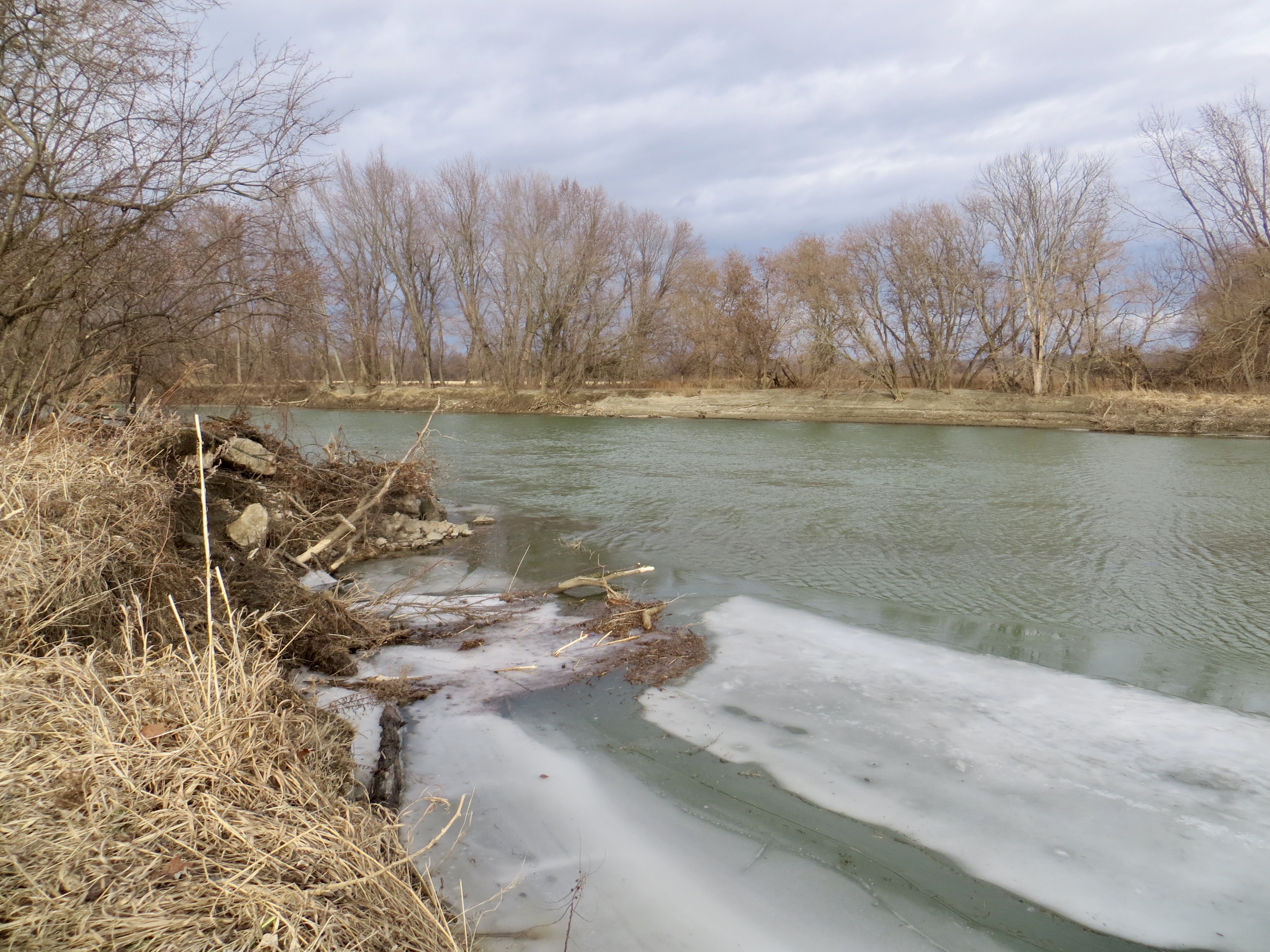
Winooski River Portrait 2020

Yesterday I volunteered again for the Winter Bald Eagle Survey. My route is the Winooski River, from Waterbury to Lake Champlain. This is a pretty good distance, so it means driving along the river and stopping at several locations to look for eagles. I have never seen one along the river, only where the river meets the lake, but I have seen eagles above the river at other times, so I was hopeful.

I didn’t see any eagles yesterday, not even at the lake, but I did enjoy being out there. As I have at other times I have done this survey, I took one photo at each of the 14 locations at which I stopped. Below is my Winooski River portrait for January, 2020.

Ice in Duxbury
From the Winooski Bridge in Waterbury
Deforge Hydroelectric Dam in Bolton
Near Long Trail in Richmond
Looking down from the Long Trail Bridge
Winooski River under the Jonesville bridge
Warren and Ruth Beeken Rivershore Preserve, Richmond
Bridge in Richmond, Vermont
Fontaine canoe access, Williston
Overlook Park, Williston
Woodside Park, Colchester
Winooski River Walk
Ethan Allen Homestead trail, Burlington
Winooski River as it flows in Lake Champlain

Kinda Foggy

I have to go when I can go. So I went up to the town forest a couple mornings ago, when I had some time to do it. If I had total flexibility I might have gone the day before, when the sky was clear. But I have to work, and I have a family and, you know, life stuff. So I went when I had time.

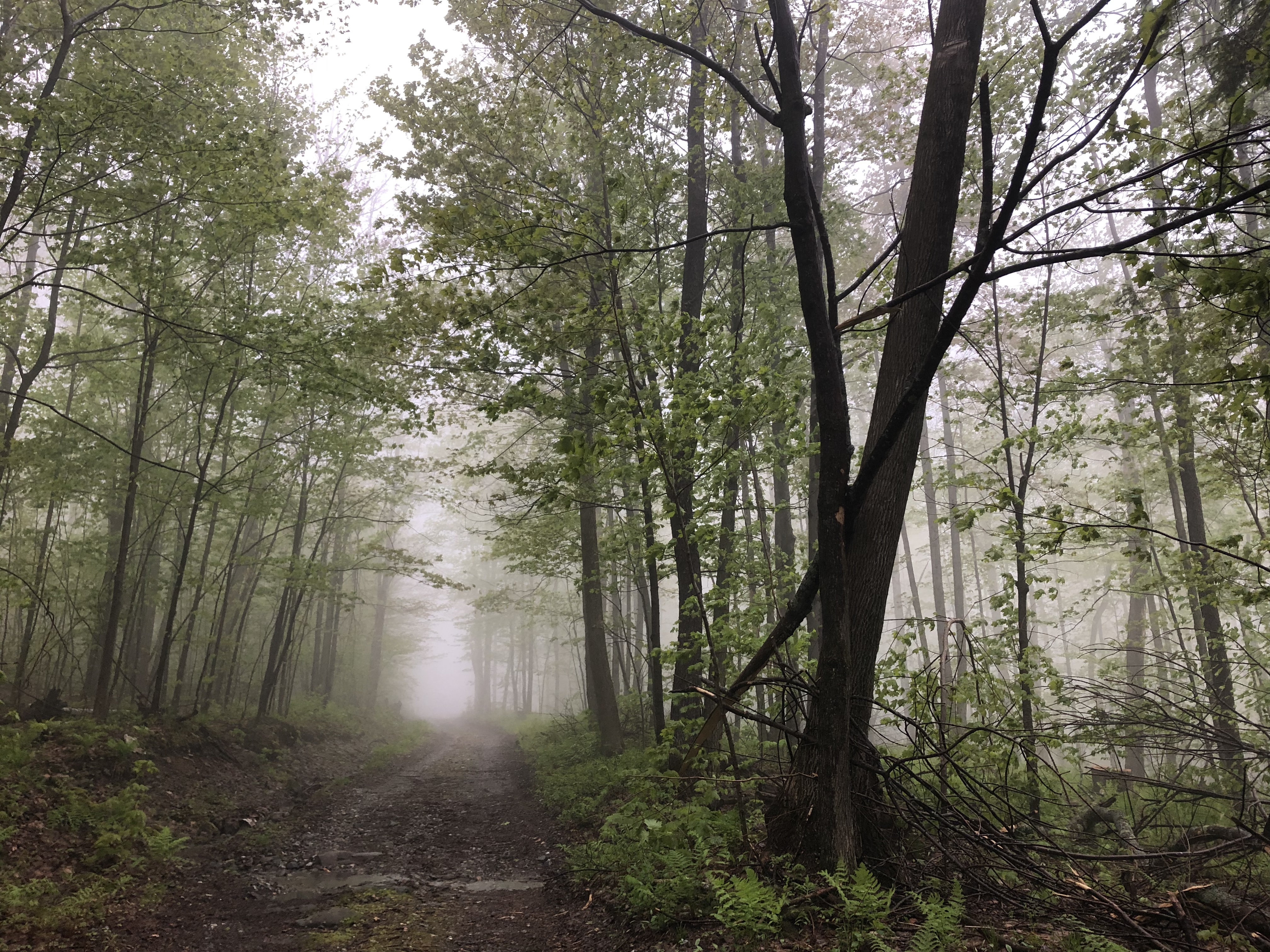
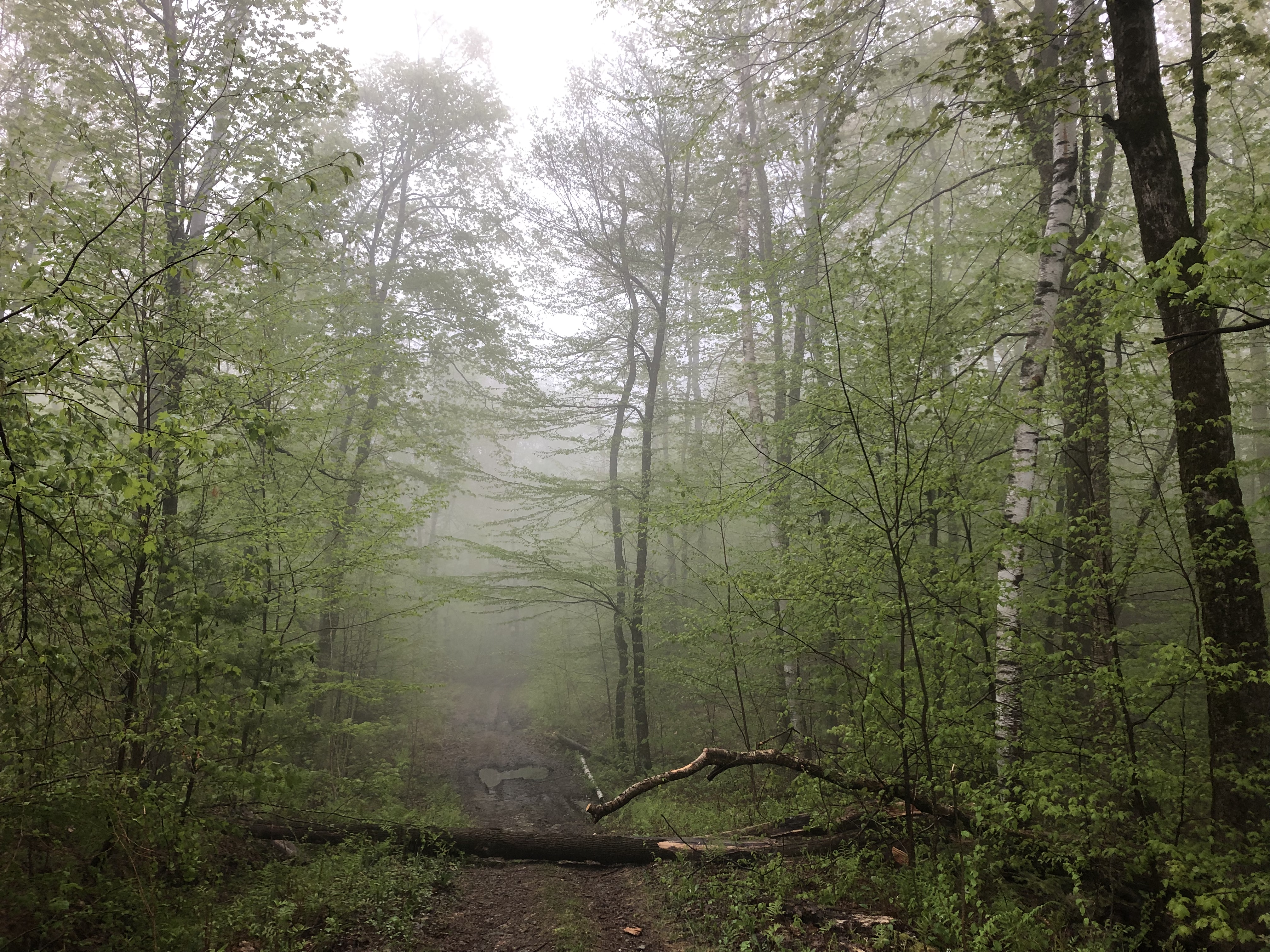
May is the month to find migrating birds. And, currently, it is May. So up I went to see what is passing through, or what has arrived for the summer. There was some fog down low, but as I drove up the hill, the fog got thicker. Up at the small parking area it was a bit socked in. I could see, mind you, just not very far. Tree tops were obscured, so I had to listen more than look.

When I go birding I usually listen more than look anyway, so it was natural. I have to remind myself sometimes to look up, in fact. There is just so much sound that birds make–songs and calls and drumming and chips and peeps. On this day I heard plenty of birds–Winter Wrens and American Redstarts and Veeries and Mourning Warblers. The bird of the day was the Bay Breasted Warbler–one that passes through–peeking out from a spruce tree right next to the trail at head height. Cool looking little dude.

I wandered around in the fog for a while before I had to get off to work. It was a successful and satisfying morning. The fog behind the fresh greenery was a quiet portrait of spring. I was in awe. It was awesome. I sank into the landscape and, by observing closely, discovered some of the landscape’s details. Not a bad way to start the day.

It’s May. Get Out There.

That is what I tell myself at 5:00 in the morning when I wake up and it is still mostly dark and I am sleepy and warm in bed and could use a little more rest before getting up for the day to get cracking on the usual routine. It’s May. Just get out there.

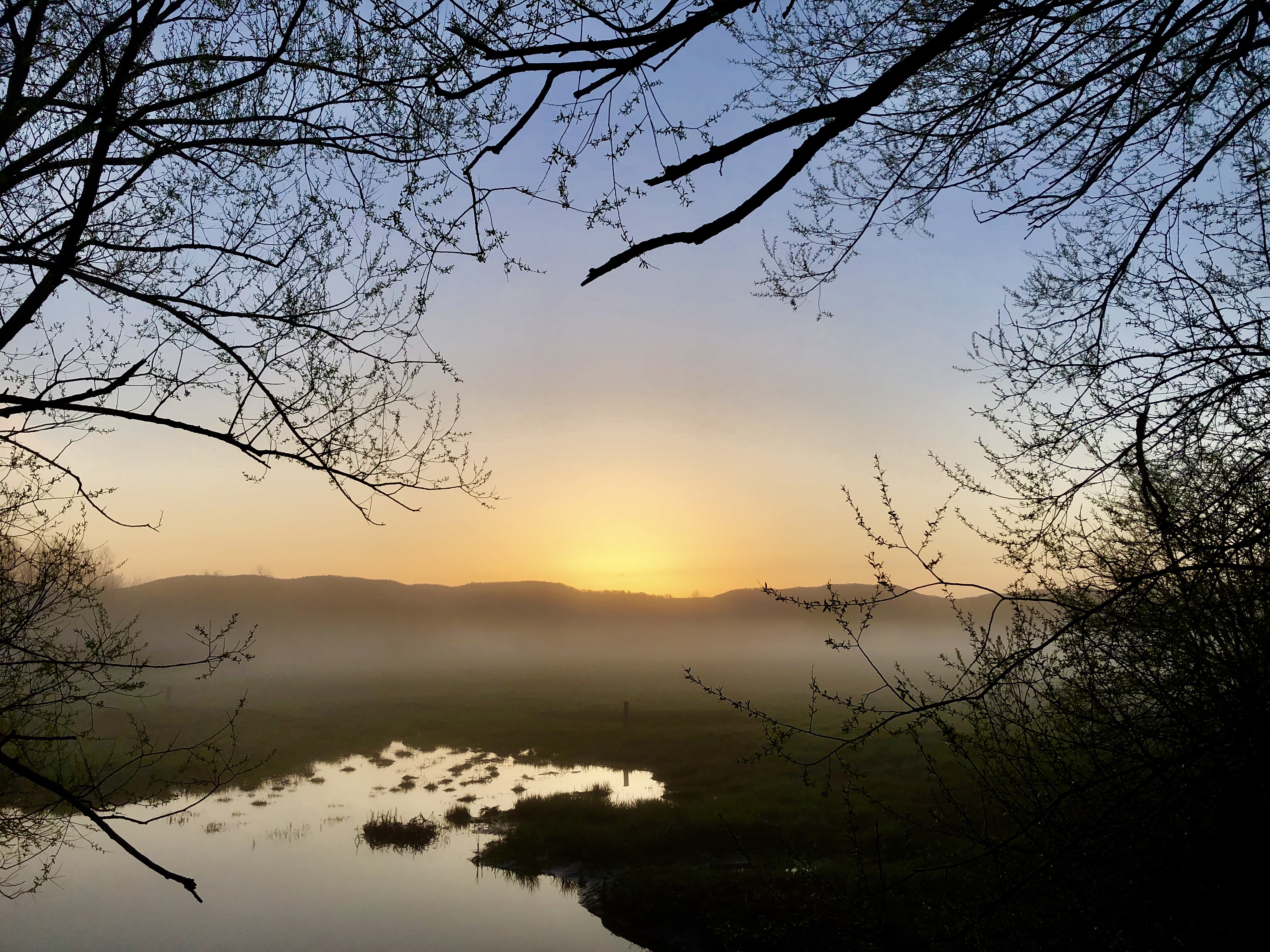
I mean, it is beautiful on a May day when the sun rises and the fog settles over the river and the green of the new buds is almost yellow it is so bright. But May is also when the birds come back. Warblers and orioles and flycatchers and sparrows. And so many more. I get out and try to find them. Every morning I try to find a bird species I have not yet found this year. Lately the birds have just been nuts.

What I mean by nuts is there have been so many birds singing in the morning. When I go out I stand in the driveway and listen. I hear ten species from the porch. By the time I get to the end of the driveway I have heard 15. By the turn in the road I’ve found 20. The past couple of times I have walked out early I have seen or heard 50 species. It is nuts.

Six years ago, when I started birding more seriously, my goal was to learn the songs of as many local birds as possible. I wanted to be able to hear a song or call and know what I was hearing. I know a lot of them. I look forward to hearing the first Savannah Sparrows or Eastern Meadowlarks or Bobolinks. My heart leaps up, as Wordsworth said, when I hear my first Yellow Warbler of the year. Or my first Rose-Breasted Grosbeak.

There are several birds that regularly show up here whose songs I don’t have nailed. That American Redstart? I should know it by now, but I have to re-remember it each year. Same with the Blackburnian Warbler. But it is a new challenge each spring. “Wait,” I whisper to myself. “What is that? I should know that.” And then smile when I get it.

These days I never have enough time. I have to rush back to the house for a shower and a clean shirt and some breakfast before we all head off to work and school. It would be easier if I had more time for that crap as well. But it is May. I need to get out there. In a couple of months, those birds won’t be singing, and the leaves will be hiding them. So I get up, I grab my binoculars and I try to remember to shut the door behind me as I start listening.

Spring teaser complete

This morning I headed out to the lake to try to find some ducks before they all fly back north. A week ago Lake Champlain was frozen over–ice from Vermont to New York. Then it warmed up, and then it rained. There is still plenty of ice. Yesterday I tried to find ducks at the ferry landing. I couldn’t see any open water at all. Wind had blown ice into the cove, filling it right up. Today I tried again and found my ducks.

At Shelburne Farms there was some water. Bald Eagles rested by it, standing on the ice. A crow picked at something out there. Common Goldeneye and Bufflehead and Scaups swam and dove. Farther up the road, water stretched along the shore. Binoculars brought all those ducks closer. I guess there are fish and mussels to feed them down in that cold water. It won’t be long before they fly away to nest.

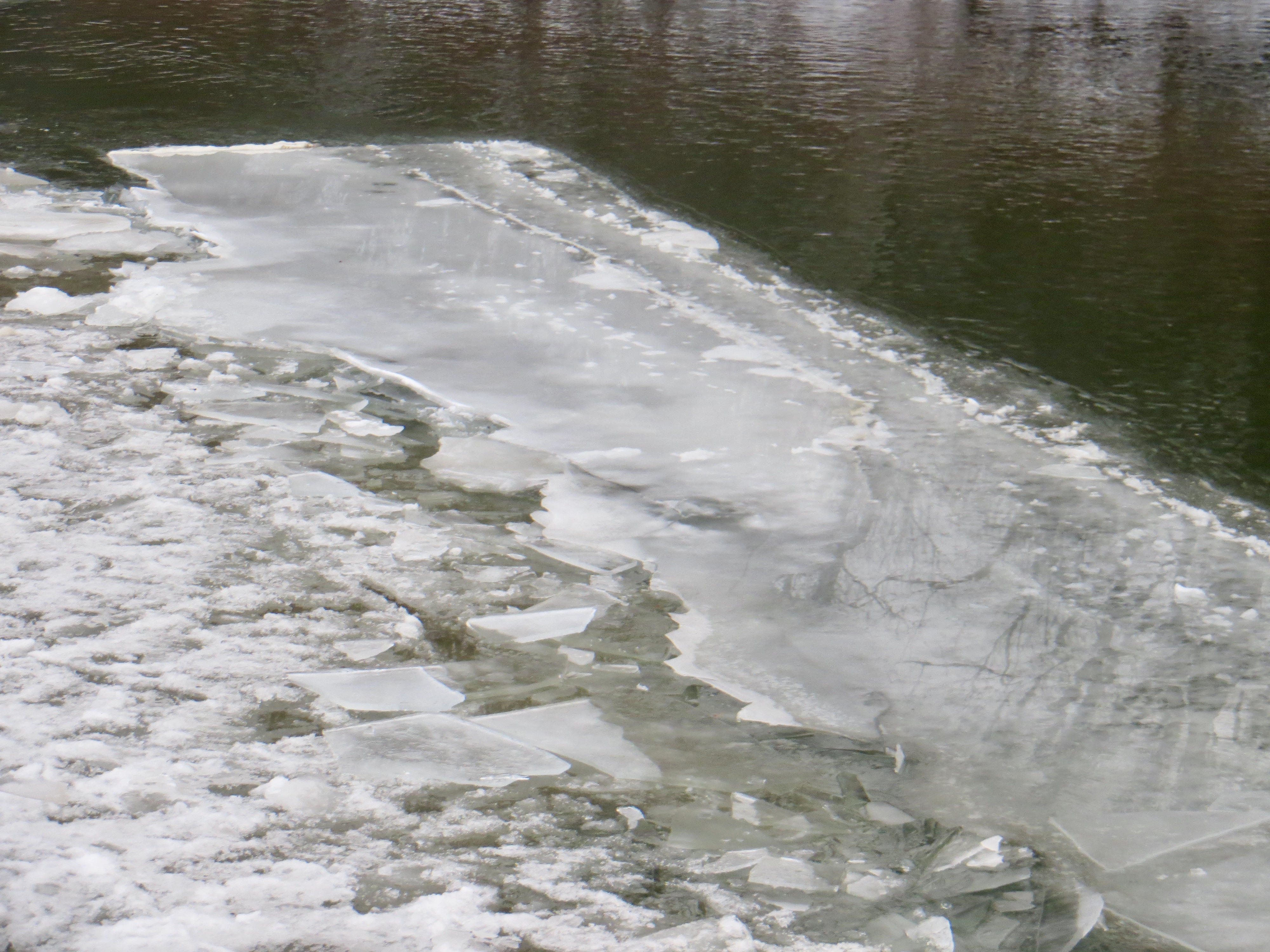
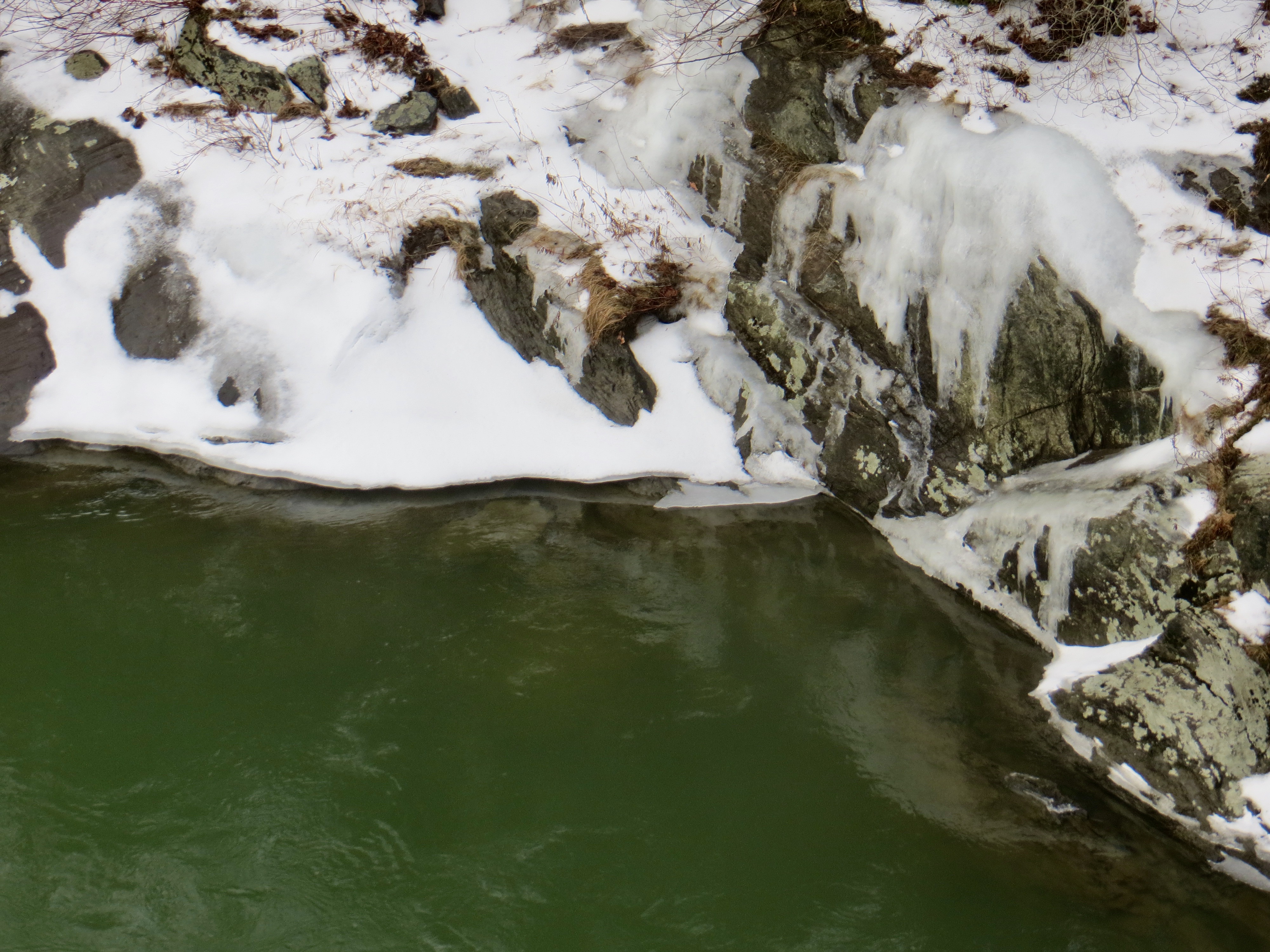
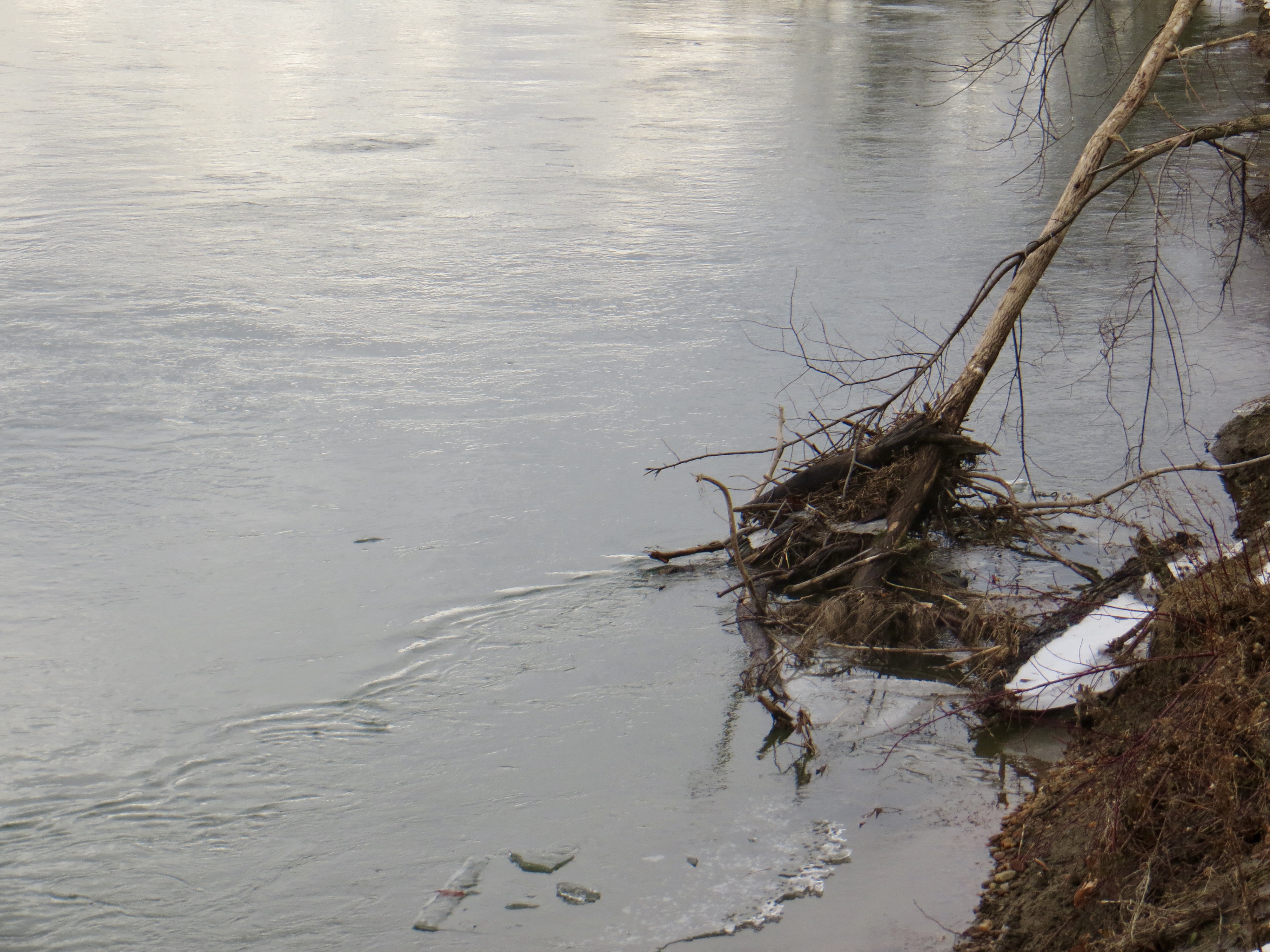
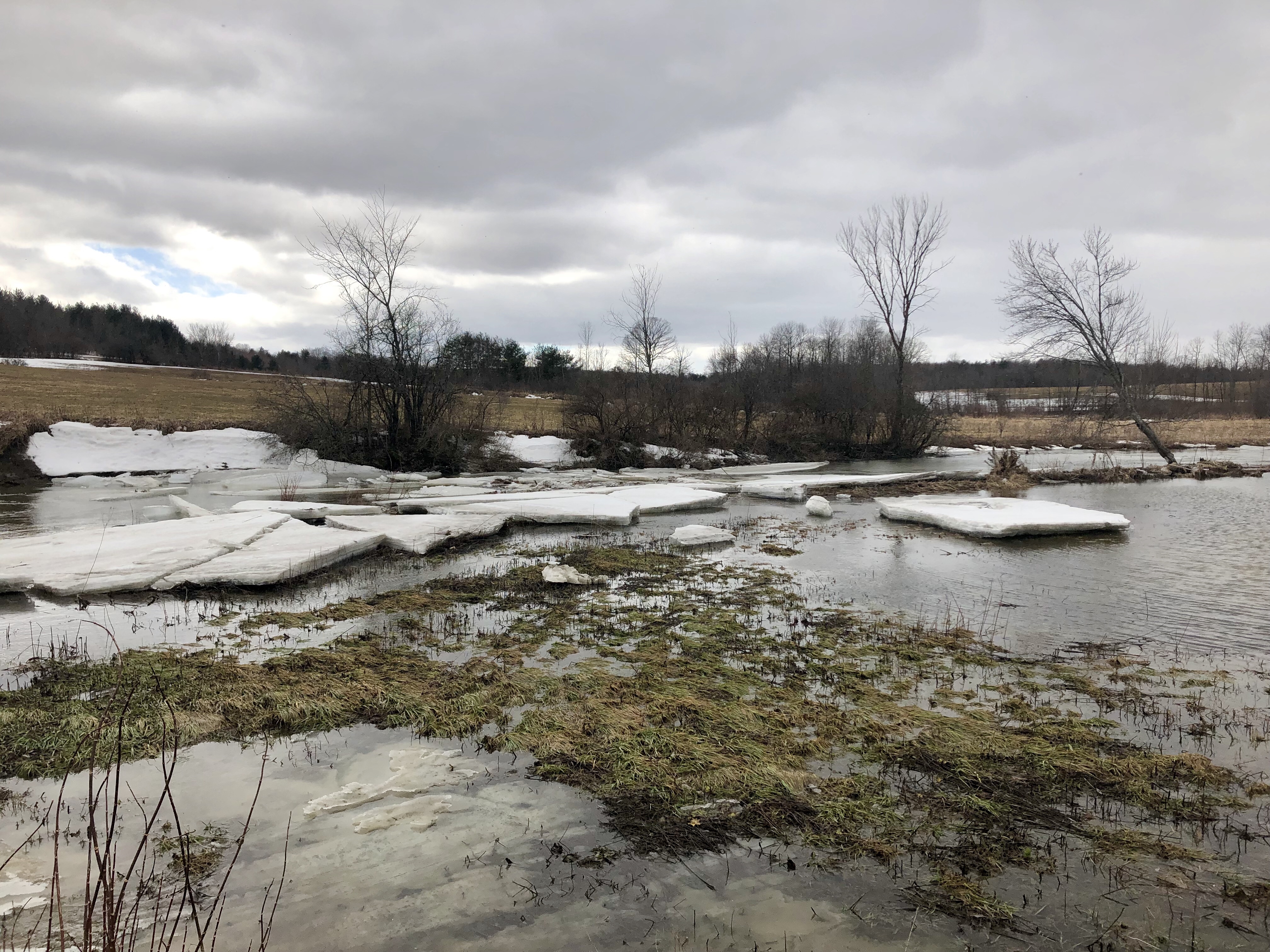
Closer to home, the river has dropped. The temperature sank into the 20s last night. All that sitting water in the fields turned to ice. A dusting of snow covers it still. On the shore, big frozen slabs. Once the water level fell they could no longer float, like boulders left behind by a glacier. They will likely sit there until spring turns them back to liquid.

Mud still seeps up on the trails. Soon we will have to stop walking on them. They are solid, for the most part, right now. They make for smooth and easy walking. Once the ice all melts, and the ground as well, the trails will be mush. In May, warblers like to sing on one particular stretch of trail. To find them I sometimes have to get wet. Or wait.

Winter is here today. This morning, my son was ruing the loss of spring. I tried to remind him that it is still winter, that those warm days were a bonus. Celebrate warm spring-like days when it is winter, don’t bemoan winter when spring’s time has not yet come. But the sun is higher. The days are longer. Phoebes will soon be singing. They will sing for the ducks as they fly overhead.

Winooski River Portrait 2019

I took part in the mid-winter Bald Eagle survey today. Yesterday was the target day, but I have been out of commission with a cold for a week. I tried to go into work on Wednesday, but I left early. I felt like garbage. I stayed out the next two days. Today, finally, I felt OK. Yesterday I was on the mend but I am glad I rested.

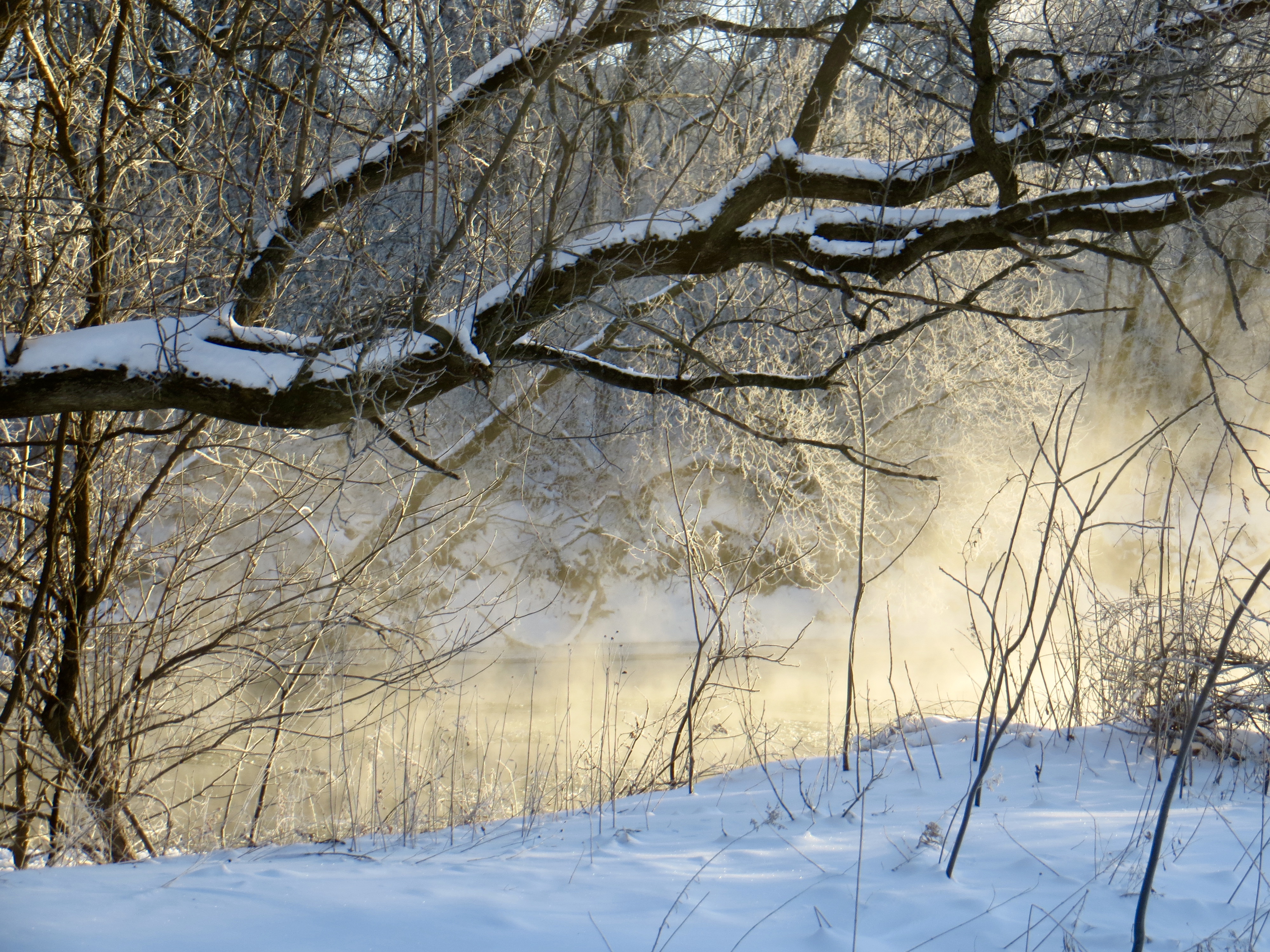
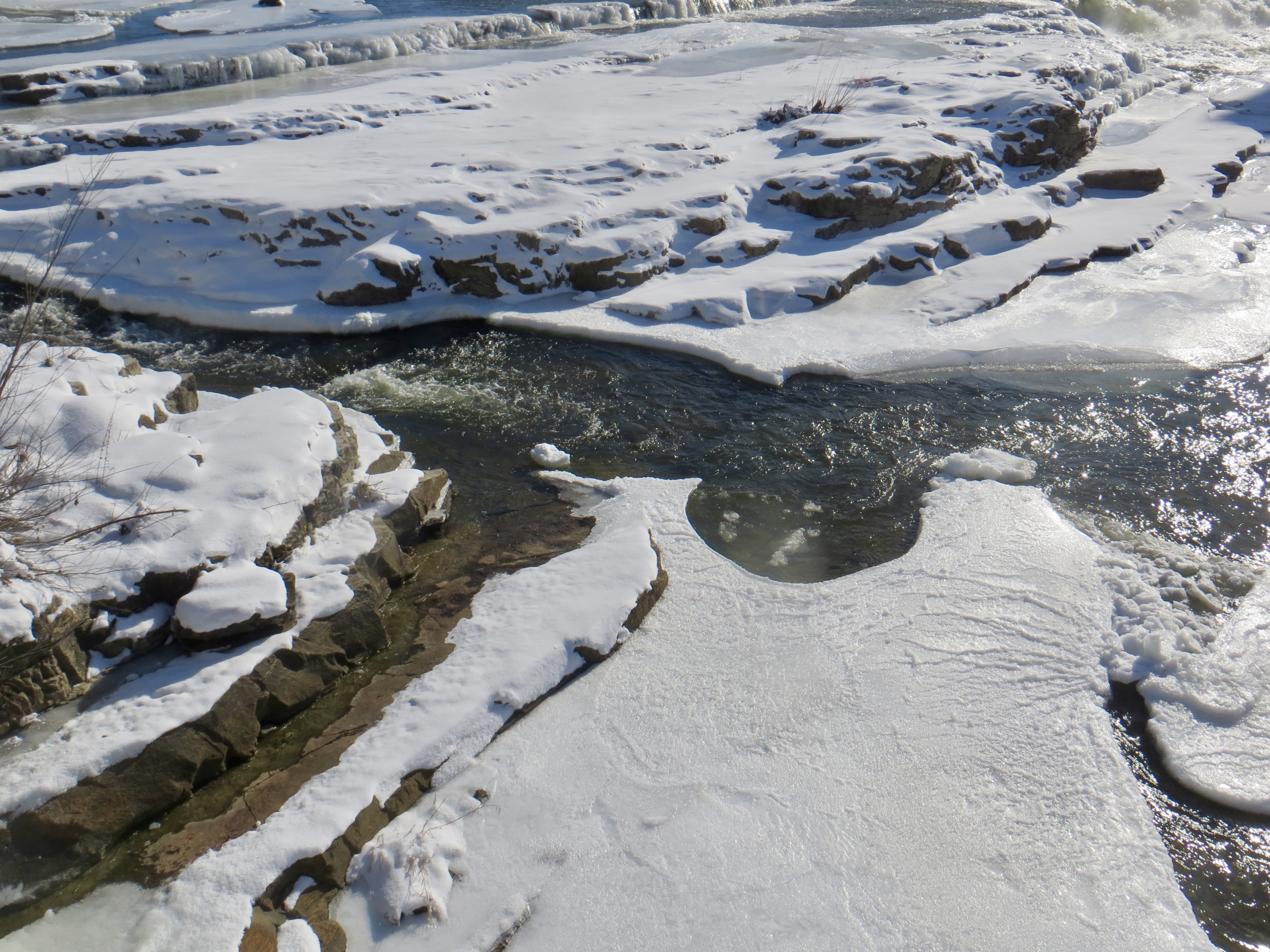
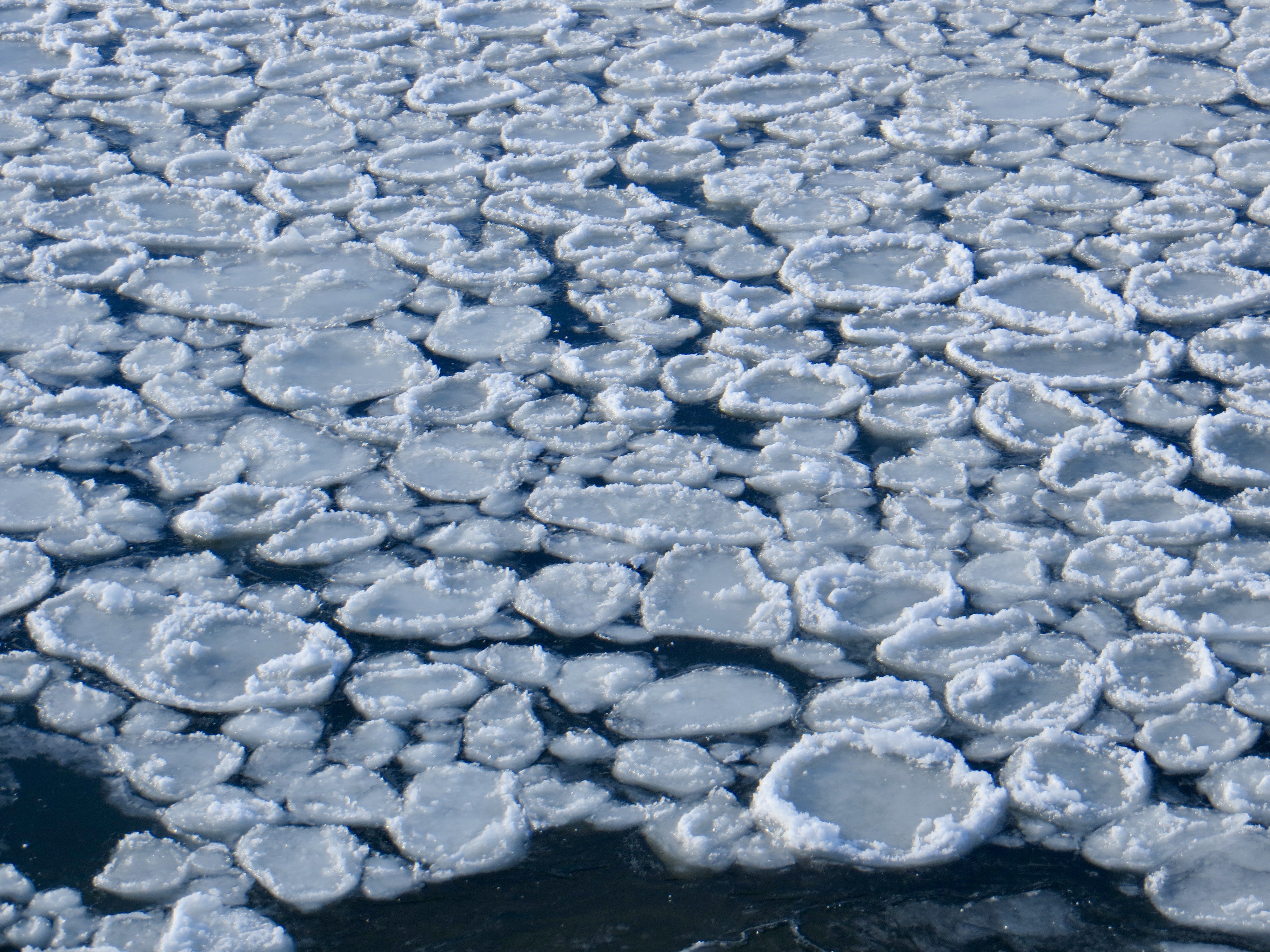
I saw zero Bald Eagles. There were not a lot of birds out in general. The day started at -6º Fahrenheit. It got as low as -9º. It was 11:00 before I saw the thermometer rise into positive territory. Our high was 13º. I guess the eagles were not interested in the cold. As I have the past two years, I took photos along the way. Here is my Winooski River portrait for this cold day.

Mist over the river just after sunrise in Duxbury
Looking north from the Winooski Street bridge in Waterbury
Ice on the Deforge hydroelectric dam
Green Mountains from Deforge hydroelectric dam
Open water under the Long Trail foot bridge
Looking north from the Jonesville bridge
River ice in shadow at Warren and Ruth Beeken Rivershore Preserve
Richmond Town Park
Snow on ice in Williston
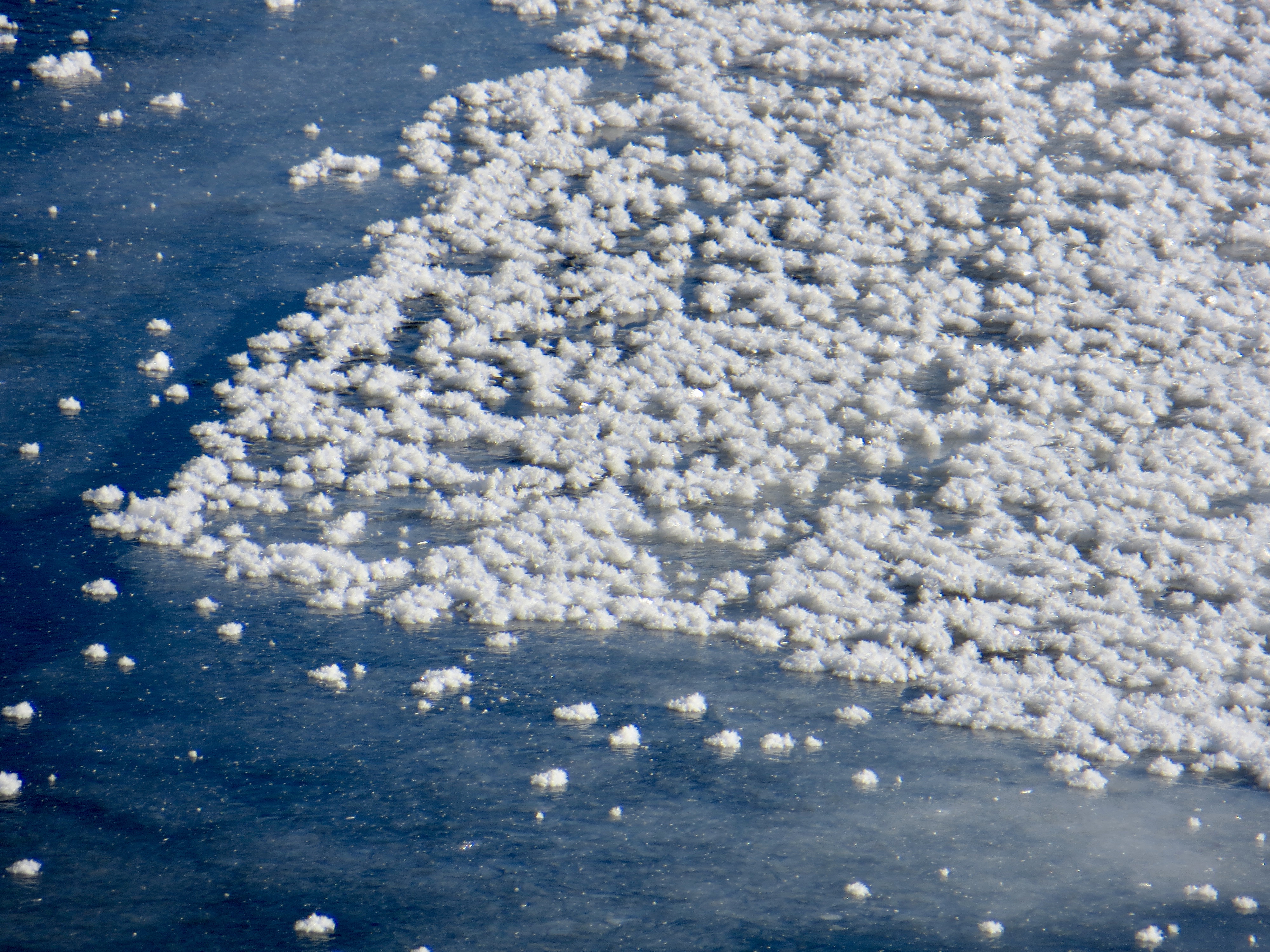
Ice flowers in Colchester
Eddy at Winooski Falls
Pancake ice at the Winooski River mouth in Colchester

Ice and Kinglets

fullsizeoutput_8c3a

It wasn’t winter, but it did feel cold. The sun was low, but still high enough for an afternoon walk. The light was sharp and the shadows were deep. The woods had the feel of calm, ready for winter to hang out for a while. Leaves rustled under my feet. Wind blew in bare ash branches. Tall grasses shone golden.

fullsizeoutput_8c3b

I was looking for Rusty Blackbirds. Maybe some would be around, picking through leaves in the wet understory. None were around. I did find quite a few Chickadees. Some crows flew overhead. The bird of the afternoon was the Brown Creeper I finally spotted, creeping, of course, up a maple trunk.

Around the back side of the loop I heard Golden Crowned Kinglets. They trilled their soft calls all around me, hidden. I waited. I watched. I looked for movement. I didn’t see any. And then I did. I got just a quick glimpse of one, its black mask metaphoric of its stealthiness.  Not far from there, White Throated Sparrows, or so I thought, called. They stayed hidden in the brown shrubs.

I warmed up after a while, comfortable by the end of my slow couple of miles. I saw few birds, but a chipmunk squeaking away from me, and a red squirrel carrying a beech nut into a hole hollowed out by a Pileated Woodpecker. Looking for birds means paying attention. The river slid by, cold and powerful. The pond tried to thaw out, its morning skim of ice almost gone, but likely to come back tonight. The trail, closed in like a tunnel in summer, was open and new.

fullsizeoutput_8c3d

I looped around to the car, watching for those sparrows, but they stayed hidden. I headed into town to pick up my daughter and her friends, the heat a little higher than when I started, my mind a little clearer. Fall, that is what I found. I will find my Rusty Blackbirds another day.

Still Some Color

img_6358

Peak foliage has passed. Around here it was about three weeks ago. Earlier farther north. We have had some wind, plenty of it in fact. And lately it has been raining. A lot. Wind and rain tear down the leaves, especially after they have reached their peak color. And so it has been. But there is still plenty of color to be had in the trees.
This morning I went down to the lake. I was hoping to find ducks. And maybe a late shorebird. Shorebirds have mostly migrated through, but there are always a few stragglers. But I didn’t see any today. I did see ducks from up north, however. Some of them will stick around for a while, as long as the ice stays away. I saw Buffleheads and Goldeneye and even a Black Scoter. Even if I hadn’t seen any, however, it would have been worth it.
The Adirondacks across the water were lit up with scattered sun. Clouds skittered across the firmament, but broken. So the sun popped though onto the mountains. The brilliant leaves remaining, and the fresh snow up high, were glowing. I started in Shelburne, with some birding success (Black Scoter!). I kept going south after that to the Charlotte town beach. I struck out there–the wind was fierce. There were a few Mallards in the cove and some gulls circling in the air currents, but otherwise it was a dud.  But those mountains…

Even on the Vermont side there were a few gems. One oak was ka-powing right next to my car. And there were maples lining the road in a couple of spots–yellow and red and orange.  I mean, it isn’t what busloads of visitors come to see. It wasn’t whole hillsides of brilliance. But still, there is some color sticking around. By Thanskgiving it will all be gone, but I’ll take it for now.

Another Visit to Moose Bog

img_6195

Boreal forest–that’s what it is up at Moose Bog. Fir, spruce, tamarack trees. Moss, ferns, green. I went up looking for a few birds. I had only a little time. I found a few birds. Regardless of that, I enjoyed being there. The place is beautiful.

I needed to be in Lyndonville for a late morning meeting. Since I live on the other side of the state, I figured I would make a stop at Moose Bog. It wasn’t that far out of the way. It added close to an hour and a half to my trip, but I was going to be so close. So I got up early, although it would be have been better to get up even earlier, and headed north.

I hadn’t been there for a while and somebody made some improvements. Where I used to park in the small lot on the gravel road off the not-so-main road, then walk up the road to the trail, there now is a well groomed trail starting right at the parking lot.  And it is a gravel trail. It will not wear out too soon, but it was a bit loud, what with all the crunching under the shoes. Hard to sneak up on birds with that going on.

img_6193

And it was a quiet morning. Granted, it was August, and I arrived later than I might have, but still, for a damp, cool morning, there was not a lot of bird song. I did hear a Gray Jay, one of the birds I was seeking, but nothing else unusual, at least at first. I walked to the end of the trail, maybe a mile, past where the gravel ended and the single smooth dirt track picked up. Still, it was still.

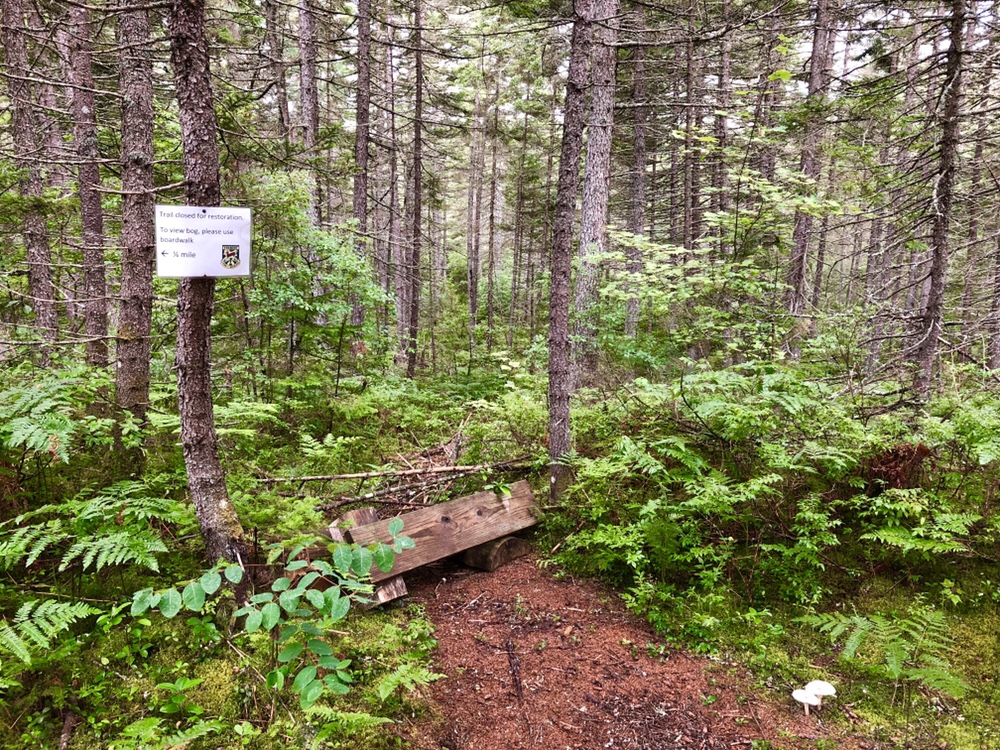
One side trail heads down from the ridge to the bog/pond. There used to be multiple trails but now everyone is steered toward one. And it is improved. The first time I was there I got pretty wet trying to maneuver out to see the water. It is a bog, after all. Now, however, there is a boardwalk that leads to a platform, with benches and railings for enjoying that stunner of a spot. It was indeed nice to keep my shoes dry.

img_6196

Don’t go that way. Please.

img_6197

img_6198

It was cloudy and threatened rain. I encountered some downpours on the way there, windshield wipers slapping back and forth on high speed, but, other than the soaking I got from the wet foliage, I stayed dry.

img_6194

I stayed for too long, as always happens when I go birding, and I had to get out of there. I drove slowly down the gravel road, with the car window down, just in case, you know? And I heard something. Boreal Chickadee? I stopped. Then I turned off the car. Birds were zipping about all over the place. I got out. I walked down the road.

I did find that Boreal Chickadee, plus a Canada Warbler, and a few other warblers. I kept walking further, but I really had to go. I ended on a high note there, for sure. I was late for my meeting, but my colleagues forgave me at least. If I lived closer I would go there more often. Apparently it is a reliable place to see Spruce Grouse, although I have never seen one. I will have to make the pilgrimage again. If I give myself more time, I might get lucky.